
Changelog
RSSWhat changed in Everruns Cloud, the self-hosted Platform, the Framework, SDKs, CLI, Yolop, Mira and Bashkit, one short dated entry per change.
November 2026
99 changes · 3 releasesFramework session data and sandbox tools
Add persistent session SQL, named read-only memory, citable application retrieval and E2B sandbox lifecycle tools to Framework agents.
Framework event triggers and native services
Route events through durable replay protection and shared filters, and bind application credentials to Cursor and Browserless native tools.
Framework shares trace projection and evaluation
Project session events into portable traces and run shared scoring rules, explicit model graders, bounded cases and online observation in Framework.
Framework connects to GitHub, MCP and Slack
Use application credentials for GitHub tools, authenticated MCP and advanced Slack channels through shared native operations in Framework agents.
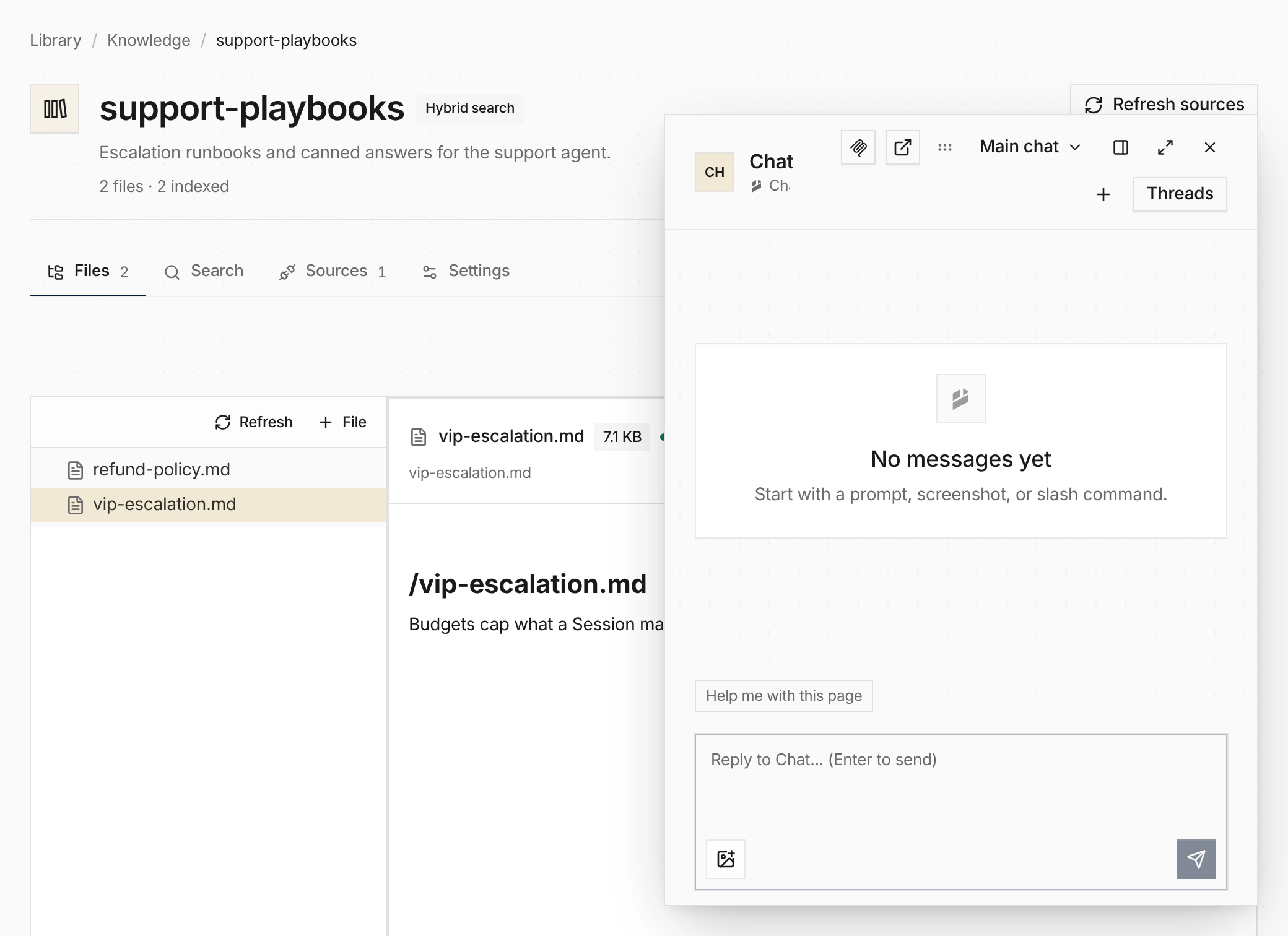
Classic layout: keep Chat floating or docked beside the page
Classic is the default layout again, and Chat in Classic can now float over the page or dock on its right, still seeing the page and drafting on it.
Choose a worktree before the first edit
New Yolop sessions in auto worktree mode require a choice before file edits or shell commands, while read-only tools remain available.
Compaction reserves context for tool schemas
Context checks now include model-visible tool schemas, reserve them before trimming history, and explain when fixed instructions and tools cannot fit.
Shorter responses for unchanged task polls
Reuse a task list snapshot to avoid receiving unchanged background task lists while preserving progress and input requests.
Extract typed fields without an agent loop
Use native extraction models through OpenRouter or Cloudflare, with typed values, evidence and uncertainty in the Framework and Server.
Yolop speaks Agent Client Protocol v2 for Zed's Delta
yolop --acp now serves the draft Agent Client Protocol v2 beside v1, the version Zed's Delta requires of external agents.
Private approval cards for Slack requesters
Slack channels can show approval cards only to the requester, keeping permission checks intact and offering session-based recovery when a card disappears.
Native Langfuse and LangSmith trace destinations
Send agent traces to Langfuse and LangSmith with organization defaults, per-agent routing, encrypted credentials, and explicit content capture.
Gemini decisions read images, audio, video and PDFs
Attach session files to a Jev decision on Gemini Decision 1, and let a deployment answer its guardrail checks with Gemini through one environment variable.
Gemini Decision 1 answers typed decisions
Google's new decision model joins Jev, GPT-6 Luna and Microsoft-Decision-1. Add it under a Gemini or OpenRouter provider for calibrated answers.
Framework sessions can stop one tool call
Session::cancel_tool_call stops a single running tool call; the model reads that it was cancelled and the turn carries on.
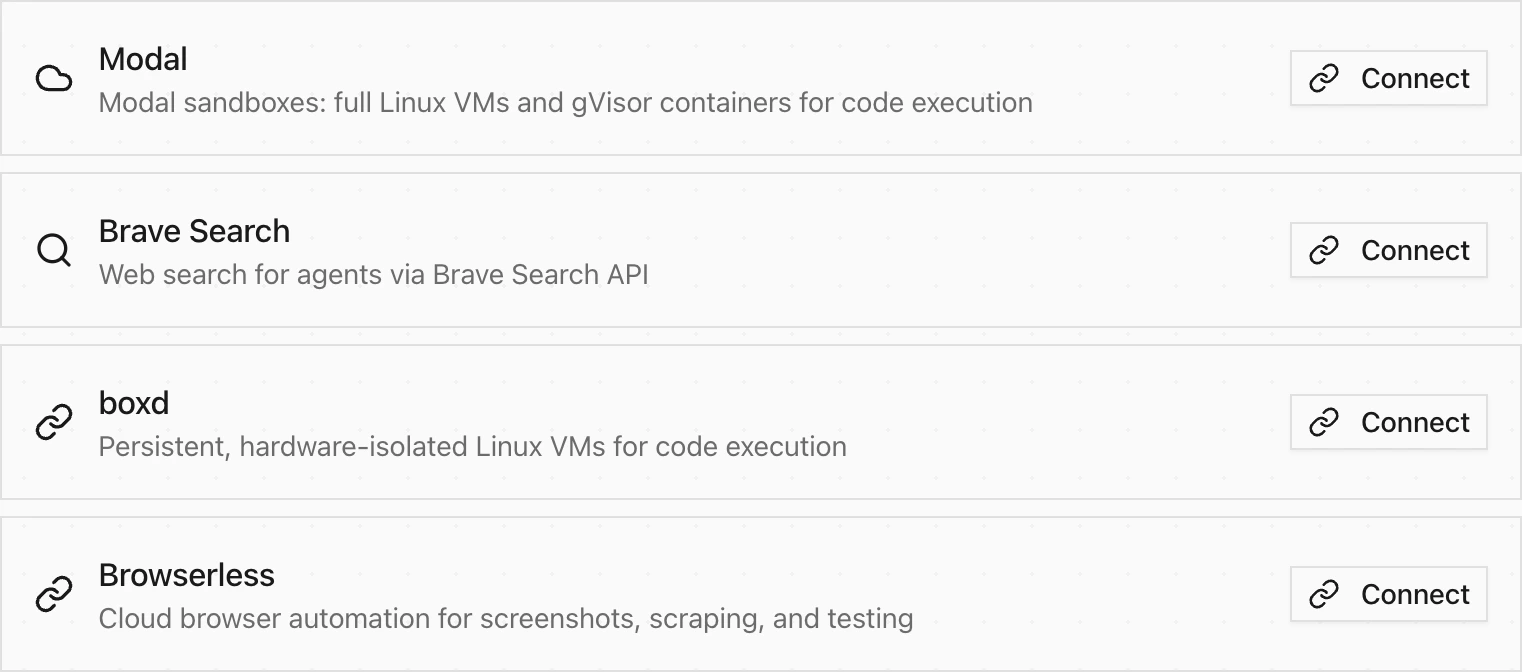
Browserless, Modal and MCP Events become built in
Browserless, Modal and MCP Events no longer need feature flags. Observers and evals keep organization opt-in, and the Sprites integration is removed.
Slack replies render Markdown everywhere, and never ping @here
Framework Slack replies and file comments now render Markdown, broadcast mentions post as plain text, and a reply Slack rejects still arrives as text.
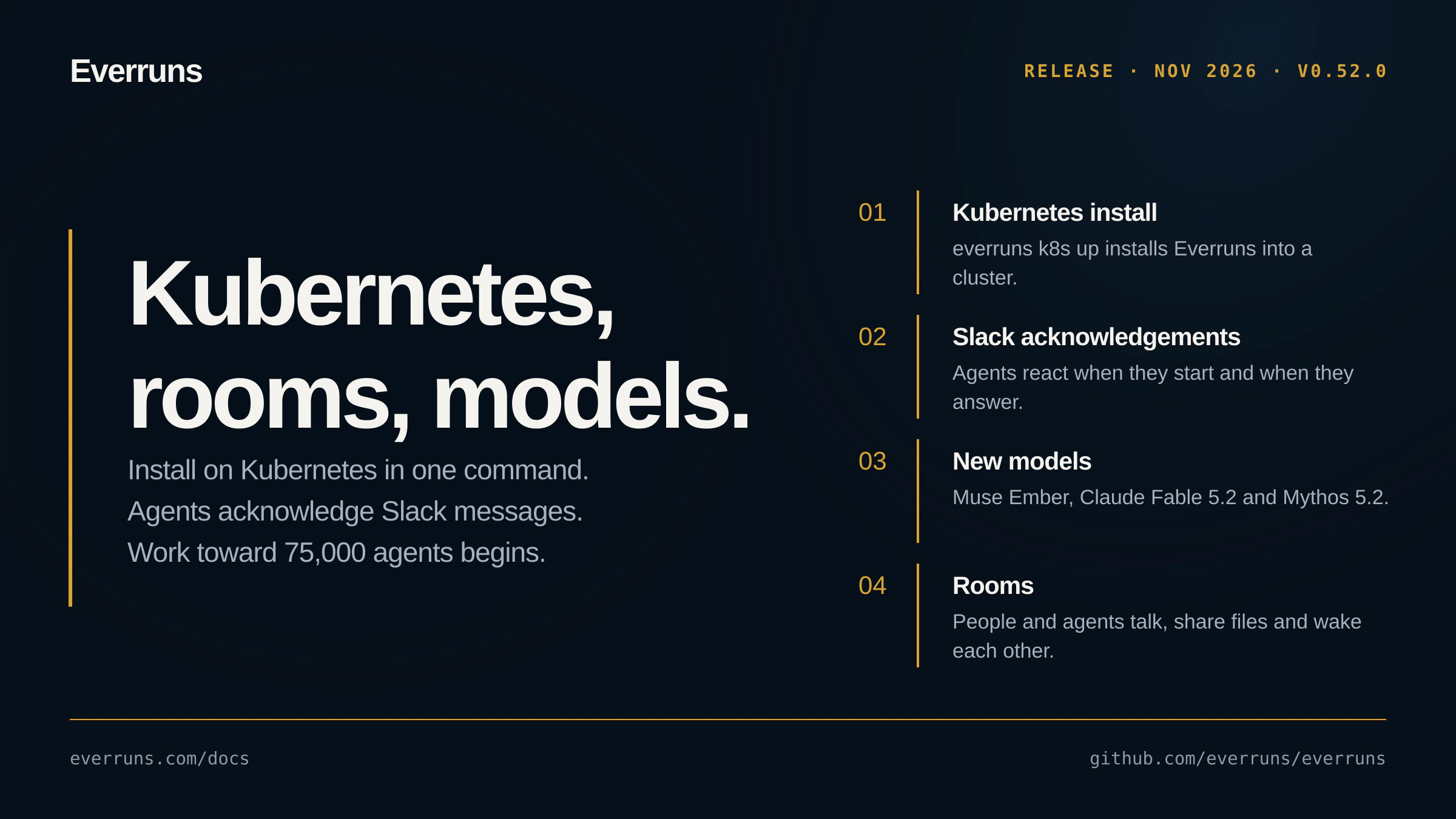
0.52.0: Kubernetes installs, Slack acknowledgements, new models, rooms
Install on Kubernetes in one command, agents acknowledge Slack messages, Muse Ember and Fable 5.2 arrive, rooms open, and work toward 75,000 agents begins.
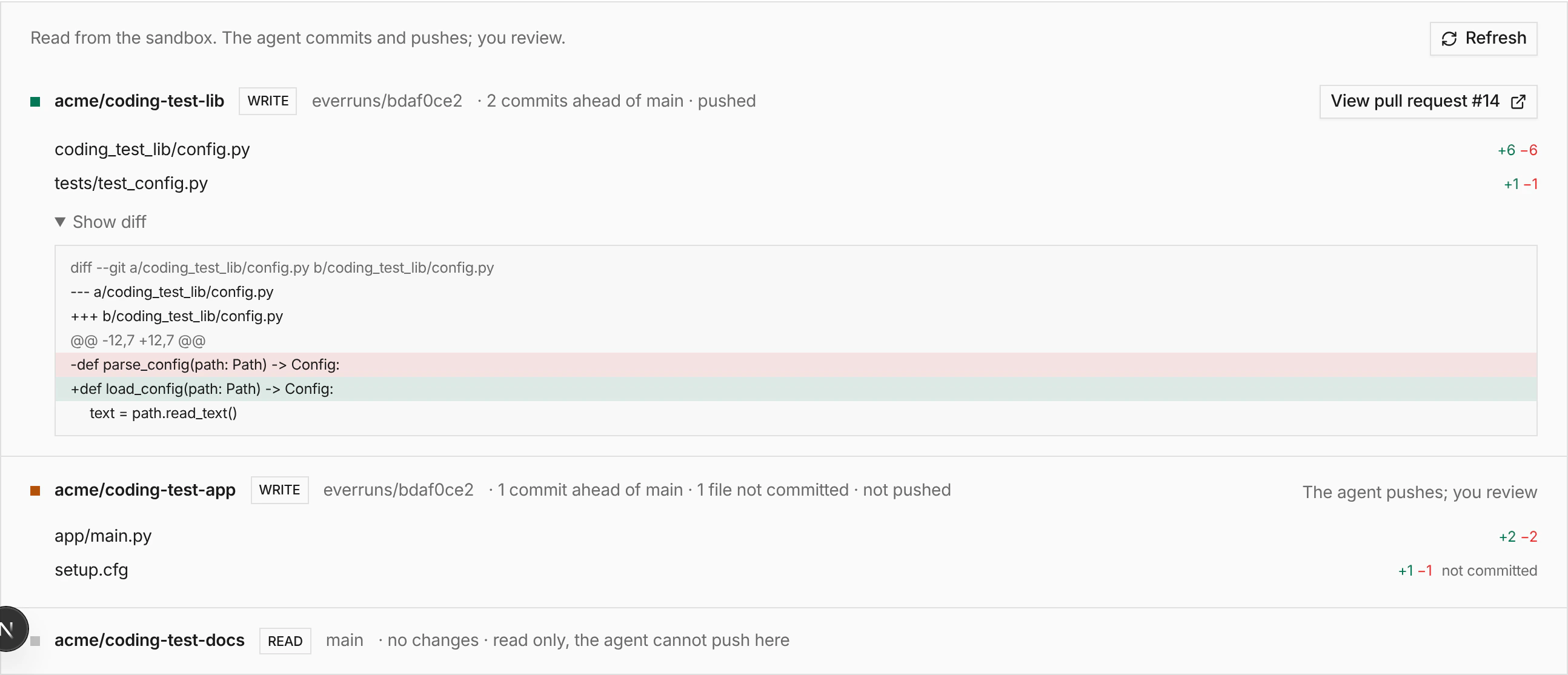
Coding agents that work across several GitHub repositories
Give an agent a set of repositories, some writable and some read-only. Each session gets one work branch, pushes it, and opens the pull requests.
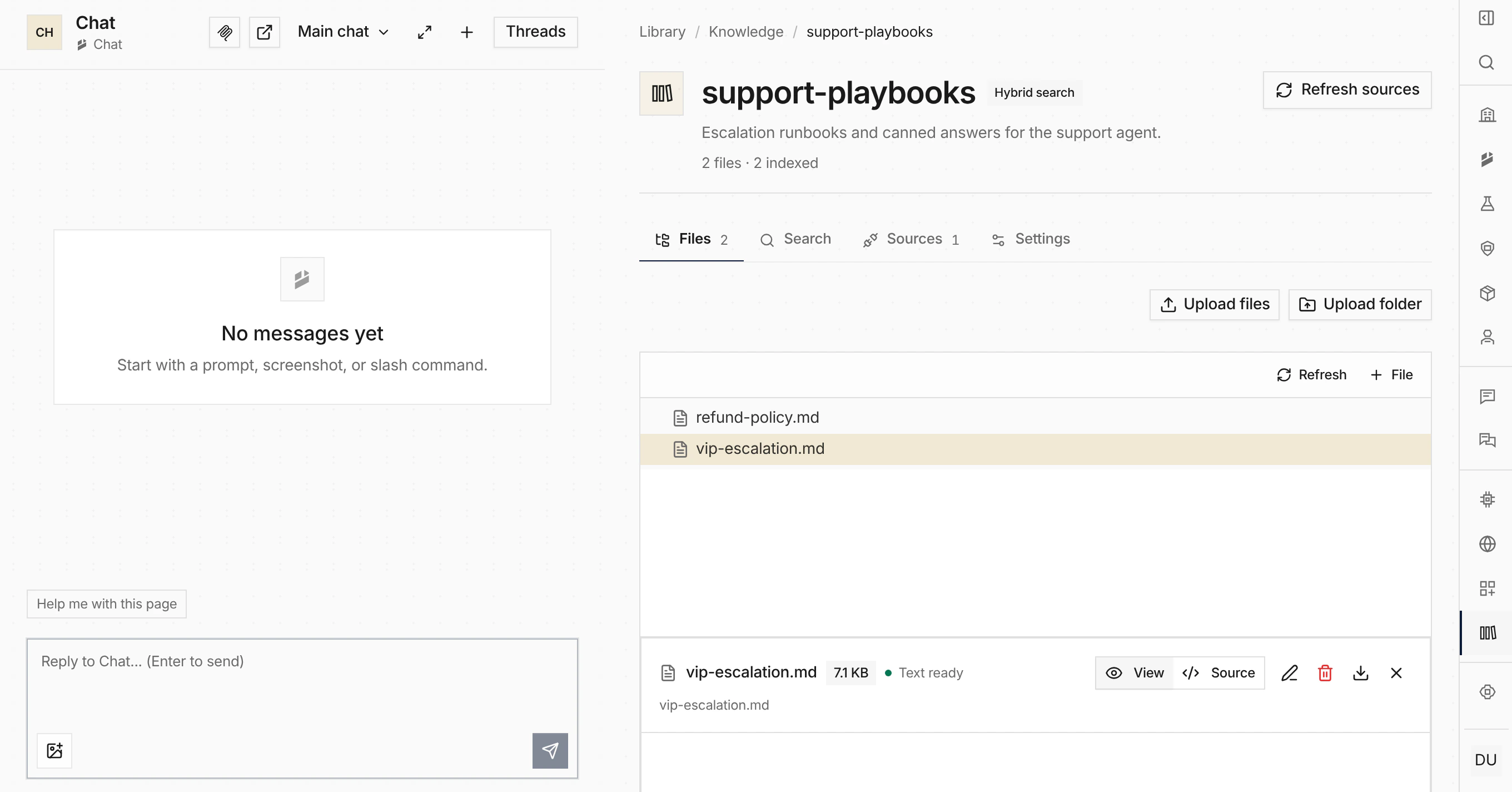
Chat first layout: Main chat beside every page, navigation at right
Pick Chat first under Layout to keep Main chat on the left of every page, with a draggable divider and a navigation rail on the right.
Local sessions use separate SQLite databases
Yolop and the Rust Framework isolate each local session, including children, so unrelated sessions do not contend on one SQLite writer.
Watch agents work together in a room, from the console
Rooms gets its own page next to Sessions, every room has a recording of who woke and why, and the Playground can put several agents and test users in one room.
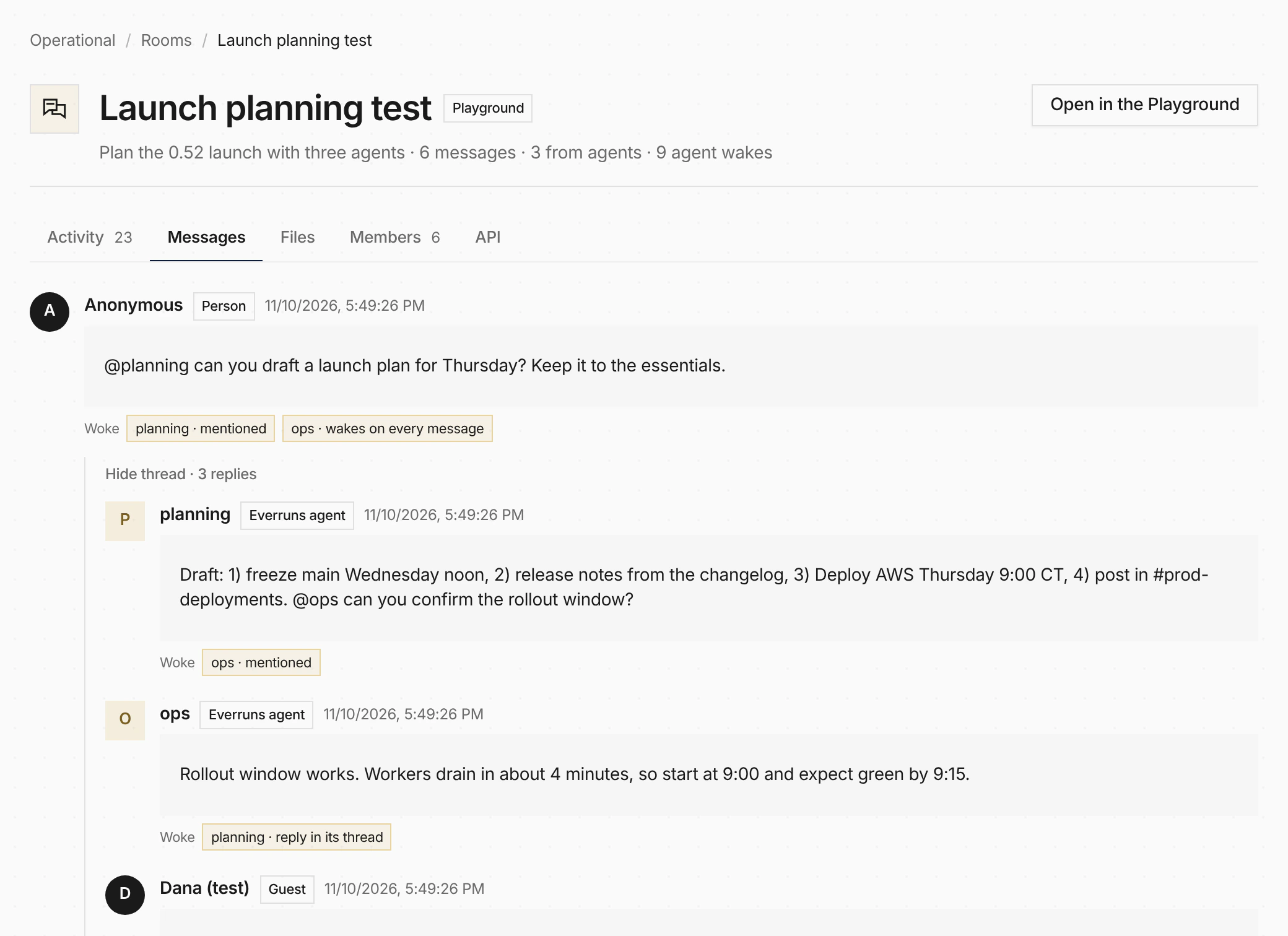
Rooms put people and agents in one conversation
Put people, agents and your own users in one room. An @mention wakes an agent in its own session, and loop limits stop agents talking forever.
Rooms keep shared files and join the Everruns MCP server
Every room gets a folder of notes and plans that agents edit in place, with every version kept, and MCP clients can catch up, post and edit files.
Room agents can step in when a message is for them
Set a room agent to wake on relevant messages and it listens to the whole room, answering only what falls within its purpose, with every check in the recording.
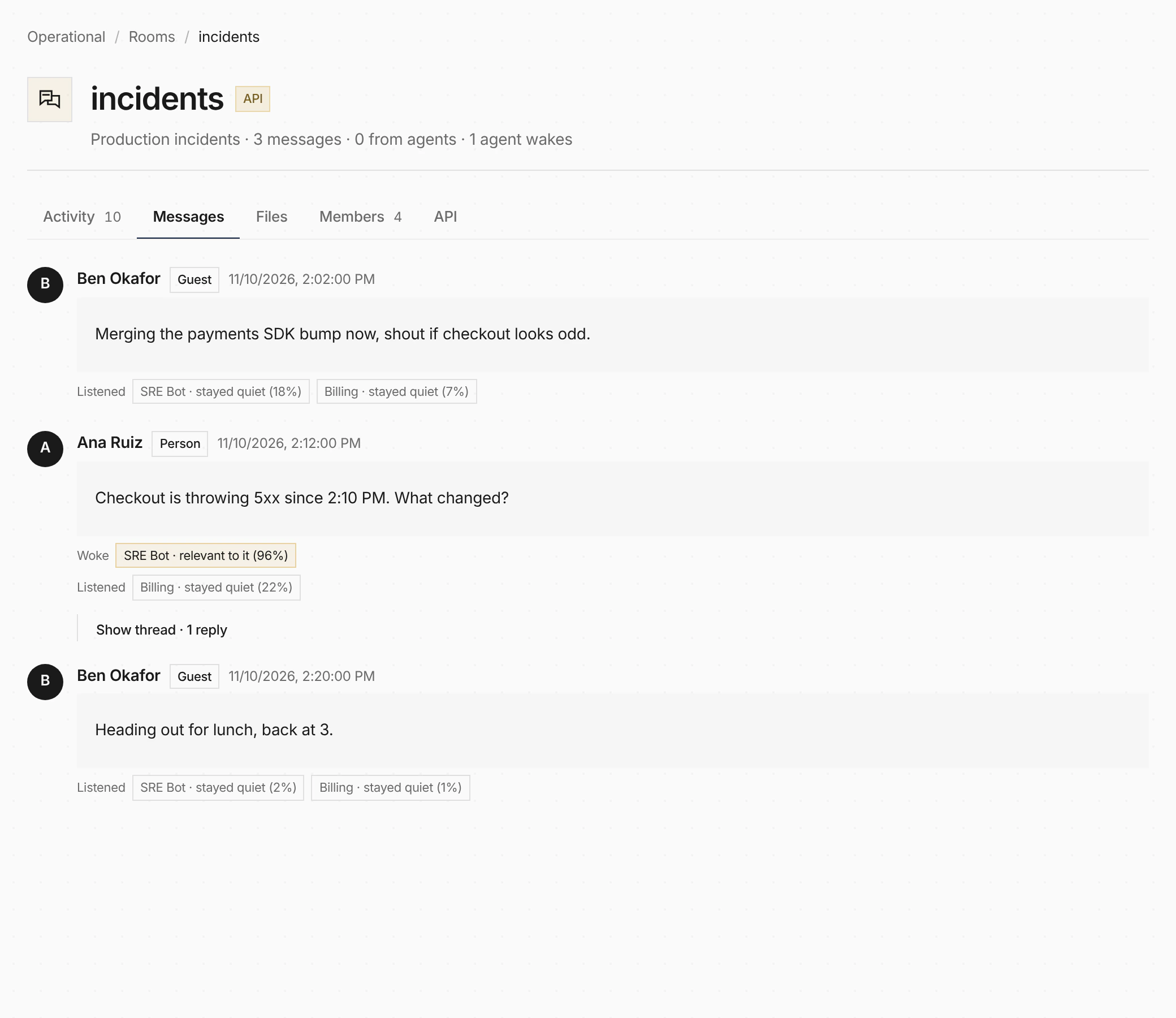
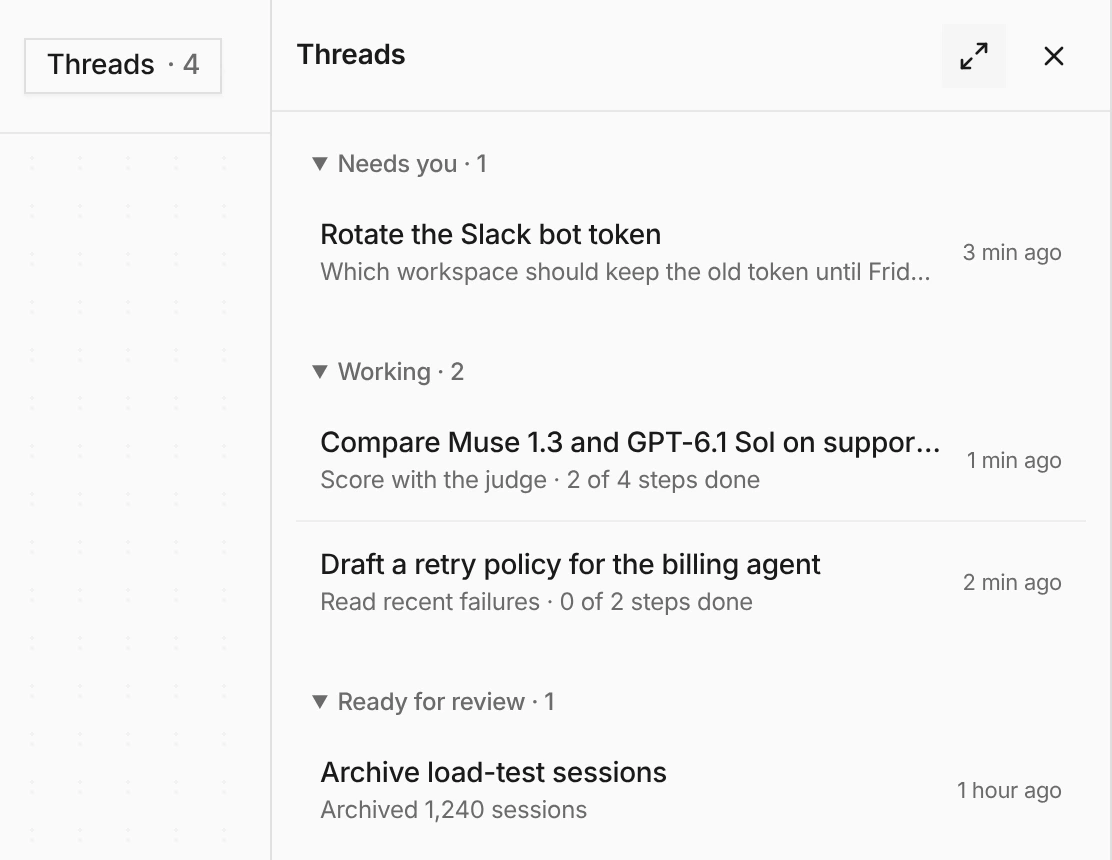
Main chat, side chats and threads, beside any page
Every chat now hands longer work to threads shown in a panel on its right, side chats replace subchats, and Chat opens beside the page you are on.
Framework agents finish the work they announce
Embedded agents can turn on the completion check for every session and set their own continuation limits; working tasks are no longer cut at ten minutes.
Browser sessions are bound to the device in Chrome
Sign-ins now support Device Bound Session Credentials, so a session cookie copied off a Chrome machine stops working within minutes.
Models only lists the providers you connected
A fresh install no longer adds every built-in provider, keyless models stay disabled, and the default chat model follows the provider you actually connected.
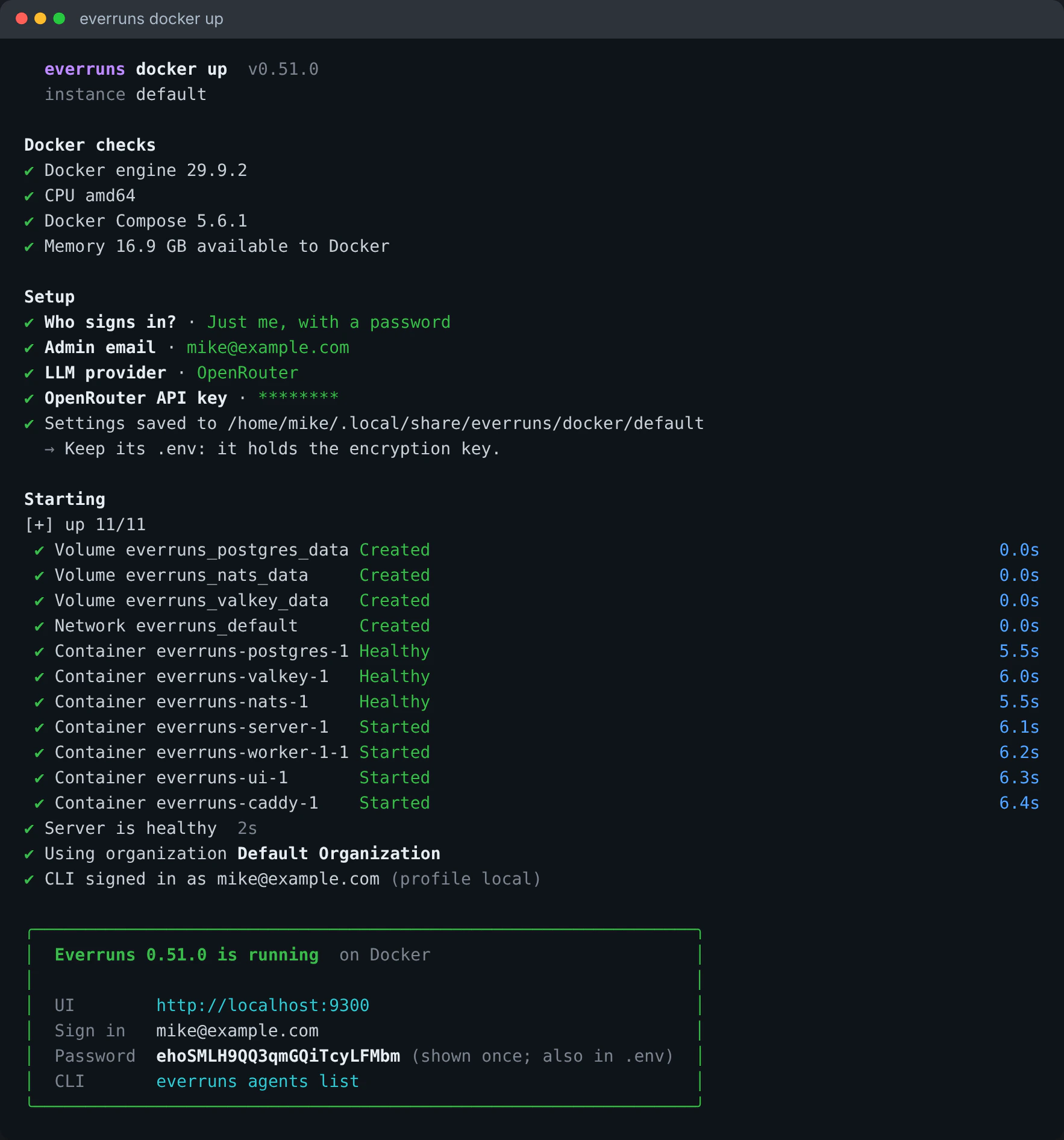
A CLI you can read at a glance
docker up and k8s up show checks, answers and live pod progress in color, then end with one box holding the URL, sign-in and next command.
Yolop stops cutting off long tasks at ten minutes
Yolop now restarts the continuation time window on every productive turn, so long tasks that keep working no longer stop at 600 seconds for approval.
Concurrent Yolop sessions share MCP OAuth refreshes safely
Cross-process coordination prevents competing token rotations and keeps logout from being undone by an in-flight refresh.
Point research agents at one organization research model
A Research model default picks Fable 5.2, else GPT-6 Astra, on its own, and agents can follow it, so moving them to a new flagship is one change.
Muse Ember, Meta's cheapest Muse model, is available in Everruns
Muse Ember runs sub-agents, tool calls and routing at $0.10/$0.50 per million tokens and becomes the Meta small model, alongside more Muse models.
Read MCP server readiness and reconnect from a Framework session
Framework hosts read per-server MCP status with failure reasons and probe times, reconnect a server on demand, and wait for readiness changes.
Invisible controls are visible in MCP descriptions
MCP descriptive metadata uses visible Unicode markers while tool names, canonical schemas and invocation values stay unchanged.
Narrate your own Framework tools
Framework tools and capability handlers can now set the human-readable line shown for each call, or keep the generic localized narration.
Session exports hide cookies in command text
Cookie headers and assignments inside command strings are now redacted in session exports and hook argument previews, without changing execution.
Claude Fable 5.2 and Mythos 5.2 models added for Anthropic providers
claude-fable-5-2 is seeded as a favorite and becomes the Anthropic research model at 20% below Fable 5.1; claude-mythos-5-2 works for verified orgs.
cancel_task returns the task after cancellation
The cancel_task tool now returns the task's state after the cancel request plus its recent messages, the same shape as get_task, with no follow-up read.
Attach a second terminal to a running Framework session
Framework hosts serve live sessions on a private local socket, so another process of the same user can list, watch, send to and cancel them.
Yolop names your Rex tabs from session titles
The main yolop in a Rex session renames its window to the session title, while secondary yolops in split panes label only their own block.
Slack agents on your own computer, no public address
A Slack channel can now use Socket Mode, where Everruns connects out to Slack, so a self-hosted agent works in Slack without a tunnel or public HTTPS.
Schedules fire in their own timezone
A schedule set to a timezone such as America/Chicago now runs at that local time, across daylight saving changes, instead of that time in UTC.
Upgrade a Kubernetes install without downtime
The Helm chart rolls several API servers one at a time, scales workers on chat load, and adds network policies, S3 storage, metrics and an egress proxy.
Install on Kubernetes with everruns k8s up
One CLI command checks the cluster, installs the Helm chart, waits for the pods and signs the CLI in; later runs repair it and upgrade backs up first.
Give a local Everruns a public address with one flag
everruns docker up --tunnel tailscale, cloudflare or ngrok runs a tunnel inside the stack and sets PUBLIC_APP_URL, so Slack and webhooks reach your laptop.
A2A callers sharing an endpoint now see only their own tasks
When an A2A endpoint verifies each caller with OIDC, OAuth2 introspection or mTLS, tasks belong to the caller who started them.
Yolop asks before running a repository's hooks
A workspace .agents/hooks.json no longer runs on its own. Yolop names the skipped file at startup and runs its hooks only after you trust it.
Organization members now join only by invitation
Org admins can no longer add an existing user by ID, and callers that name no organization now default to the one they joined first.
Start turns while slow MCP servers connect
Interactive hosts can limit waiting for cold MCP discovery, keep pending connections separate from failures, and use completed catalogs on later turns.
Yolop 0.23.3 restores Linux download compatibility
Yolop 0.23.3 restores Linux downloads for glibc 2.39 and newer, with an ABI check before publication and the MCP OAuth fixes from 0.23.2.
Workers run thousands of turns at once
Session turns no longer take worker task slots: a worker takes new turns while it has memory and its runtime keeps up. Long tool calls park after 5 minutes.
Slack agents set to Mentions only answer their @-mentions again
A Slack channel set to answer mentions only, or relevant messages, no longer drops an @-mention in a channel, and editing its settings keeps its workspace.
See human waiting time separately in traces
OpenTelemetry traces separate approval and question waits from agent work, preserving their timing and outcome when a worker restarts.
MCP OAuth keeps its audience when tokens refresh
MCP connections preserve the authorized resource through token refresh and restart, and older grants request a new login instead of guessing an audience.
Agents draw animated GIFs and SVGs with GPT Image 2.6
Image Generation now runs GPT Image 2.6 Flare by default, makes GIFs and SVGs, takes an organization default image model, and ships in Framework and serve.

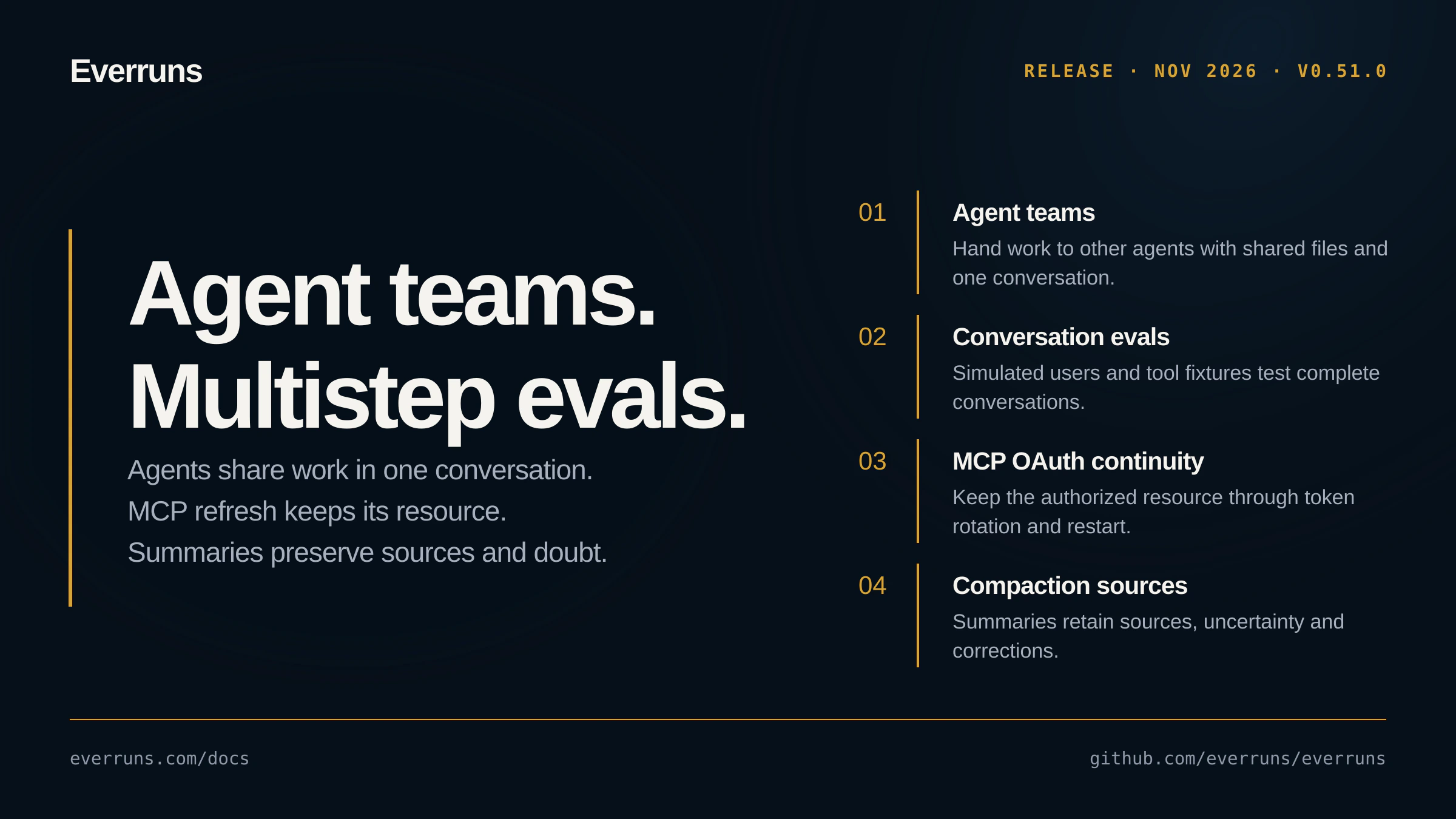
0.51.0: Agent teams, conversation evals and OAuth continuity
Agents work in teams, evals test whole conversations, MCP refresh preserves its resource, and local compaction keeps claim sources and uncertainty.
Compaction keeps claim sources and uncertainty
Local summaries preserve user intent, evidence, working assumptions and later corrections across repeated compaction, with Active Skills retained.
Request signing now verifies with Cloudflare Web Bot Auth
Agent web requests are signed in the format Cloudflare verifies, and the key directory is signed so a deployment can register as a verified bot.
Model refusals stay distinct from provider failures
Responses refusals keep the same classification in streaming, JSON, batches and session traces, without automatic retries.
See which MCP client created a session or message
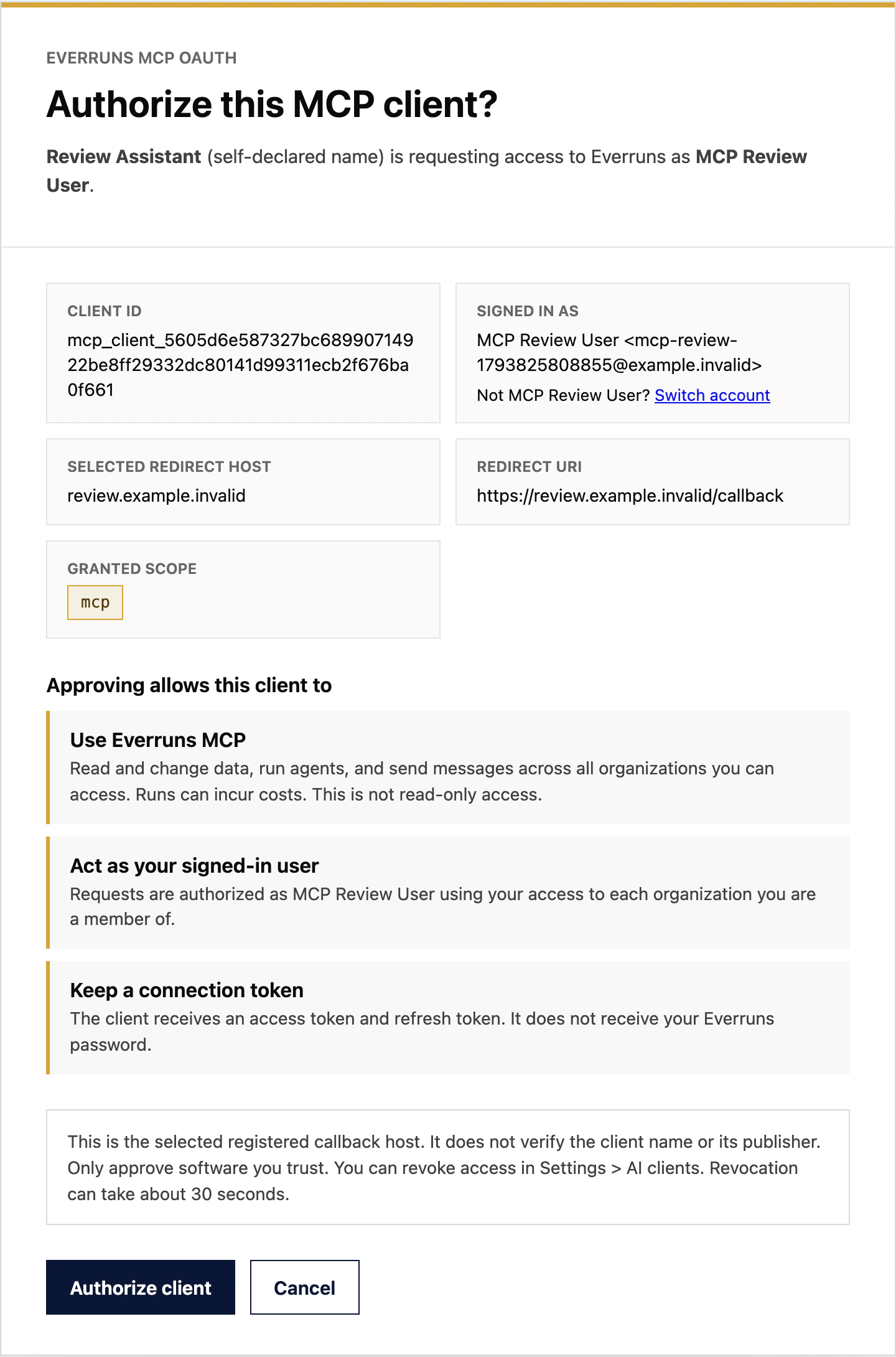
MCP consent explains callback trust and full access, while session details, messages, and change history identify the registered client behind each action.
Agent turns put less load on PostgreSQL
Servers share event commits across turns, keep a session on the worker that ran it, batch lease renewals and build reports outside the turn.
Health issues fix themselves in one click
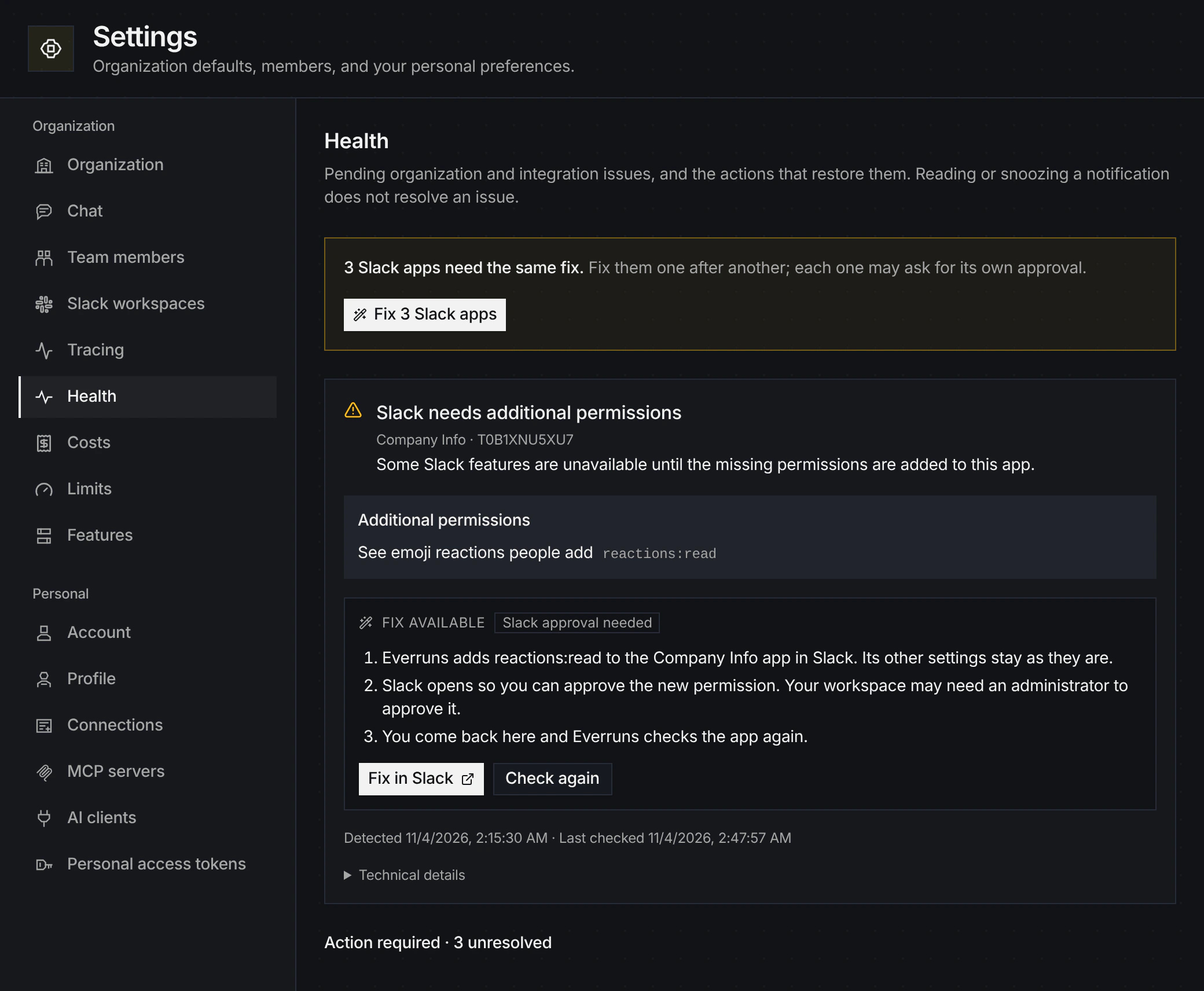
Fix in Slack adds missing bot permissions to an agent's Slack app, including apps set up by hand, and opens Slack to approve them.
Gemini usage includes hosted-tool prompt tokens
Gemini token usage now includes provider-reported tool-use prompts, preserving cache accounting across streaming, continuation, recovery and batch responses.
Run Sandboxes on boxd machines that keep working while idle
boxd is a Sandbox Template target and an agent capability, with region and size choices and hibernation that keeps running processes.
Health and Slack say when an agent's model is unavailable
An agent whose model is off, unlisted, not a chat model or on a disabled provider opens a health issue, and channels say the agent needs fixing.
Yolop restores saved sessions with late budget events
Yolop restores older conversations whose budget diagnostics arrived after a turn ended, preserving their history and rewind branches.
OpenAI Responses caching defaults to twelve hours
Keep reusable OpenAI Responses prefixes warm across longer pauses with a twelve-hour default lifetime and estimates that include the higher write rate.
Turns out of provider credits retry smaller or wait for credits
When the provider refuses a request for lack of credits, the turn retries with fewer output tokens, or checks every minute for an hour and continues.
MCP Apps open the real Everruns workspaces
Open Agent, Harness, Capability and Knowledge cards, plus the full Home and Session interfaces with Trace, through your existing MCP connection.
MCP session status keeps delivered replies visible
MCP status polling returns the latest delivered reply even after long tool runs, filtered event requests, or polling past the reply event.
Run a trigger on an event you choose
Fire any agent trigger with an event, or point a GitHub trigger at an open pull request, and it runs exactly as a real delivery would.
Channels and triggers tab, with Pause agent in the header
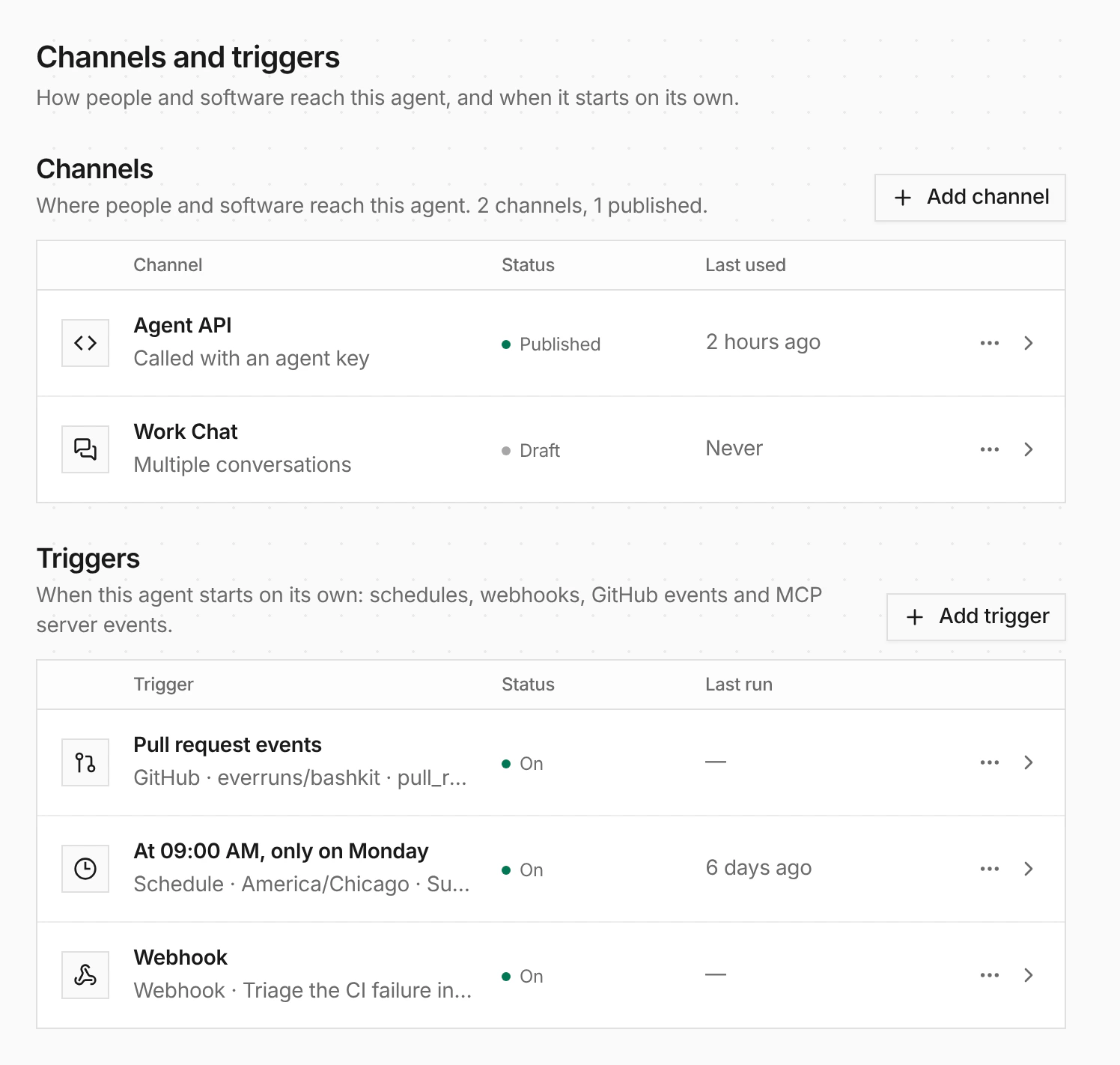
The agent's Integrations tab becomes Channels and triggers, each row opens its own page, GitHub gets its own page, and Pause agent stops schedules too.
Agents that hand work to other agents
Give an agent other agents to hand work to. They work as one run with a shared team folder and bring every question back to one conversation.
Suggested fixes for findings, checked by evals
The Inspector suggests an instruction change for a finding; check it against the agent's evals and approve it as a new agent revision.
Repeating schedules now pause themselves, with one-click resume
When a schedule keeps ending the same way, Everruns pauses it at 24 runs, records it on the finding, and lets you resume it from there.
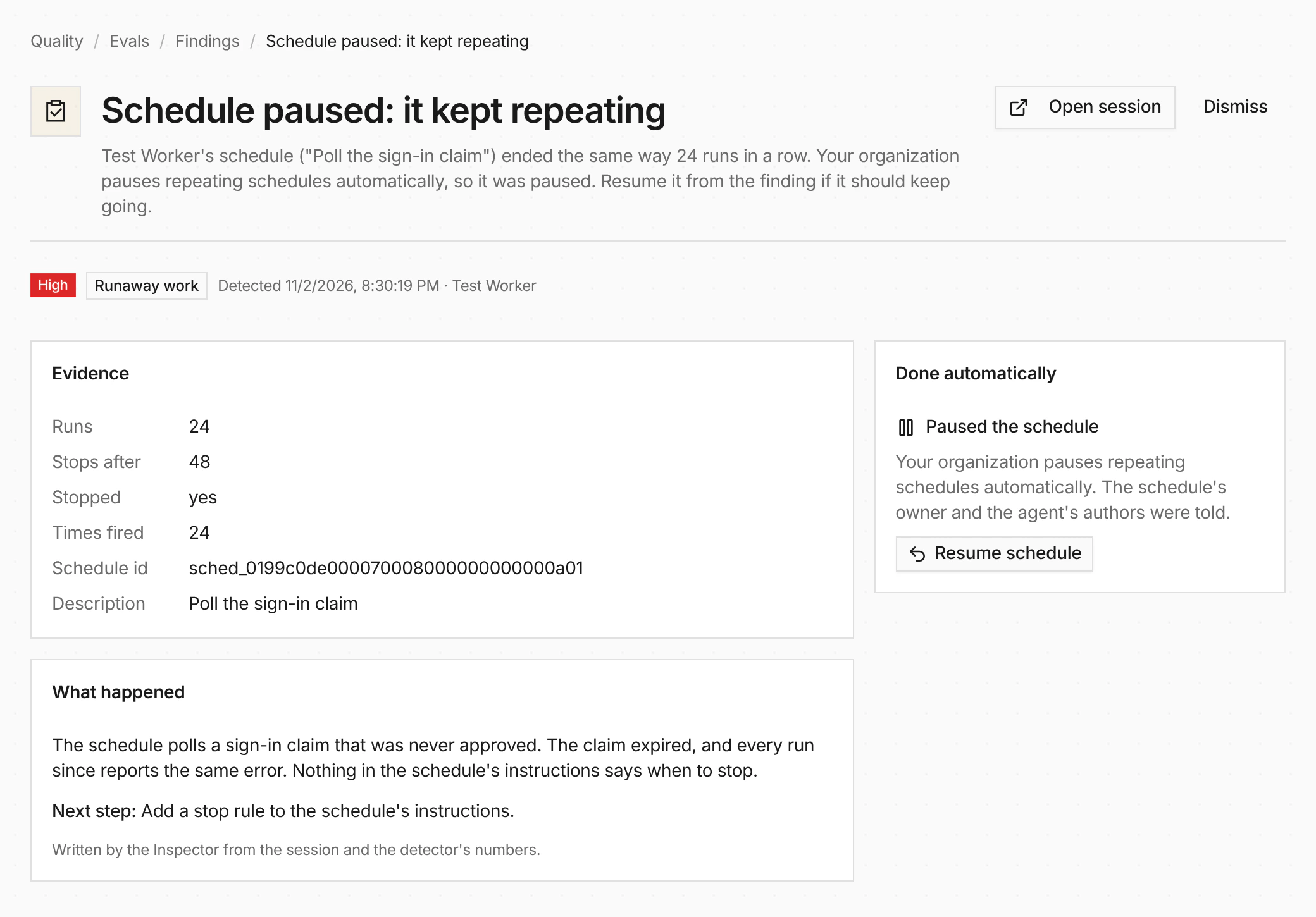
Scheduled jobs no longer stop when one schedule has no runner
A schedule nothing runs now holds one queued task instead of filling the queue, so Memory sync, sandbox template builds and cleanup jobs keep running.
Observers score conversations and tool calls, and alert on drops
Observers now grade whole conversations and single tool calls, open a health issue when the pass rate drops, and show live quality on Evals pages.
Run a Mira model matrix against your hosted Everruns agents
Mira now tests the agents you deployed on Everruns and publishes each run into an experiment, next to the versions Everruns ran itself.
The Inspector explains findings and groups similar ones
Serious findings now come with a plain account of what happened and a next step, similar findings show as one row, and findings can be dismissed with a reason.
The Eval Builder proposes cases for your agents
Ask for eval cases drawn from an agent's instructions and its real sessions, then add the ones you want to a dataset with one click.
Email updates use one newsletter and honor topic opt-outs
The hosted demo uses Everruns updates, and the Profile switch reflects both topic-specific and global unsubscribe choices.
Claude message threads send only new messages
Opt into short-lived Claude message threads to reduce repeated history uploads, with full local transcripts and automatic replay when state expires.
Review agents on Bashkit can read the code around a change
github_checkout_pull_request now works without a managed sandbox: on Bashkit it copies the pull request's files into the session files.
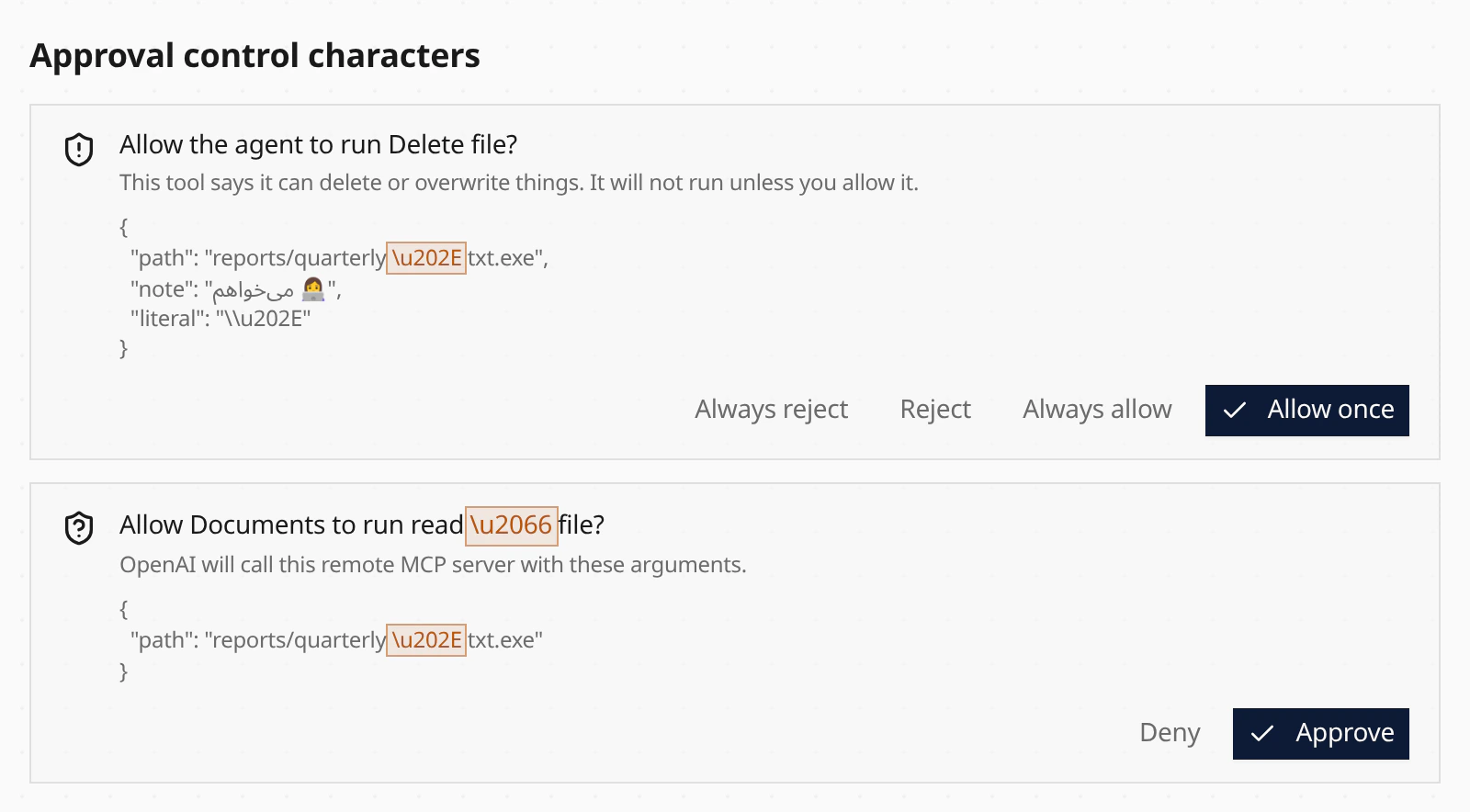
Tool approvals reveal hidden bidi controls
Approval cards show directional and control characters as visible Unicode escapes, helping you inspect tool names and arguments before consenting.
Trigger and schedule sessions finish work they announced
When an unattended turn ends on an announcement without doing the work, the agent's own model reviews it and the turn continues, within a budget.
Session trace explains failed turns and model calls
The session trace names why a turn failed, shows model call retries, and its inspector now shows a failed model call's full error with a link to the provider.
Scheduled runs no longer send the whole session to the model
A recurring schedule's run now sees its task, the latest summary and its own recent runs, so a schedule in a long session stays cheap on every fire.
Sessions go idle after their turn when workers restart
A session whose turn finished while rolling deploys restarted its workers no longer stays active, and sessions already stuck that way are resumed and idled.
Session Cost tab shows spend by category and over time
The session Cost tab splits spend into uncached prompt, cache reads, cache writes and output, and charts it per day or per turn.
Schedules advance during repeated daylight-saving hours
Recurring session schedules ignore past UTC candidates during repeated daylight-saving hours, preventing immediate repeated executions.
Agent schedules get an end, a budget, a daily cap and health alerts
Agent-created recurring schedules must say when they stop and carry a spend cap, unattended work has a daily limit, and repeating schedules are stopped.
Agents can poll a URL without spending model tokens
A scheduled web_fetch monitor with a wake condition fetches on every run without an agent turn, and wakes the agent once when the response changes.
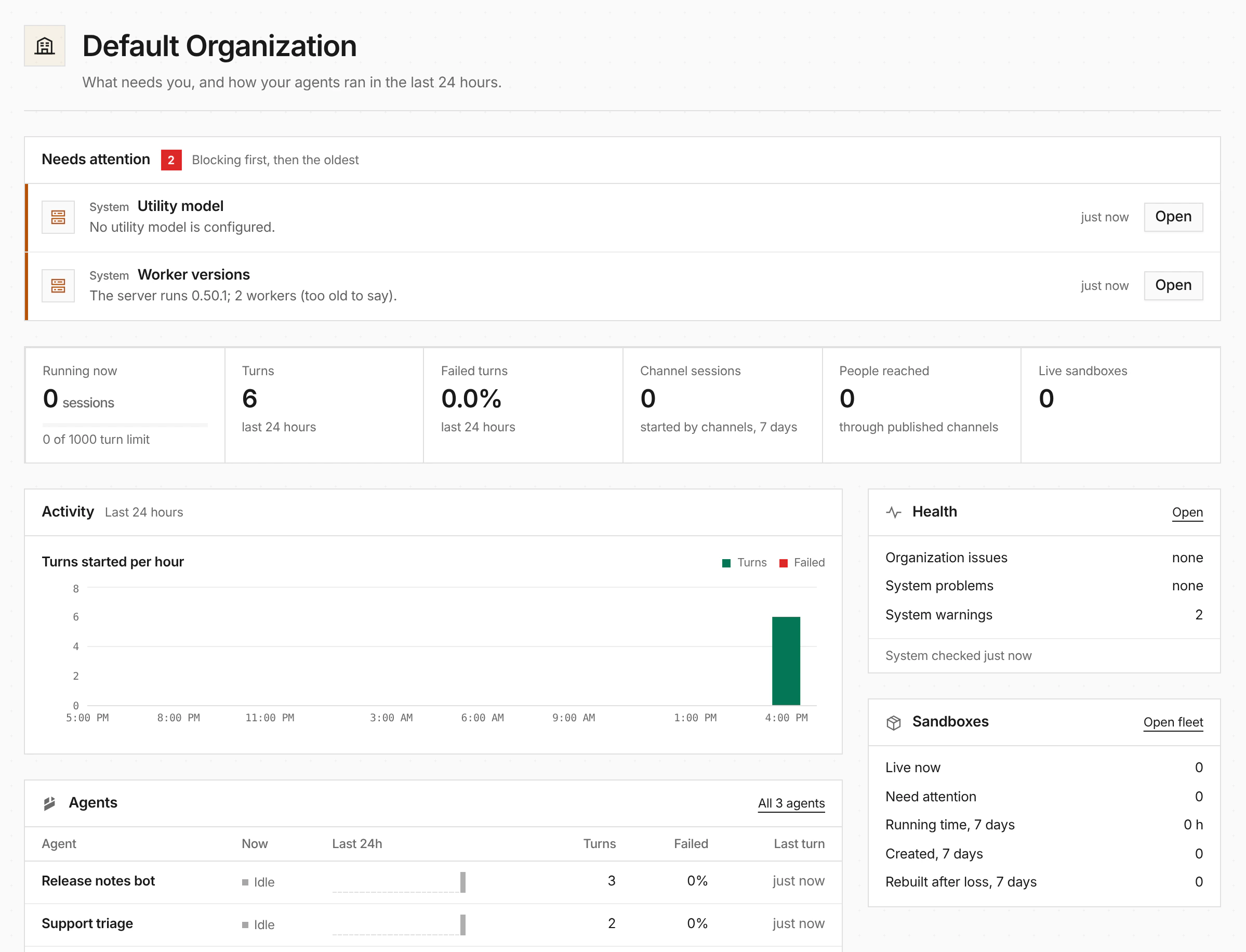
Home shows what needs attention across the organization
A new Home page ranks what needs a person, from failing agents to paused sessions and health issues, above the last 24 hours of activity.
Long Muse sessions read their history from the prompt cache
Responses requests now always carry a prompt cache key, so Muse Spark caches prompts above 100k tokens instead of re-reading every call at full price.
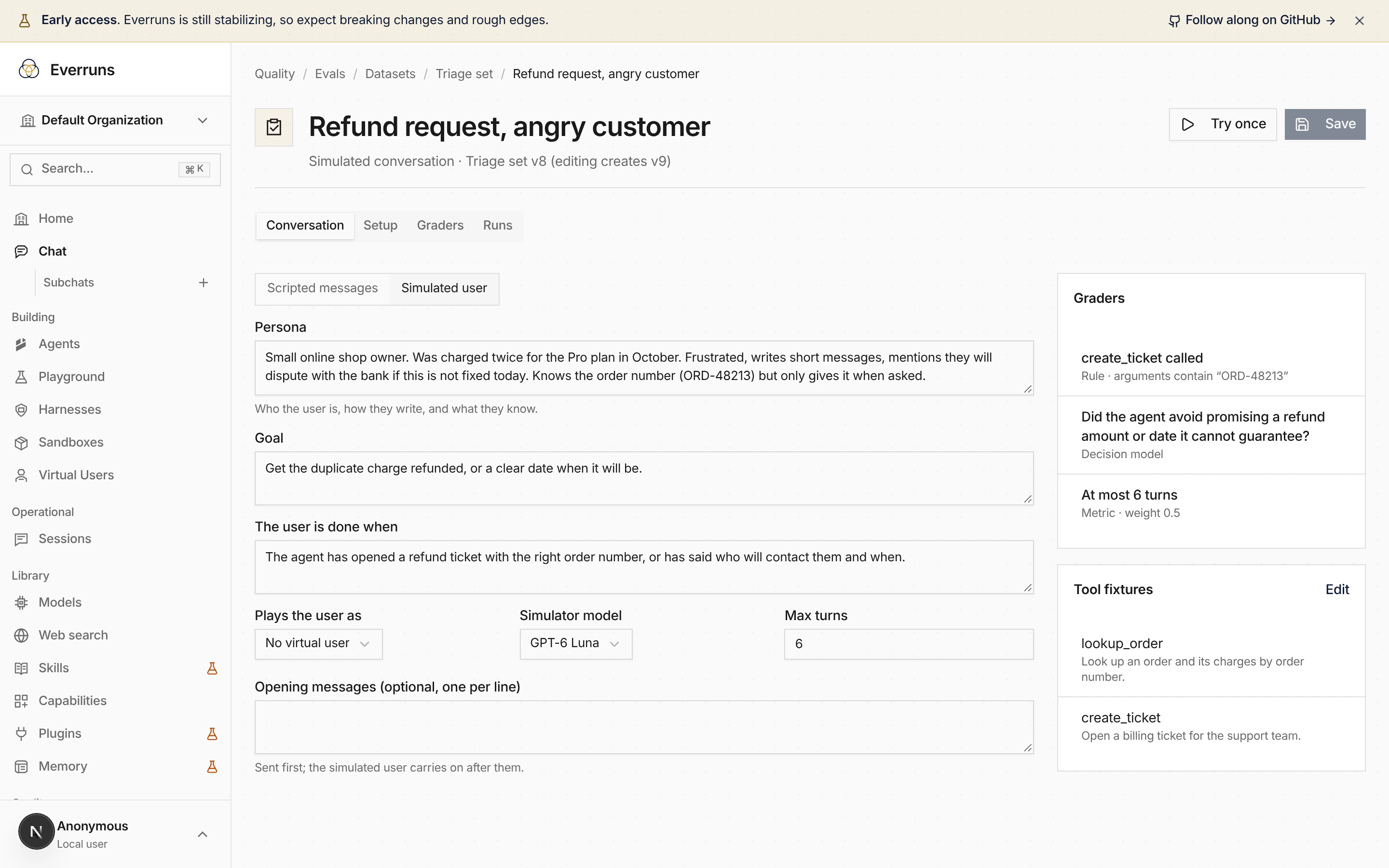
Test whole conversations with simulated users and tool fixtures
Eval cases can let a model play the user from a persona and goal, and give the agent tools with canned responses, testing a whole conversation.
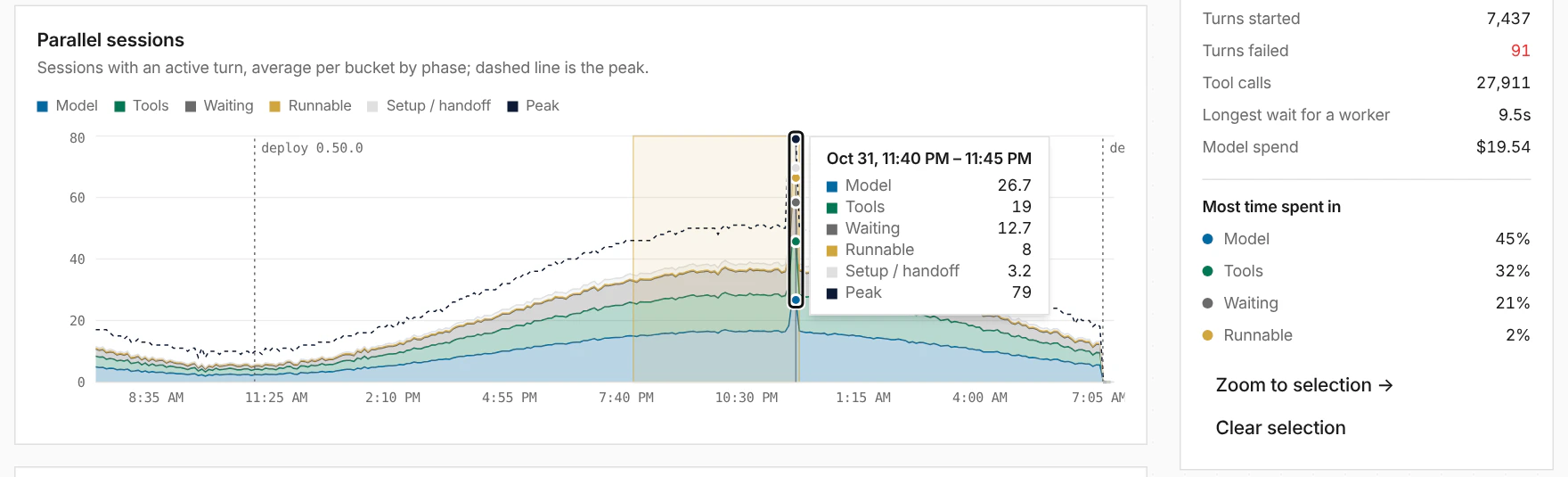
Monitoring shows parallel sessions and turns over time
A new Timeline tab in Monitoring charts parallel sessions by phase, turns by outcome, waits for a worker, spend and worker load over any range up to 30 days.
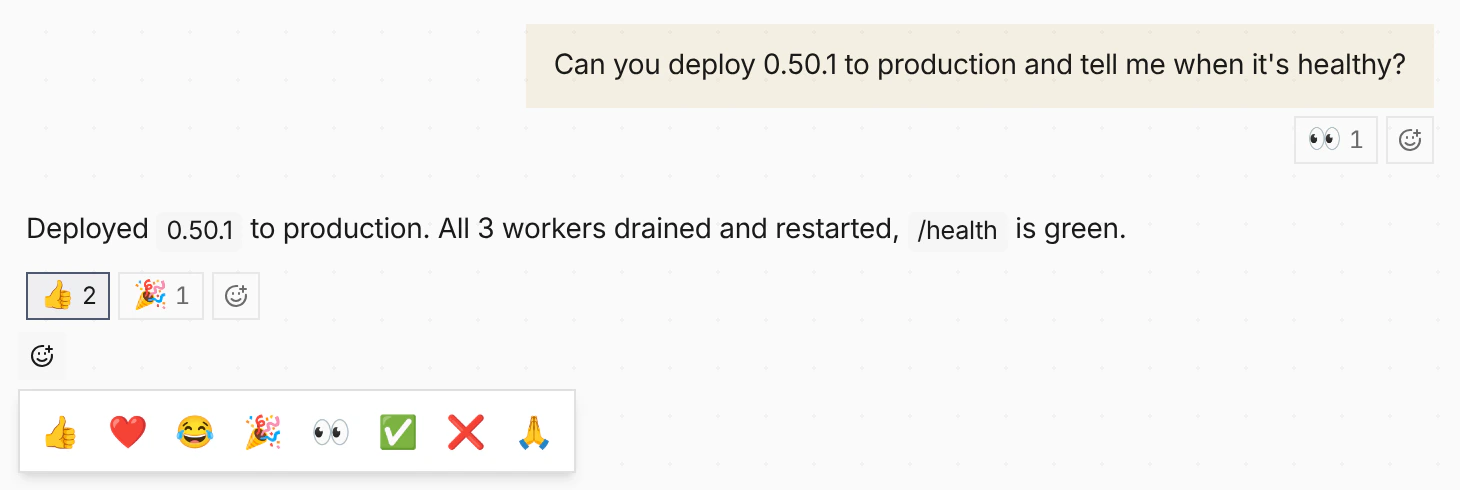
Emoji reactions on messages, for people and agents
React to any user or agent message in Chat, Work Chat and the API. The agent reads reactions as a short note and can react back with a tool.
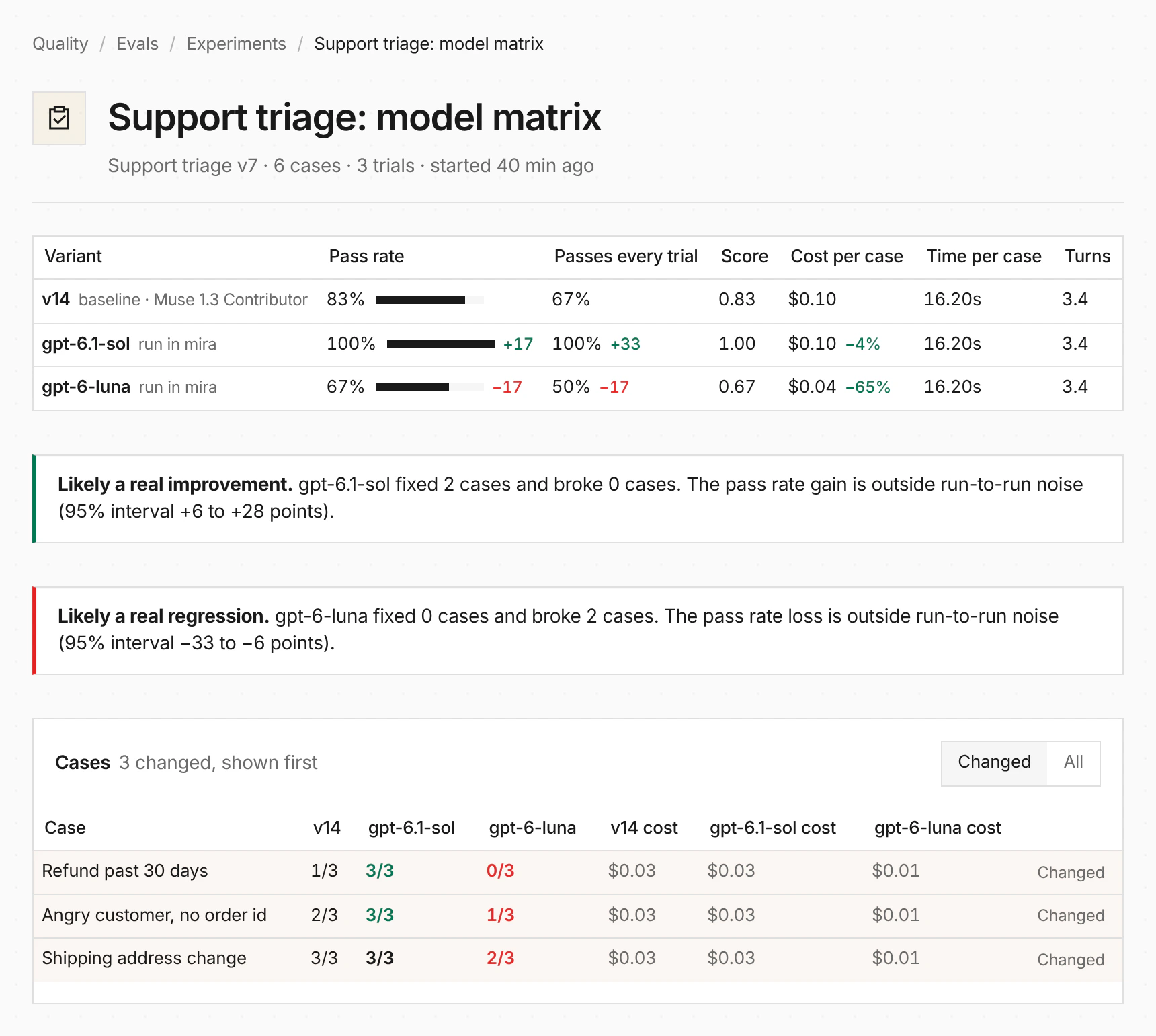
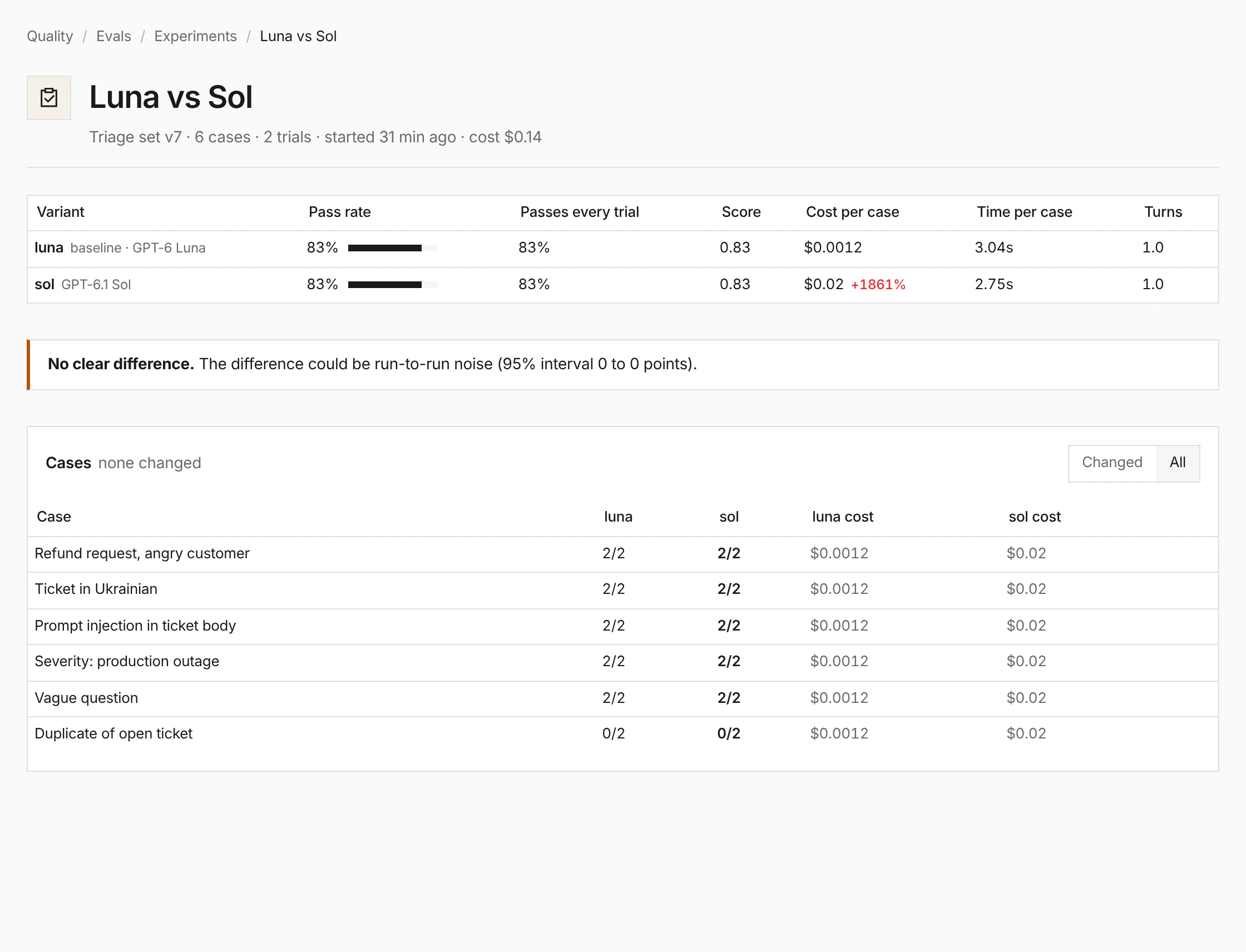
Compare agent variants with eval experiments
Run one eval dataset against several models side by side, see which cases each fixed or broke, and gate CI on a verdict that accounts for run-to-run noise.
See what agents cost and limit usage with usage policies
Settings → Costs shows each usage's cost and where it came from, keeps your own price list, and turns budgets into usage policies that notify, ask or stop.
Scheduled and triggered messages no longer look like yours
Messages written by schedules, triggers, thread updates and notices are marked with who wrote them in Chat, Work Chat, the session trace and the API.
October 2026
267 changes · 24 releasesYolop preserves shell and background failure evidence
Yolop stops on unhandled shell failures, keeps command diagnostics visible to the agent, and reports blocking background tasks when print-mode waiting expires.
Yolop preserves immediate ACP settings updates
Editors connected to Yolop receive model option updates when settings change immediately after opening or loading an ACP session, including later sessions.
Tool discovery recognizes multilingual words
Bounded tool discovery and tools search now match equivalent Unicode accents and words in Chinese, Japanese and Thai metadata within current access.
The person using an Agent approves its tools
Tool calls an Agent holds for approval are answered by the person using it, in Work Chat or through the Agent API. Channels no longer pick who approves.
Skill installation preserves cached prompt prefixes
Installing or editing skills appends a recorded inventory update instead of rewriting system instructions, preserving earlier prompt prefixes.
Jev 1.14 is available for typed decisions
Select Jev 1.14 through TypeSafe or OpenRouter for calibrated text decisions, with matching provider IDs and existing Jev 1.13 models preserved.
Exact file edit failures show recovery hints
Failed exact file edits now show bounded similar-line hints and cautious already-applied guidance, helping agents recover without changing files.
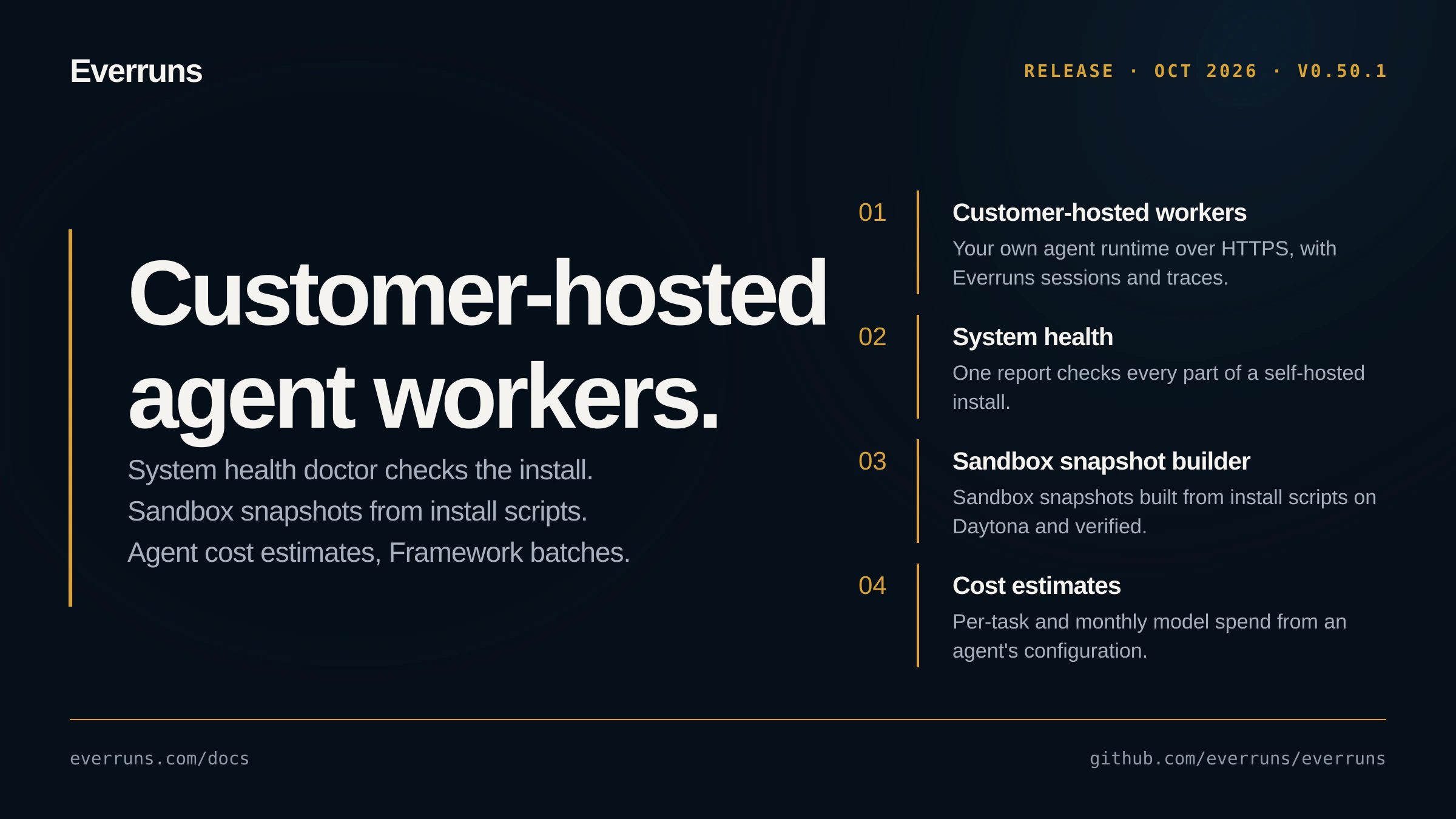
Everruns 0.50.1: Customer-hosted workers, health, sandbox snapshots
Customer-hosted agent workers, a system health doctor, a sandbox snapshot builder, agent cost estimates and Framework batch completions.
OpenRouter and TypeSafe decision models appear on the Models page
Model sync now lists every decision model OpenRouter and TypeSafe publish, and built-in decision models appear on the next Models page load.
Work Chat shows the signed-in person
The Work Chat sidebar shows the signed-in person's name, plus email and picture when the identity provider includes them.

Work Chat shows a sent message as the reply
A message the Agent sends is the reply, not a work-log preview. A step that only sends that message ends the turn instead of waiting on another model call.
Work Chat addresses are not the channel id
A published Work Chat link uses its own hostname. The address is assigned once, stays put when settings change, and no longer matches the channel id.
Work Chat chooses who may sign in
Work Chat membership is open access, one person plus invites, or organization users. Sign-in follows that choice instead of a personal access token switch.
Work Chat keeps the live conversation connected
The hosted chat no longer closes the live session stream after half a minute, which was showing up as a network error above the composer.
Work Chat uses the Agent's model
Work Chat no longer lists models people can pick. Messages use the model configured on the Agent, and a request that names another model is refused.
Work Chat shows the Agent's avatar
The Work Chat sidebar and an empty conversation show the Agent's avatar. An Agent without an avatar keeps the round mark.
Sessions with tool calls keep the prompt cache again
Workers gave each loaded tool result its load time, so every model call rewrote earlier time facts and lost the prompt cache after the first tool call.
Serve uses standard OpenAI endpoint settings
Configure Serve with OPENAI_BASE_URL and OPENAI_API_KEY; endpoint overrides apply to OpenAI models and receive IDs without the routing prefix.
Inspect skills and Yolop memory locally
Opt into heuristic skill and memory reports tied to content hashes and observed origin, without automatic blocking, removal or external scanning.
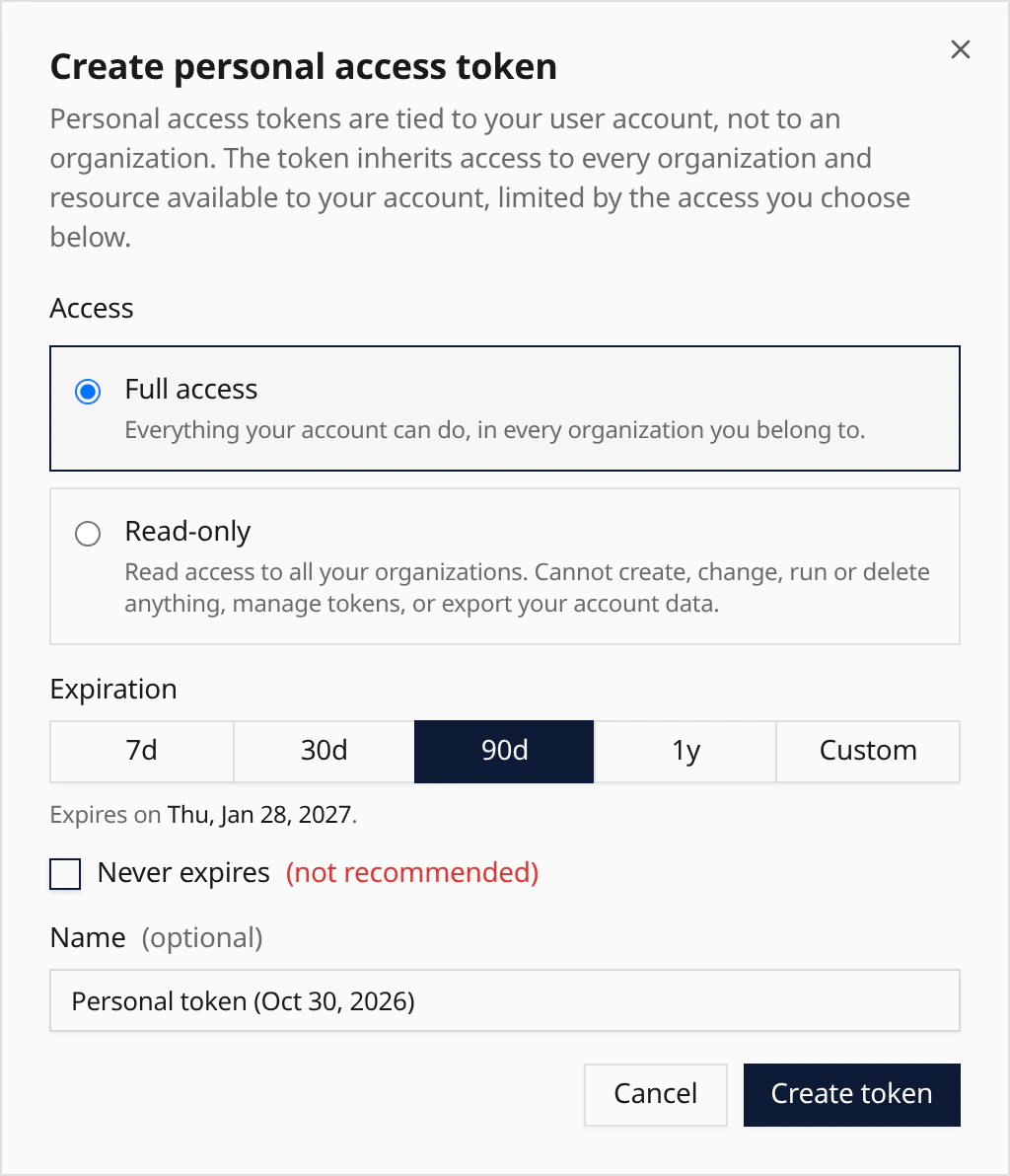
Personal access tokens suggest today's date
The create dialog lists the name last and marks it optional. It is filled in as Personal token plus today's date, and a blank name keeps that suggestion.
Page navigation keeps content visible while loading
Navigating between Everruns pages keeps the current content visible until the destination is ready, avoiding flashes of generic page placeholders.
Claude judges use model sampling defaults
Mira's Claude judges omit the temperature override so models that reject it can grade runs instead of returning HTTP 400 and an N/A score.
MCP resource reads support input continuations
The Framework HTTP MCP client resumes resource reads that request input, preserving consent, resource identity and one deadline across retries.
MCP OAuth clients can use hosted metadata documents
Outbound MCP OAuth clients can select a hosted client metadata document when supported, while preserving configured clients and dynamic registration fallback.
Sync Agents with GitHub through your account or your organization
Agent source sync now connects GitHub inline and reads through your own GitHub or the organization's, separate from the Agent's runtime GitHub identity.
Channel spending is one section
The shared channel budget and the per-person daily limit sit together under Spending on the channel page. Save the channel to keep the daily limit.
Shell commands can rename workspace directories
Shell mv and embedded Python os.rename now preserve nested files and empty directories when renaming workspace folders through remote workers.
Work Chat channel pages link to the chat
A published Work Chat channel page shows its address once, above the settings. The header opens the chat, and the address stays the same when settings change.

Chat surfaces share 69 interactive UI components
Console chat and Work Chat now render the same A2UI 1.0 catalog, with bound forms, charts, surface updates and existing message actions.
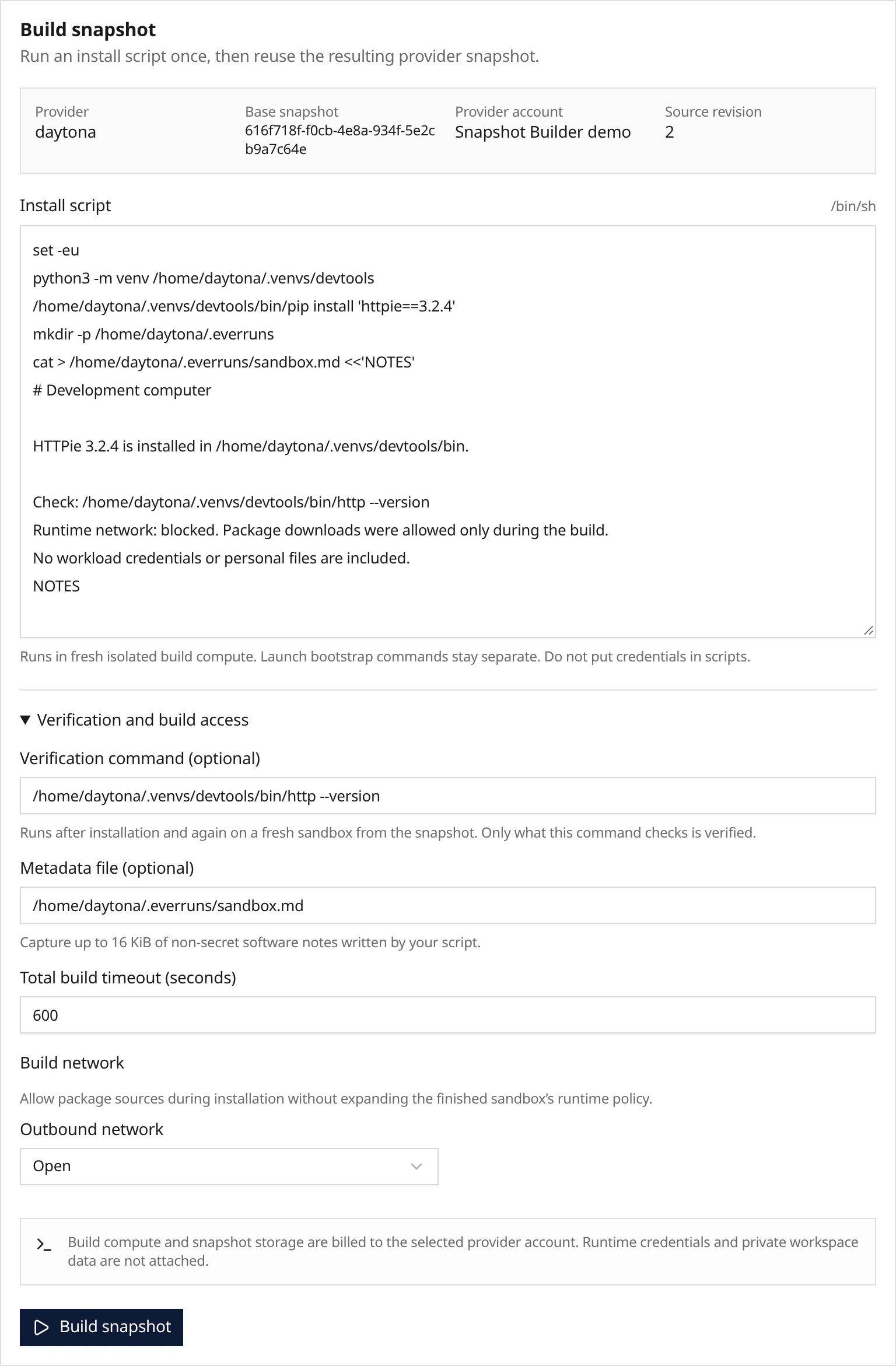
Build reusable sandboxes from install scripts
Build Daytona snapshots from install scripts, verify them in fresh compute, and save template revisions with readable software notes and separate build access.
Rolling deploys no longer interrupt running agents
Servers drain connections and workers hand running turns to another worker on shutdown, so a rolling restart no longer cuts streams or stalls turns.
Connect customer-hosted agents over HTTPS
Register your own agent runtime with an HTTPS endpoint and keep Everruns sessions, tool traces, conversation history and Slack Direct replies.
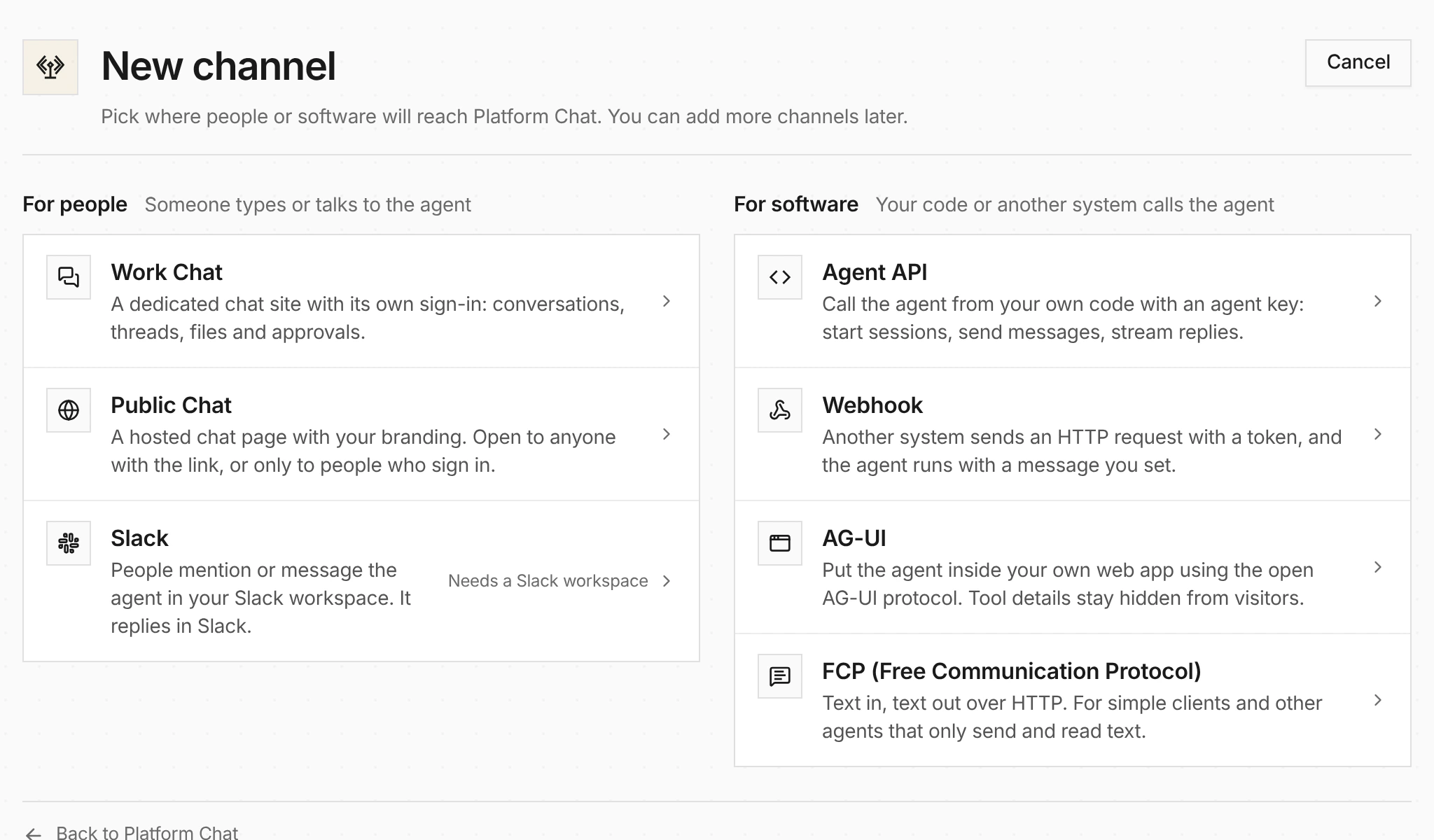
Clearer screens for adding and managing agent channels
New channel groups types by who uses them, the Integrations tab lists channels as rows, and each channel gets its own page to connect and change settings.
Bashkit copies directory contents without an extra wrapper
Recursive copies using source/. preserve nested companion files, hidden files and empty directories directly inside the destination.
Worker turn requests now honor the configured TLS settings
Worker turn RPCs and blob fetches now apply the same optional TLS and client certificate settings as task requests, with bounded handshake failures.
Work Chat renders interactive reports and artifacts
Work Chat adds inline widgets, artifact previews, conversation controls and revocable read-only links while keeping consumer execution permissions intact.
Unfinished native web searches show failed status
OpenAI Responses searches that stop before completion now show as failed, while partial answers, citations, and provider usage remain available.
Long sessions avoid repeated message-history reads
Individual message reads now use a session-scoped index, reducing turn startup work and keeping older inputs accessible beyond the history window.
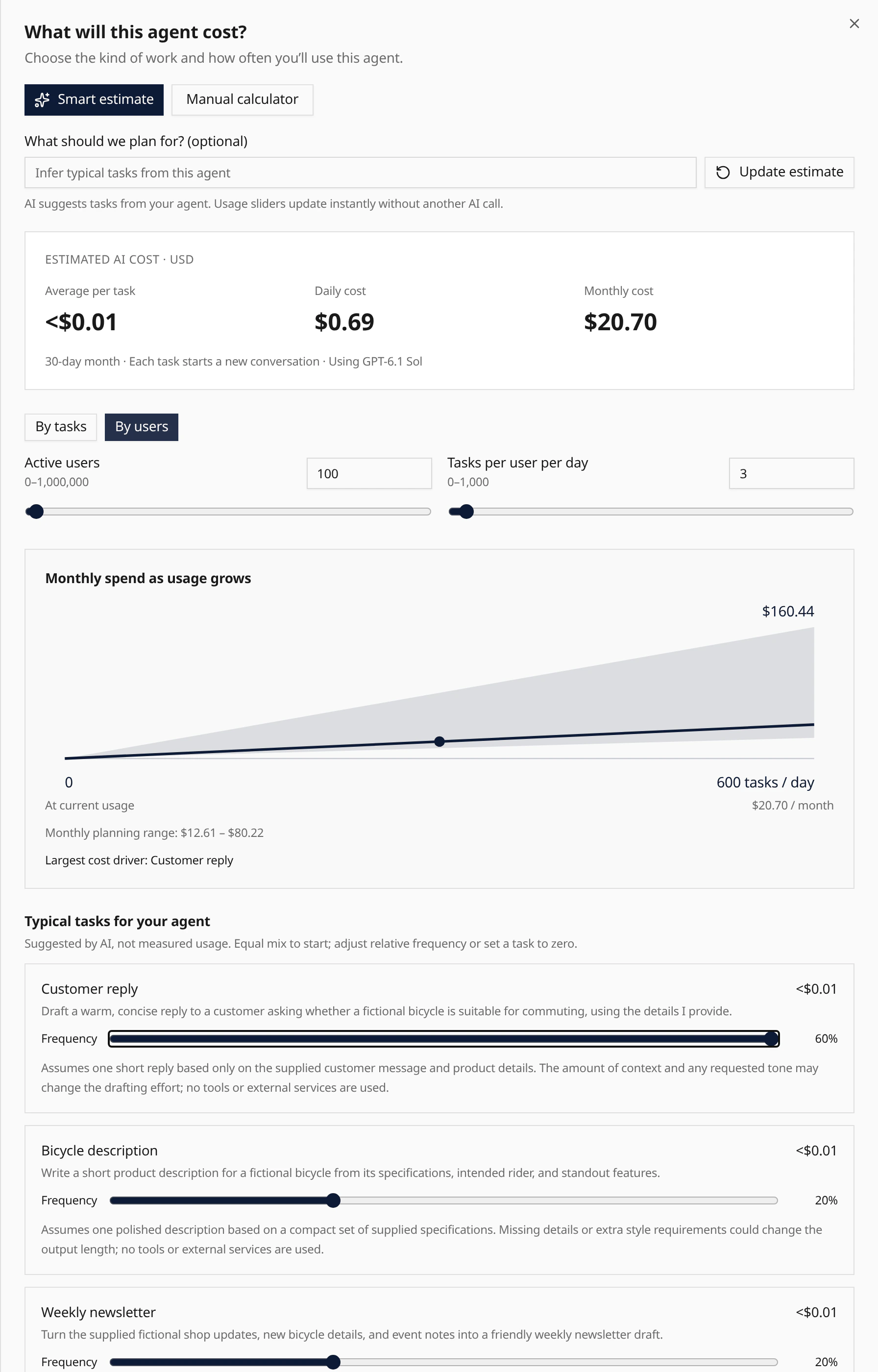
Plan agent costs with AI task suggestions and projections
Estimate typical tasks from your agent, adjust the task mix and expected users, and explore daily and monthly AI costs with live projections.
Conversation APIs return reviewed message metadata
Conversation APIs keep internal replay and execution metadata in storage while returning reviewed annotations and caller-owned custom metadata.
Passkeys and an account hub for Everruns Cloud
Add an optional passkey second factor and manage sign-in devices, personal MCP connections, and API tokens from your Everruns ID account.
Complex OpenAI tool schemas use non-strict mode
Tools with deeply nested objects or large property counts now use OpenAI's non-strict mode automatically, while execution still validates arguments.
Platform Chat uses native functions for platform operations
Platform Chat discovers typed platform operations on demand and uses its shell to aggregate results across many resources.
Several control-plane instances without NATS no longer split live chat
Instances that cannot share live events through NATS now poll PostgreSQL for them and report degraded health instead of silently missing events.
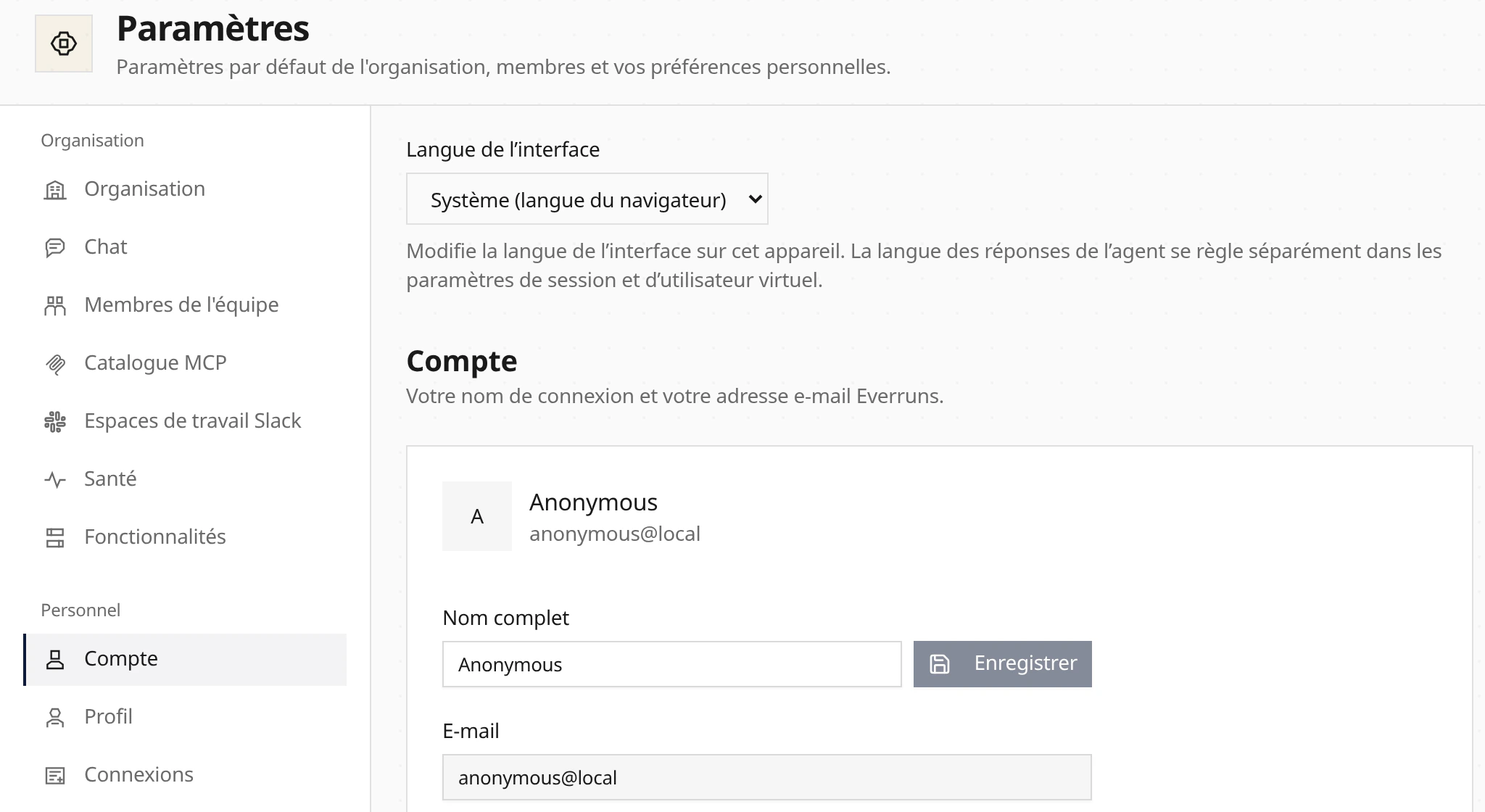
French, German, Spanish, Chinese and British English
Choose more interface languages, follow browser preferences and use regional formatting while keeping agent names portable across file formats.
Mistral Responses API support in Everruns
Framework callers can opt into Mistral's stateless Responses API with streaming, tools, reasoning replay, structured output, and image or file inputs.
Keep Knowledge embedding usage tied to its provider account
Knowledge indexing and query embeddings retain the serving provider account, keeping managed usage distinct from calls billed to your own keys.
Run Framework batches on OpenAI and Gemini
Use the same scoped batch API with OpenAI Responses, Chat Completions and Gemini inline jobs, including resumable tickets and explicit cancellation.
Framework batches add Mistral, Fireworks and Groq
Submit native Mistral, Fireworks and Groq batch jobs through the shared Framework API, with scoped tickets, typed request lists and runnable examples.
Submit Framework batches from message lists
Submit existing typed messages and request configuration as a batch, reuse the client for collection, and keep the completion builder available.
Agent background work sends fewer streaming updates
Explicit agents and subagents retain completed notes while avoiding unused streaming updates, with native provider completion where supported.
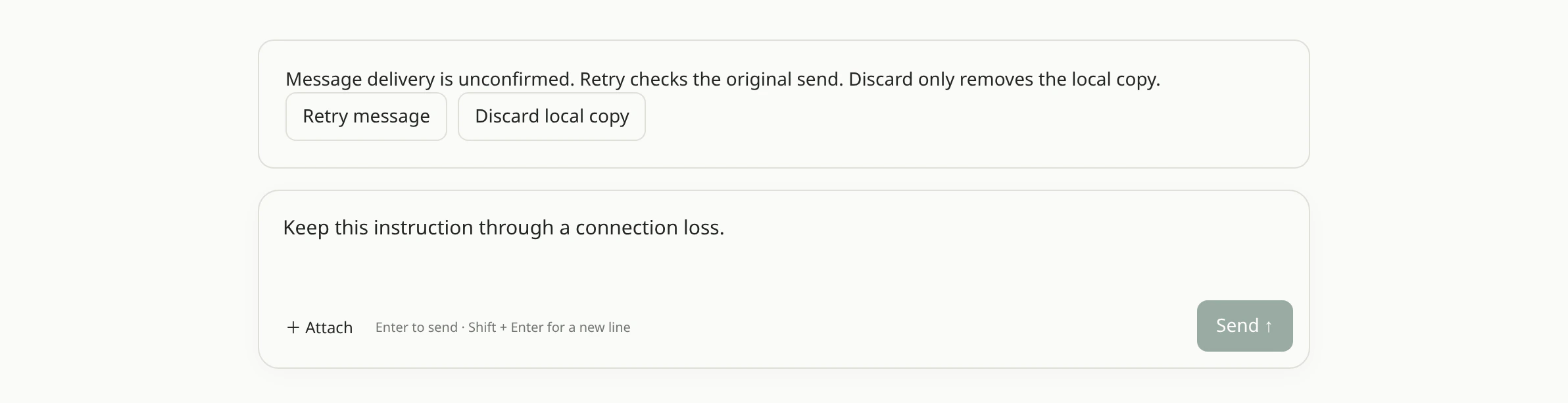
Chat restores drafts and uncertain message sends
Chat keeps unsent text and pending messages through a tab reload, preserves safe retry identities, and shares live conversation subscriptions.
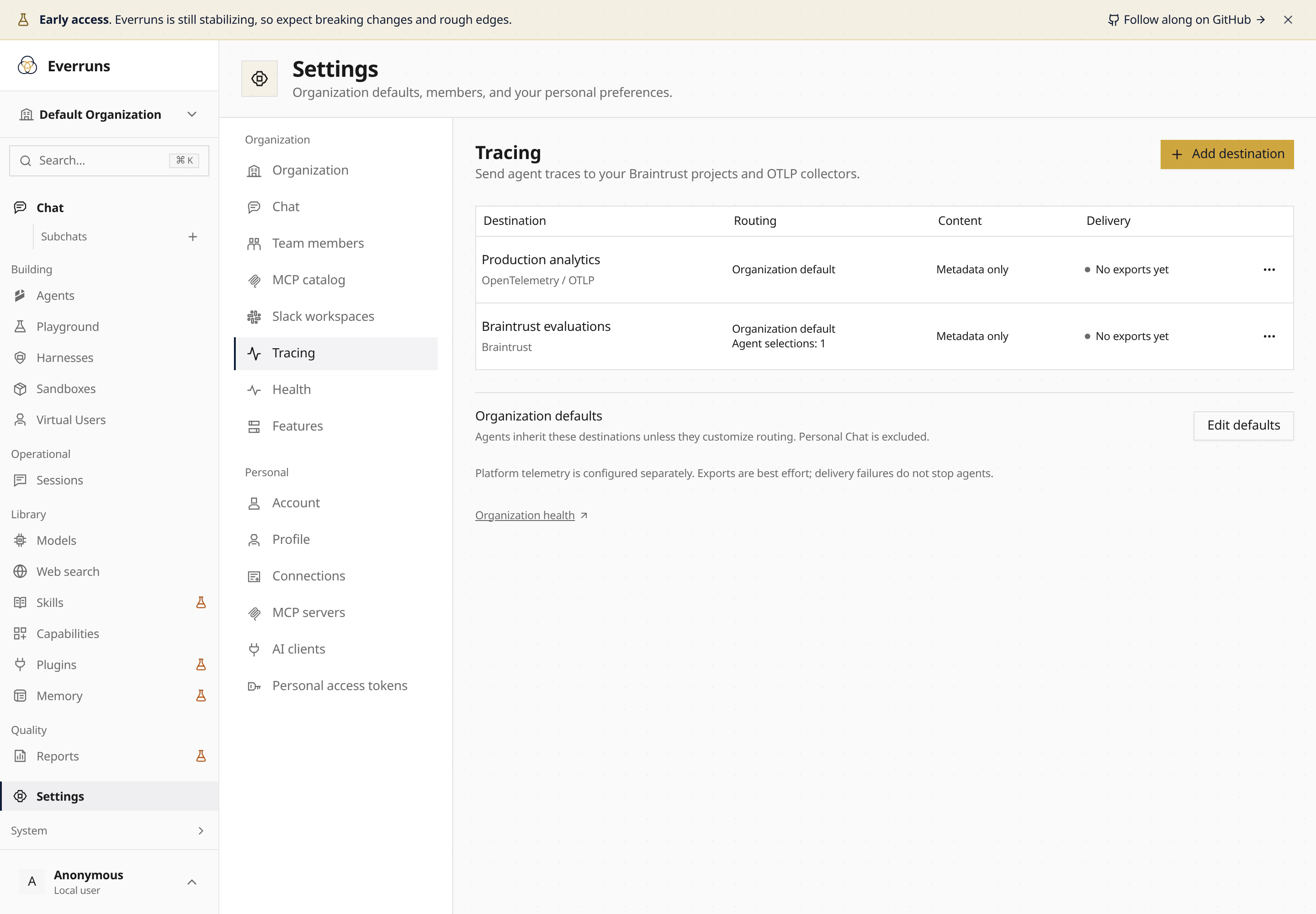
Route agent traces to your own destinations
Connect multiple Braintrust projects and OTLP collectors, share organization defaults, and override trace routing for individual agents.
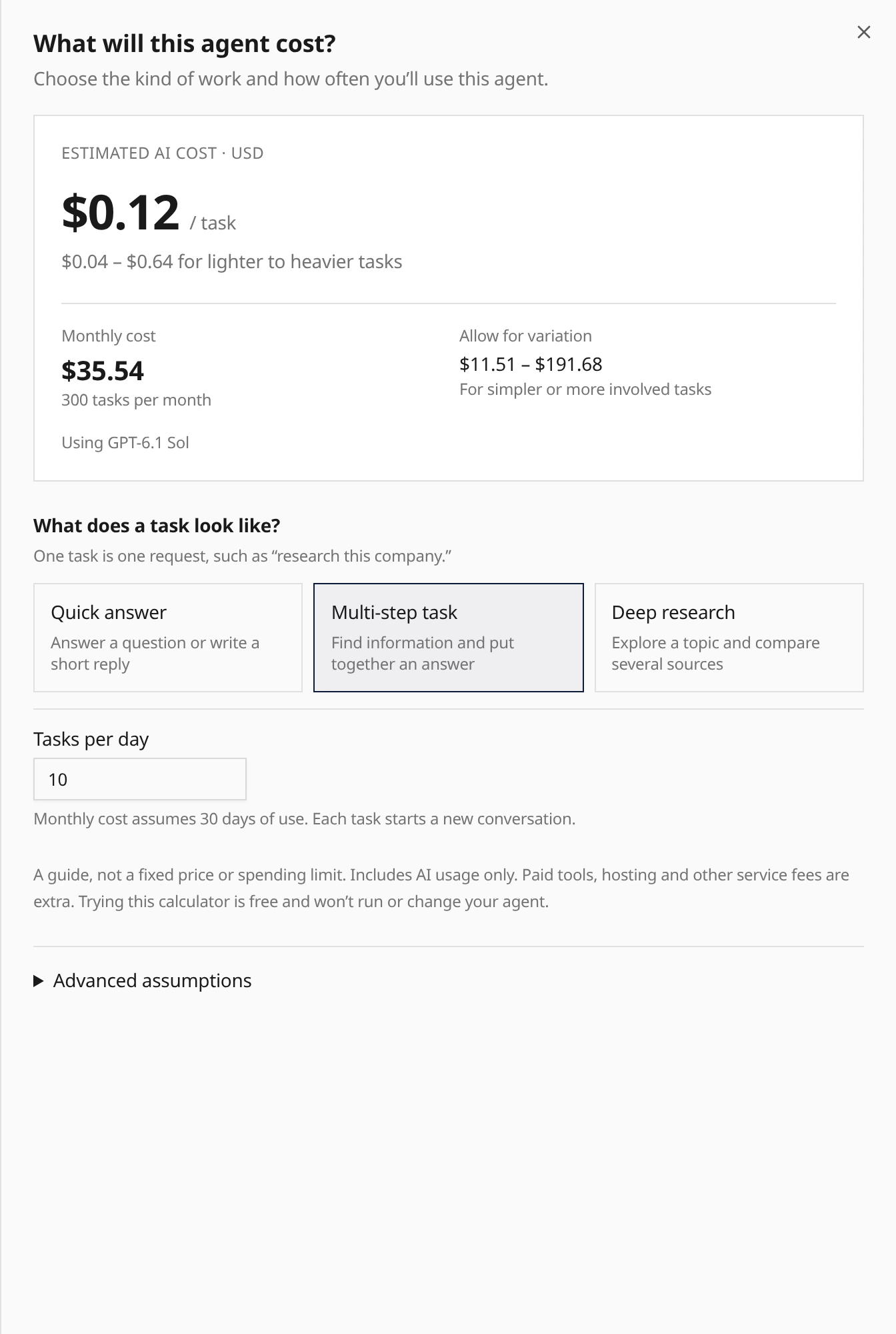
Estimate agent model costs before running tasks
Plan per-task and monthly model spend from an agent's configuration, with editable workload scenarios, context growth and transparent pricing assumptions.
System health doctor checks the whole install
One report on whether the database, workers, servers, keys, NATS, Valkey, S3 and monitoring are set up right, with what to fix when they are not.
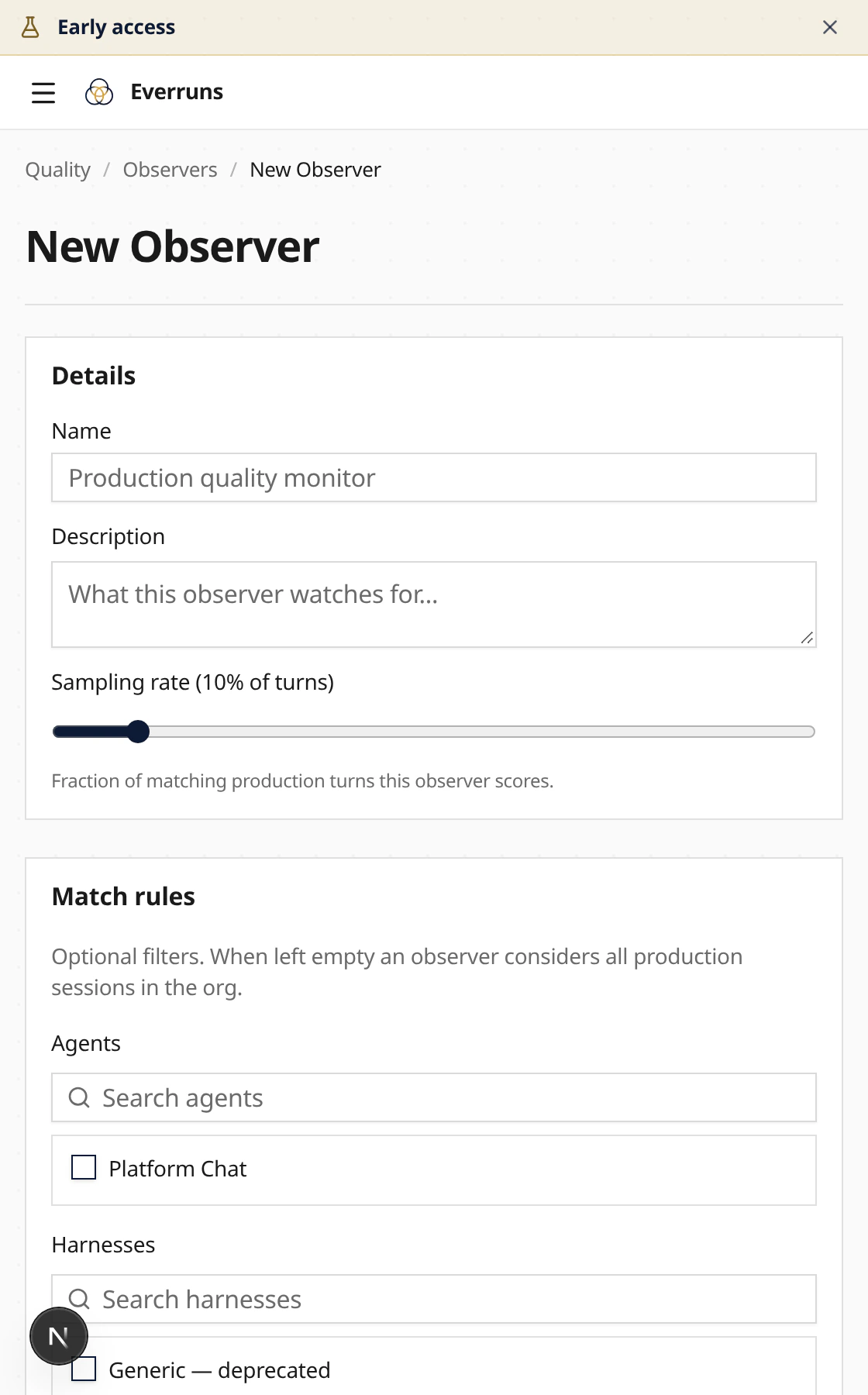
Shared controls across resource pickers and forms
Search models, agents and harnesses with the same picker, use shared form controls, and reach organization settings through compact mobile navigation.
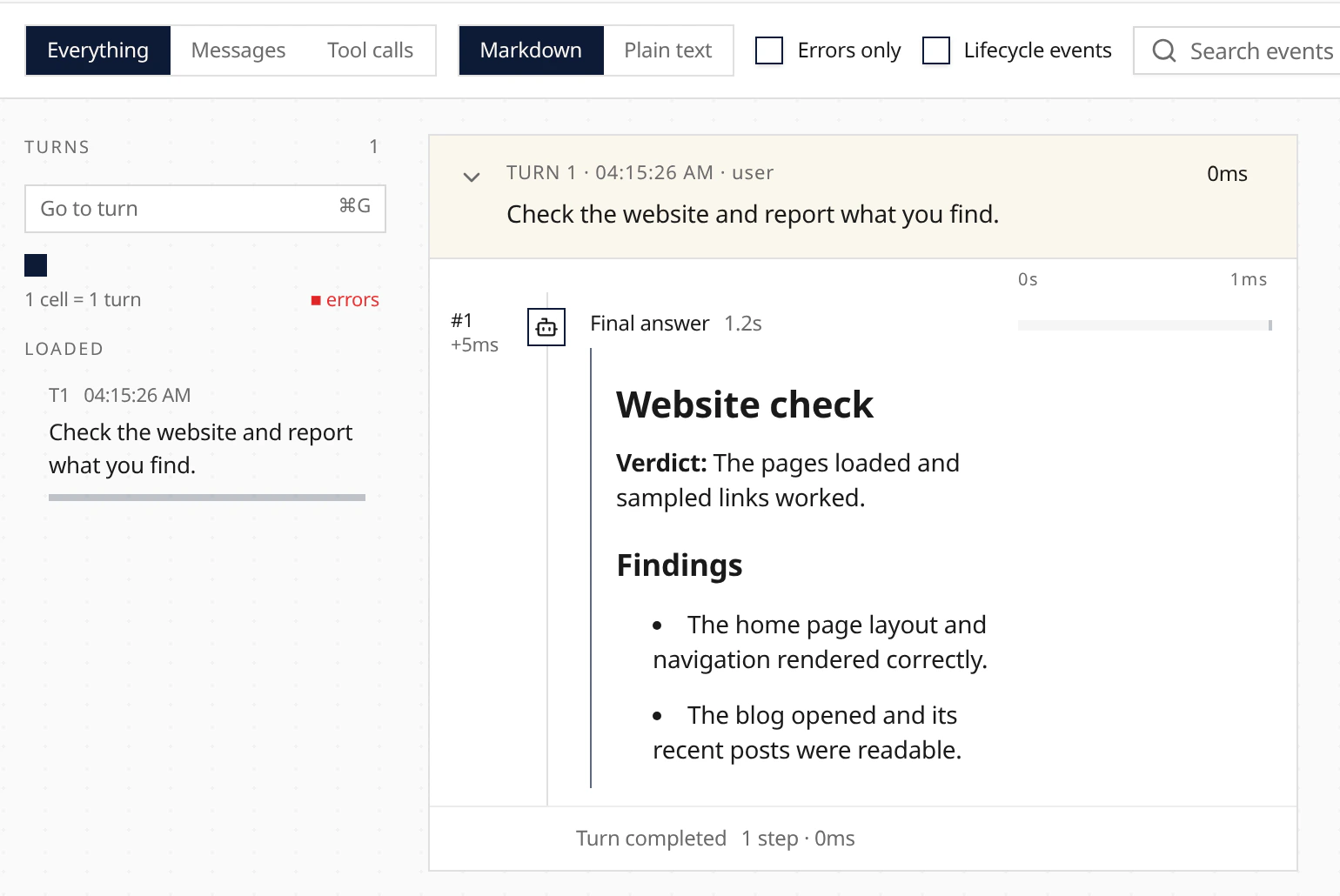
Session trace messages render as Markdown
Session trace model messages and answers now render Markdown by default, with a plain text option for inspecting the original source.
Provider retries preserve the initiating user
Short provider retries preserve verified user and responder context, allowing interrupted personal MCP setup to continue without an extra chat message.
A turn too large to resume is stopped instead of retried forever
A turn whose stored history grew past the worker link's message limit now ends with an error after a few attempts, instead of being retried every few seconds.
Long tool calls no longer hold a worker slot
A server-side tool call running past 5 minutes keeps running on the worker while its turn parks and gives back its memory and session lease.
Submit Framework completions as offline batches
Submit independent completions through Anthropic Message Batches, persist credential-free tickets, and collect results in another process.
Connect custom agent workers to your control plane
Self-hosted installations can connect agent-scoped custom workers with private tools while retaining session APIs, canonical events and tracing.
Chats no longer hang waiting for a finished turn
A live session stream that missed an update now picks it up from the event log within seconds, so a finished answer no longer looks stuck.
Browserless settings collapse into one toggle
The three Browserless adoption toggles become one Browserless flag; agents pick computer use or browser use via capabilities.
Bashkit recognizes empty workspace directories
Bashkit shell commands recognize newly created empty workspace directories, so recursive copies preserve their source folders on remote workers.
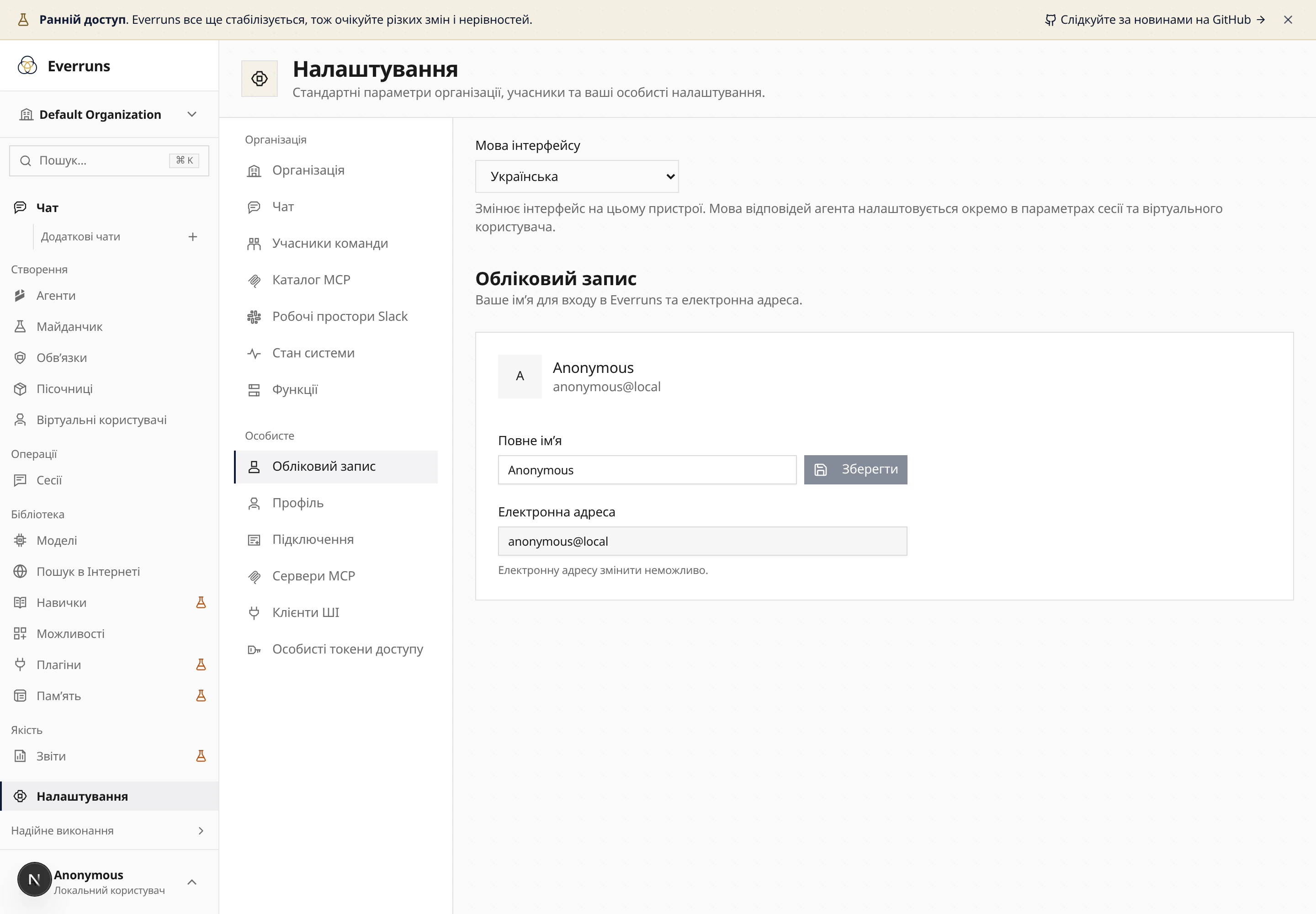
Ukrainian interface and localized agent names
Choose Ukrainian for the Everruns interface and give agents and harnesses translated display names, with portable translations in agent files.
Agents see the screenshots and images their tools return
Images from tool results, such as computer-use screenshots, reach the model as images again instead of as truncated base64 text.
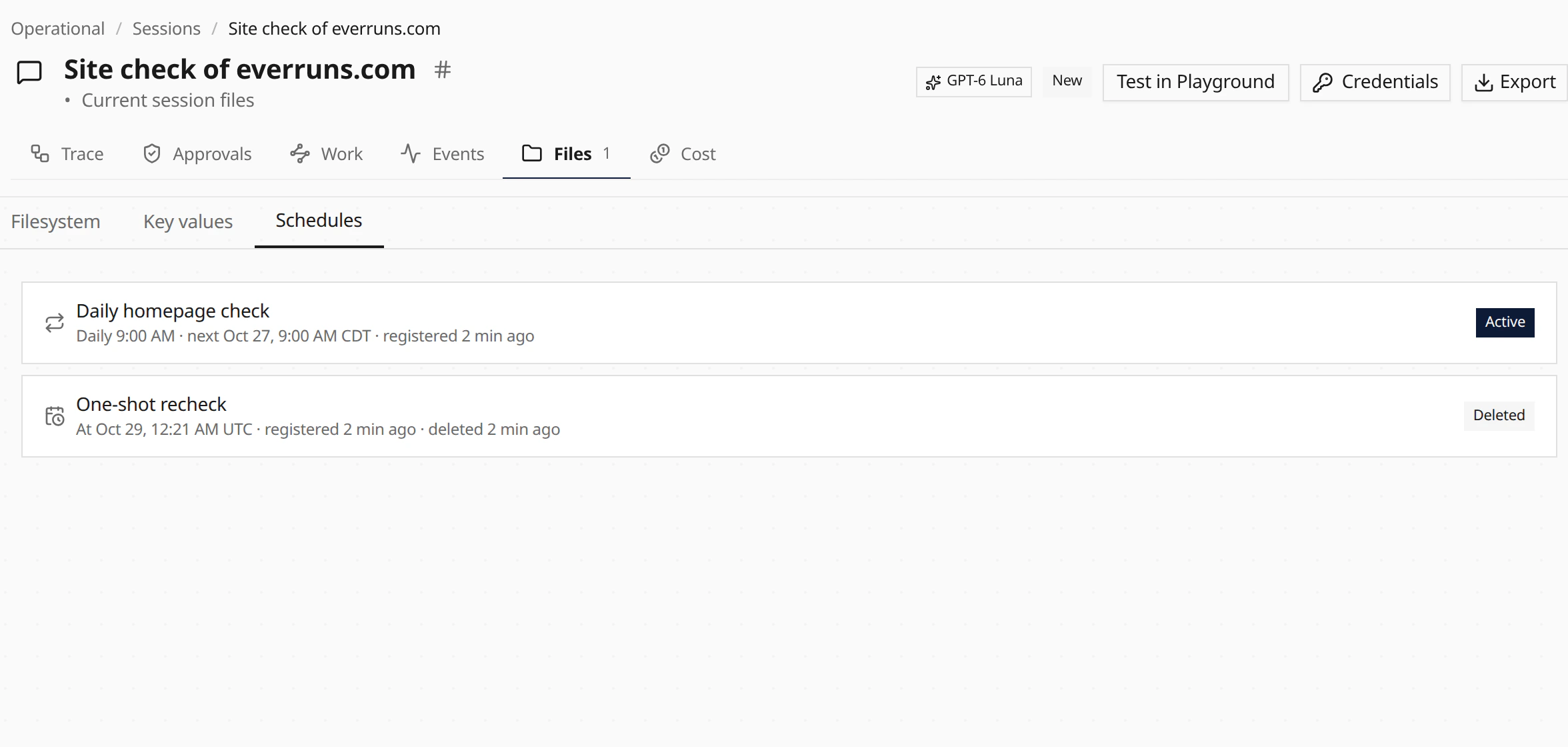
See a session's files, values, and schedules
The session page lists the filesystem, key values, and schedules that were registered or deleted, including sandbox sessions that previously hid them.
Long sessions with many images no longer freeze
Sessions whose history grew past 16 MB, such as long computer-use runs full of screenshots, retried every turn forever. They now run again.
Session files hold videos and other large media
Session and workspace files stream on download and upload, so recordings play and seek in the browser and files up to 2 GiB fit when object storage is on.
Choose a separate default model for Everruns Chat
Set an organization Chat model independently of agents and sessions, with shared provider validation and support for GPT 6.1 Terra on supported APIs.
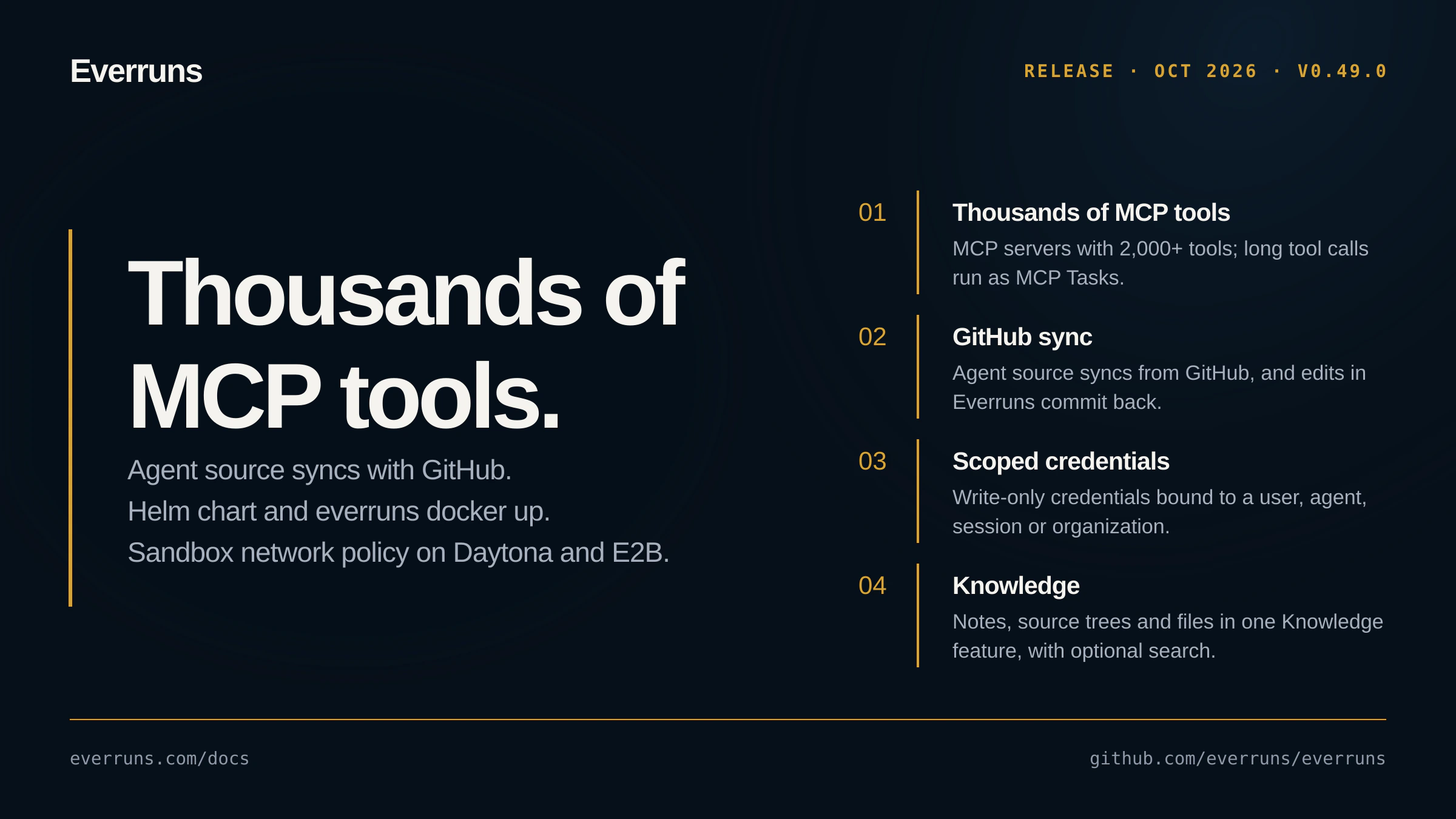
Everruns 0.49.0: Thousands of MCP tools, GitHub sync and a Helm chart
MCP servers with 2,000+ tools and MCP Tasks, Agent source synced with GitHub, scoped credentials, Knowledge, and a Helm chart with everruns docker up.
Threat-intelligence deny feeds and abuse signals for outbound traffic
Self-hosted deployments can refuse domains on public threat-intelligence lists for all agent traffic, and the tenant egress proxy reports per-org abuse signals.
E2B sandbox traffic now follows your org's network rules
E2B sandboxes can send their traffic through the Everruns egress proxy, so it gets the same address, blocks, caps and usage counts as agent tools.
Agents can discover approved MCP servers
Agents can list approved organization MCP presets before adding a personal or chat-only server, using exact names without exposing credentials.
Watch what an agent did on its Sandbox desktop
Daytona desktops are recorded as video. Each turn's recording is saved to the Session's files and plays in the chat under the turn.
Review Chat changes across app pages
Shared Before/After review, guarded Save and Undo across supported page editors, with atomic model selection and private profile history.
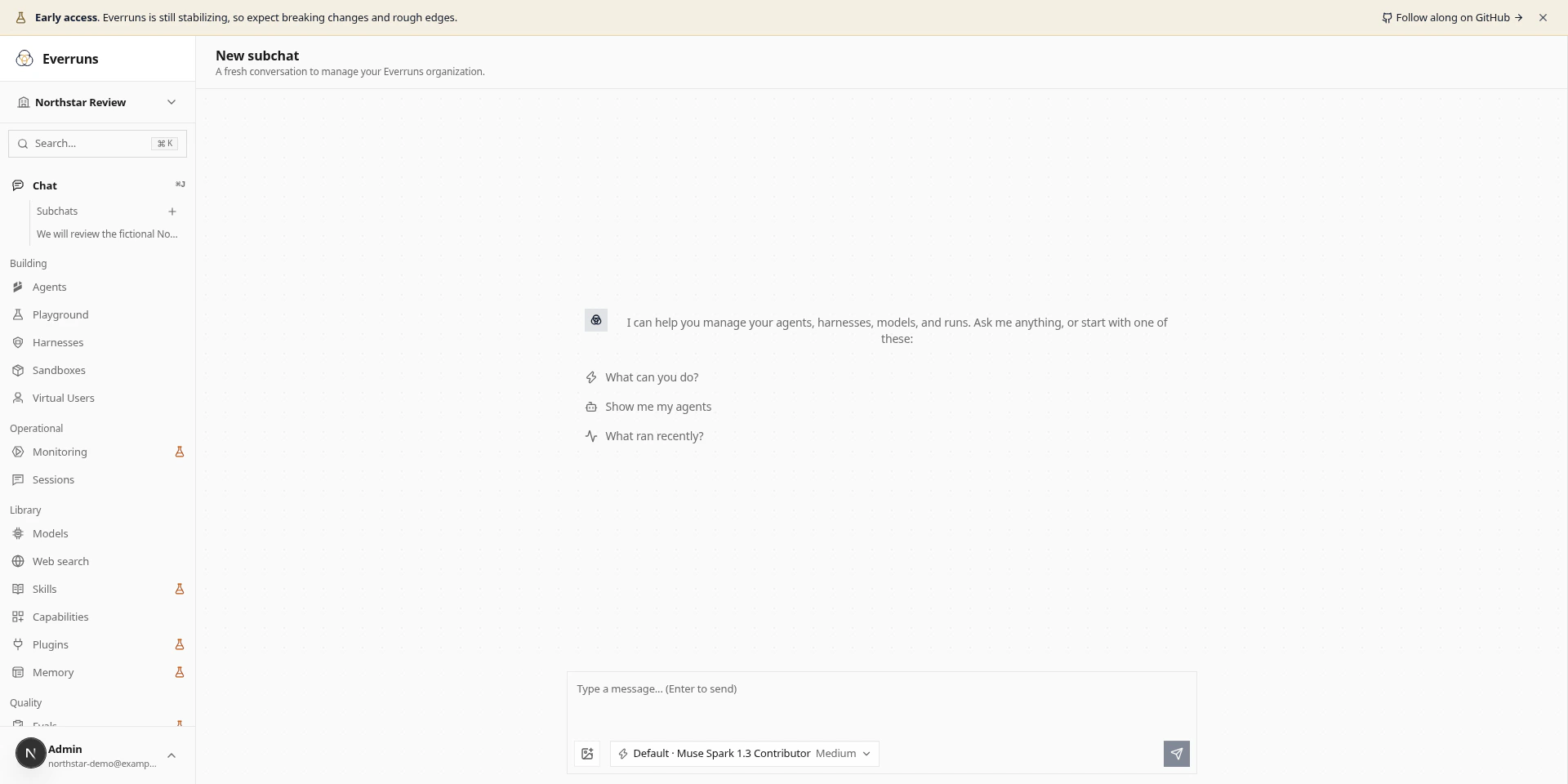
Raw event previews stay small for large tool results
The session Events table bounds JSON previews for screenshot-heavy and nested tool results while keeping complete original events available through Copy.
Bashkit curl preserves binary HTTP downloads
Bashkit curl now saves downloaded archives and other binary responses without altering their bytes, so agents can extract them in their workspace.
Edit GitHub-synced Agents from either side
Enable two-way Agent source sync to commit saved Everruns edits to GitHub, retain local changes on errors, and review conflicts before replacing them.

Sandboxes are disposable, their records are kept
Paused Sandboxes are deleted after a day, a Delete idle action drops disposable ones at once, and every Sandbox record is now kept forever.
Give a Daytona or E2B sandbox a desktop
A Sandbox Template option starts the Session's Sandbox with a Linux desktop the agent sees and operates with the computer tool, next to its shell and files.
Personal settings are separate pages
Profile, Connections, MCP servers, and AI clients each have their own Settings page, replacing the combined My agent experience page.
Live event delivery recovers after a NATS restart
Session streaming restores its JetStream replay buffer after a broker restart, without an API restart or duplicate retries after uncertain acknowledgements.
Install the self-hosted Platform on Kubernetes with Helm
An official Helm chart installs the self-hosted Platform on Kubernetes, ships as an OCI chart with each release, and keeps its secrets across upgrades.
Chat folds a thread report into one line
When a thread finishes, asks, or fails, Chat shows one folded line. Open it to read the report. The coordinator still gets the full text.
Run Everruns on your machine with one command
everruns docker up asks a few questions, starts the self-hosted Platform in Docker and signs the CLI in; running it again is safe.
Limit outbound network for Daytona and E2B sandboxes
Daytona and E2B Sandbox Templates can block the network or allow only listed domains, enforced by the provider together with the Session's network access list.
Bashkit Python builds on Windows again
Bashkit's embedded Python no longer crashes the Rust compiler on Windows, while preserving module alignment and Python in the hosted integration catalog.
Work reports show what an agent is doing and got done
Each turn gets one report of its plan, steps, what it waits on and its result, shown in chat and the sessions list and returned by the API.
Publish a dedicated Work Chat for an Agent
Self-hosted deployments can publish an Agent with separate consumer sign-in, a workspace panel and a choice of conversation interfaces.
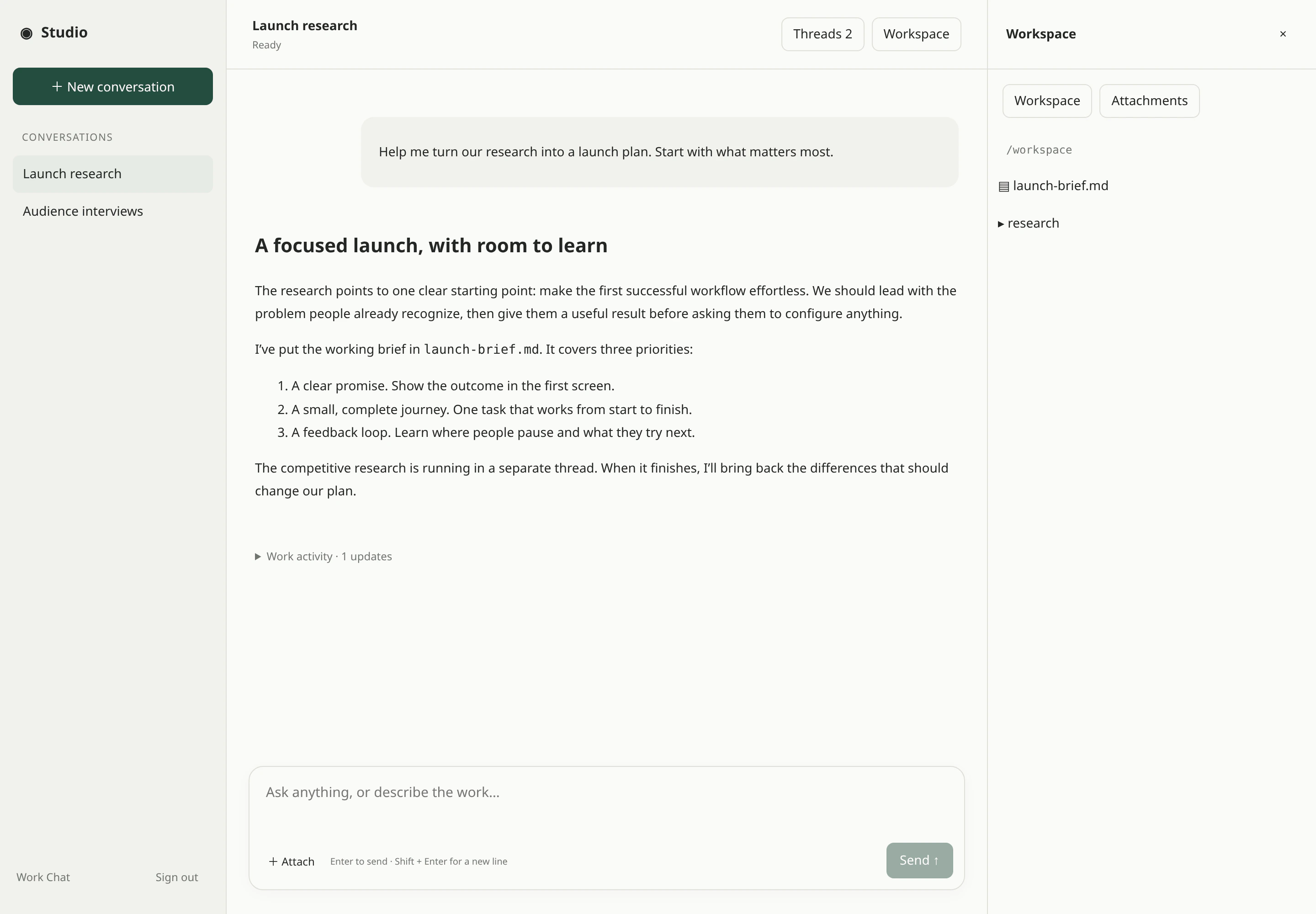
Agent actions and searchable Playground setup
Find users and agents in Playground setup, connect GitHub from the Agent menu, and distinguish dry runs from normal Playground chats before starting.
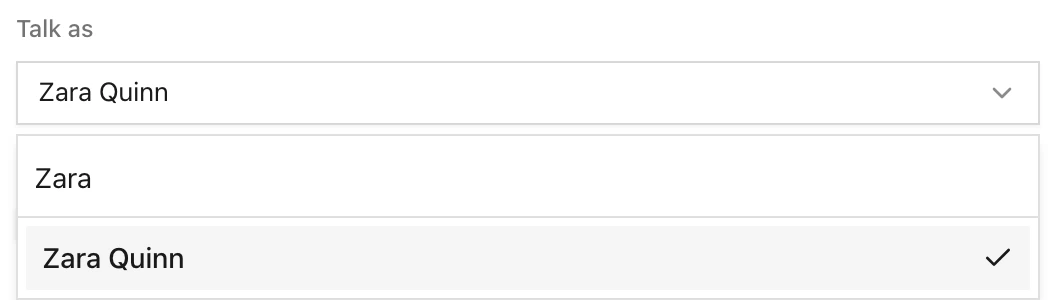
Knowledge unifies files and optional indexed search
Mount notes, source trees and binary originals through one Knowledge feature, with Markkit text extraction and optional keyword or hybrid retrieval.
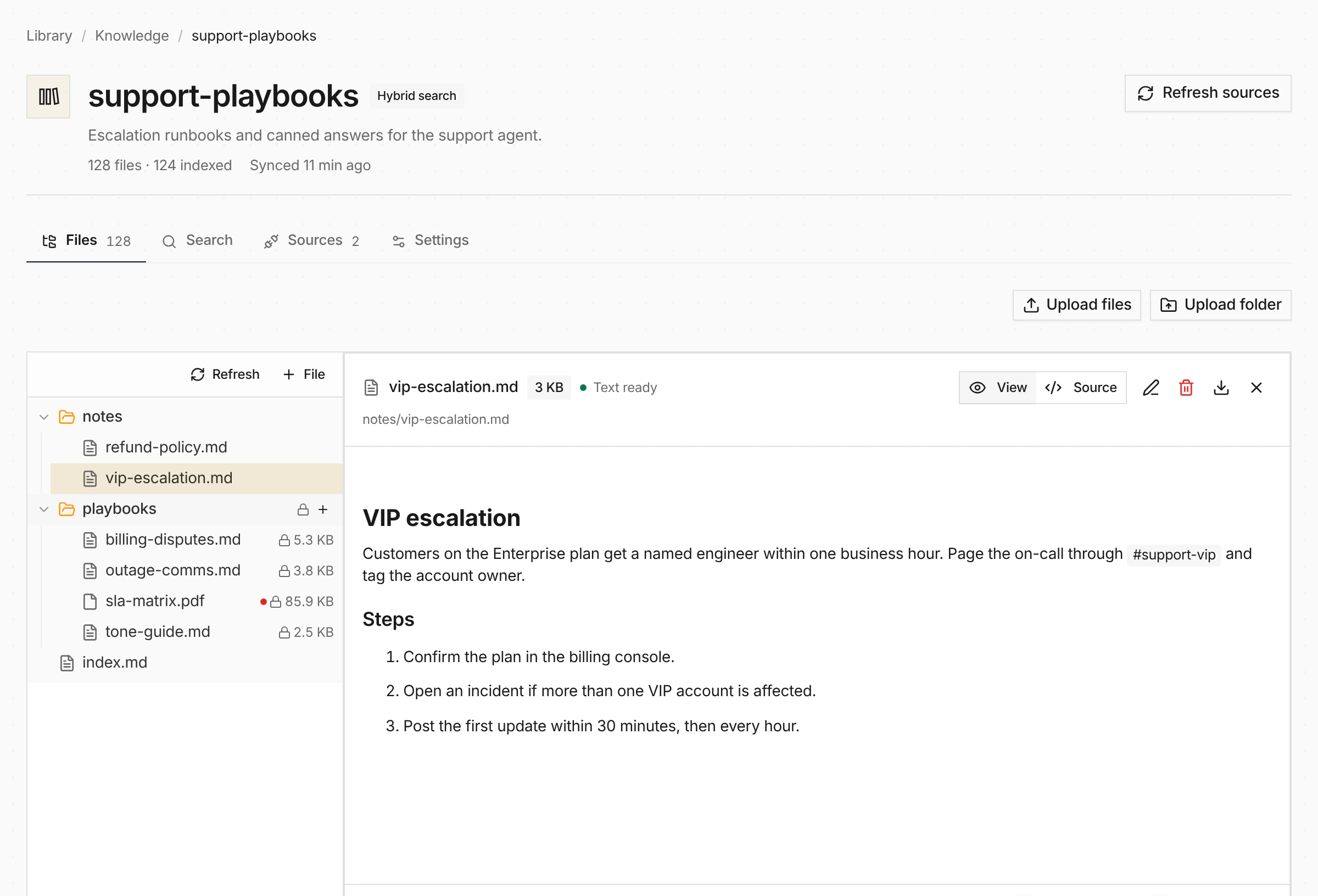
Sync Agent source continuously from GitHub
Connect an Agent to a GitHub repository package, review its changes, and apply future updates automatically while keeping source fields read-only.

MCP tool calls can run longer than 60 seconds
Each MCP server can set how long one tool call may run, from 1 second to 30 minutes, instead of the fixed 60-second limit.
MCP Tasks run one agent turn per task
Agent runs over /mcp follow the published MCP Tasks extension, with one task per message, the reply as the task result, and official client support.
Agents wait on MCP servers that run tools as tasks
Everruns agents now accept MCP Tasks from the servers they call, checking on long tool calls until they finish instead of hitting the request timeout.
Chat mode keeps Agent edits beside the conversation
Opt into Chat mode to edit the live Agent form with Platform Chat, preserve unsaved work, and review changes before saving.
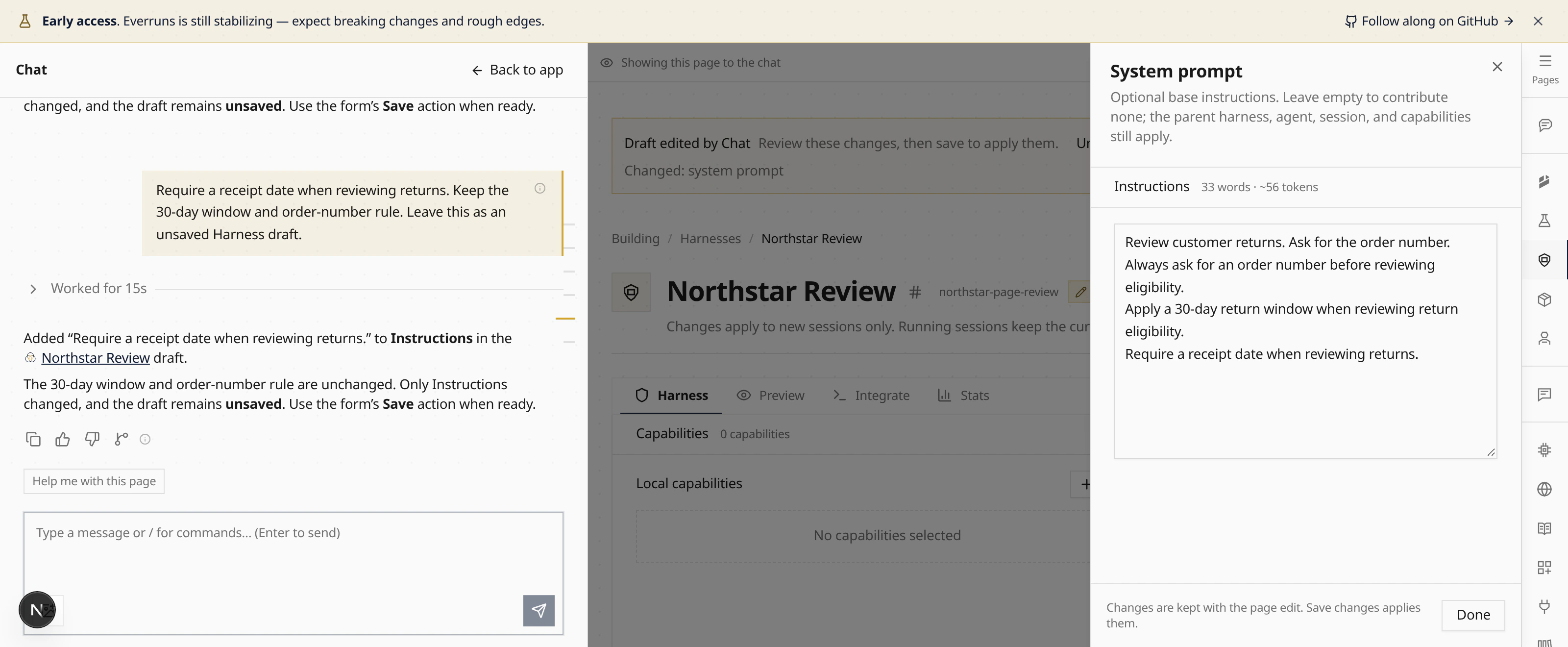
Large MCP catalogs use bounded search and schemas
MCP catalogs load across pages, search server and schema text within current access, and reveal bounded tool schemas through native calls, CLI, or both.
Send host-written review completions on Framework sessions
Session::complete sends exactly the system prompts and messages a host chooses, tool-less, through the session's current provider and model.
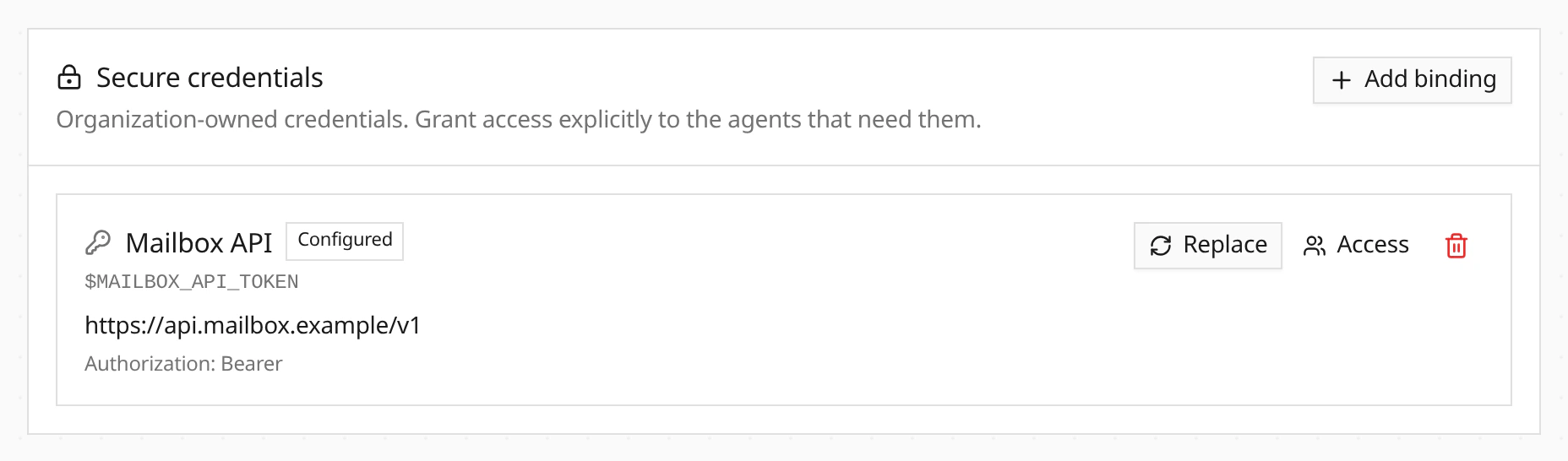
Credentials work across users, agents and sessions
Bind write-only credentials to a user, agent, session or organization, grant agents explicit access, and capture API tokens with exact-request consent.
Harness capabilities keep their name and details
A harness row for a capability hidden by a rollout flag now shows its name, icon, and description, and links to the capability page.
Gemini citations survive every continuation hop
Long Gemini responses retain citations from each grounded request and count repeated searches across hops while preserving combined token usage.
Run commands and hot-install capabilities on live sessions
Framework sessions run slash commands, activate host-registered capabilities and switch model, effort and MCP servers without a runtime handle.
Bring host capabilities and providers into Engine sessions
Embedding hosts attach their own capabilities, provider resolution, retry budgets, MCP credentials, request attribution and observers to Engine sessions.
Yolop searches with the shared web_search tool
Yolop's default harness now has web_search: the model's own search first, then Brave or Parallel with a key, then free search.
Tenant egress proxy for self-hosted deployments
Self-hosted deployments can send agent outbound traffic through everruns-egress-proxy for its own outbound address, per-org caps and per-org usage counts.
Sessions no longer hang when a worker stalls before a turn
A session whose worker stalls before its turn starts, or after it ends, is now picked up by another worker within minutes instead of staying active forever.
Schedule triggers can run in a Slack conversation
A schedule trigger can now run in a direct message or channel of the Agent's own Slack channel, sharing that conversation's session from the first run.
Turns no longer fail when a provider asks to wait too long
A provider rate limit whose Retry-After exceeds the retry budget now falls back to backoff and retries, instead of failing the turn at once.
MCP client authorization follows callback redirects
Approving an MCP client now completes even when its callback forwards the browser to another site, app, or local port after receiving a code.
Connecting GitHub as yourself acts as you, not the shared bot
Your own GitHub connection now signs you in to GitHub and acts as you; shared Everruns App installations move to organization links.
OAuth MCP servers with path-specific metadata now connect
The MCP connection check and sign-in now find OAuth metadata at every location the MCP authorization spec allows, so these servers no longer read unreachable.
Framework hosts can brand ChatGPT login completion
The ChatGPT Plan loopback helper now accepts custom HTML for its successful callback page while retaining its existing plain-text default.
ChatGPT Plan removed from Platform setup
The Platform UI no longer offers ChatGPT Plan sign-in or its models because its browser callback is unavailable to remote users.
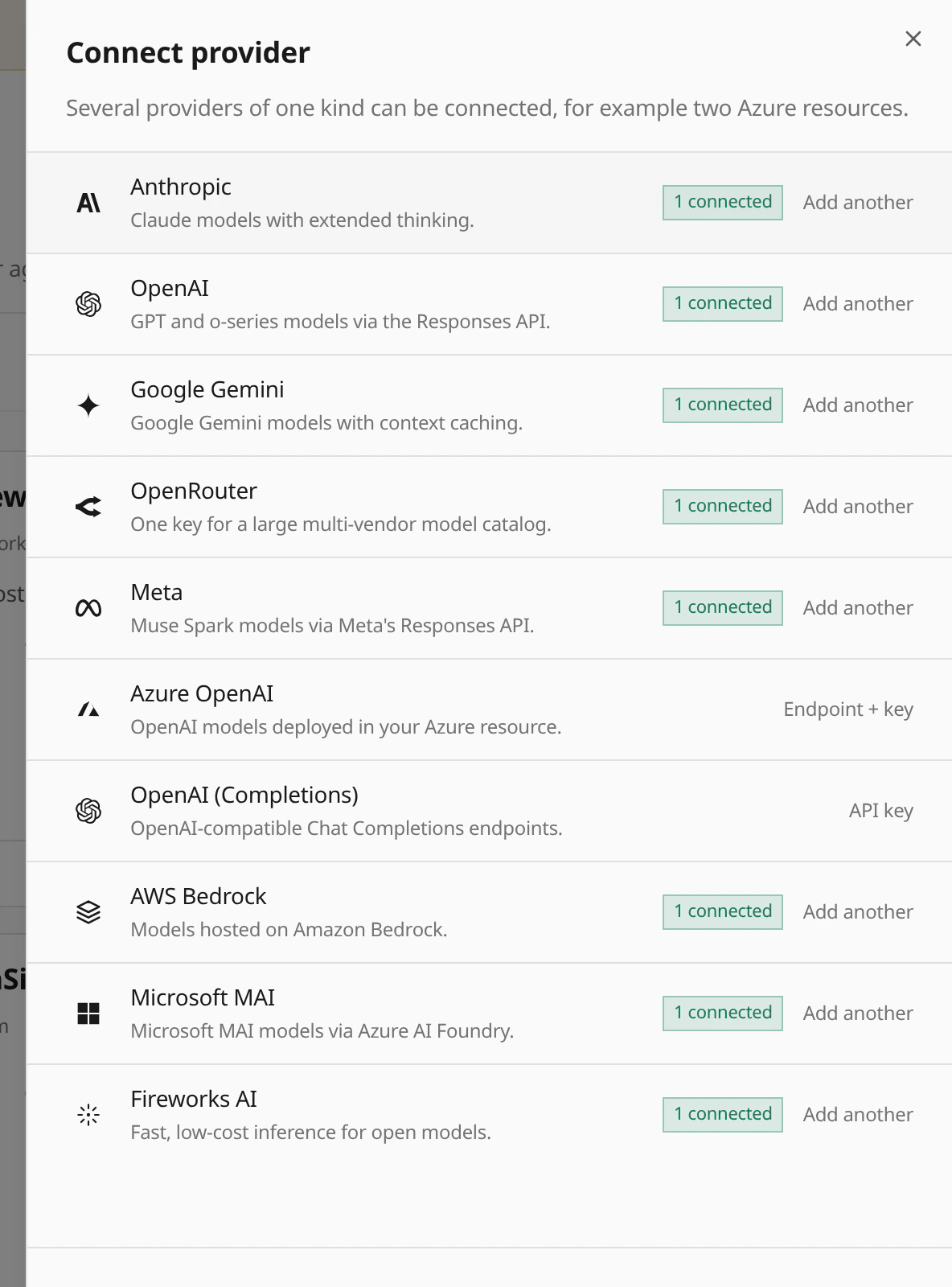
Automatic session titles with a shared small model
Enable automatic session naming, choose a dedicated model and provider, and keep explicit titles protected while topic checks back off over time.
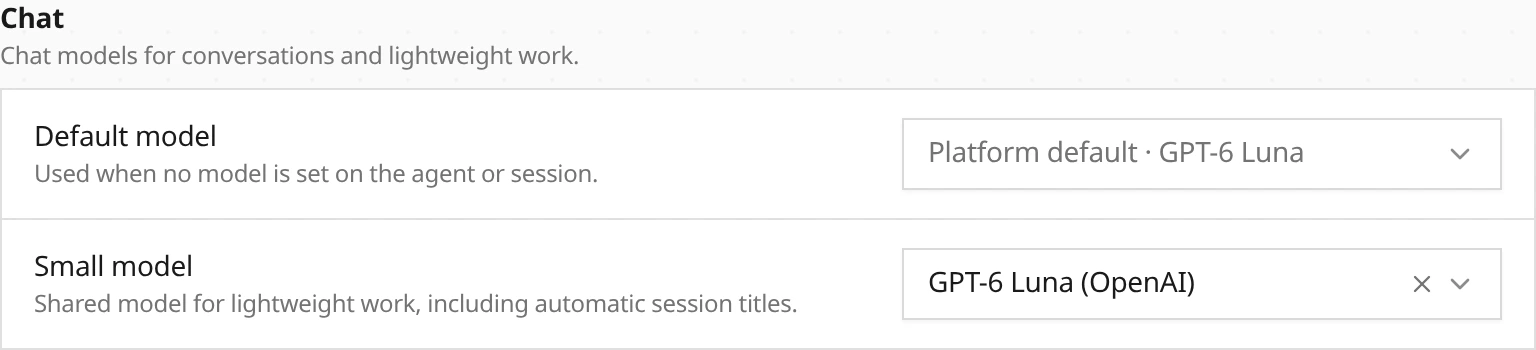
New providers: Mistral, Fireworks, Vercel, Cloudflare, MAI
Yolop setup and --provider now reach Mistral, Fireworks, Vercel, Cloudflare, and MAI, with Google on the native Gemini driver.
Meta Muse sessions continue after tool calls in Yolop
Yolop keeps Meta Muse sessions running after tool calls by replaying context when a response ID cannot be used for server-side continuation.
MCP setup verifies login without restarting
Yolop verifies MCP connections after browser sign-in, reports pending authorization honestly, and loads newly installed tools in the same session.
Control Yolop continuation budgets and trace stop reasons
Yolop supports five automatic continuations, configurable limits, durable stop and retry reasons, and OpenTelemetry budget diagnostics.
Run Everruns provider drivers with WASM host fetch
Use shared OpenAI and OpenRouter chat drivers in Workers and Durable Objects with an injected HTTP adapter, including streaming and tool calls.
User MCP management respects approval settings
Adding and enabling personal MCP servers now follow the agent's shared Tool Approval mode, preserving URL restrictions and separate OAuth consent.
Slack workspace consent stays with its initiating browser
Slack manager workspace connections now require the initiating browser and a single-use transaction, with independent tabs and safe consent retries.
Deno Deploy sandbox integration removed
The experimental Deno Deploy sandbox provider, its deno_* tools, the deno-coder demo agent, and related docs are removed.
Everruns shares product and workflow skills
Find product concepts, CLI examples, agent-authoring workflows, and Rust guidance through shared skills in Everruns and its coding-agent plugin.
Docker Compose forwards OpenRouter inference keys
The self-hosted Compose stack now accepts an OpenRouter inference key from its environment, with updated provider setup and isolated real-provider testing.
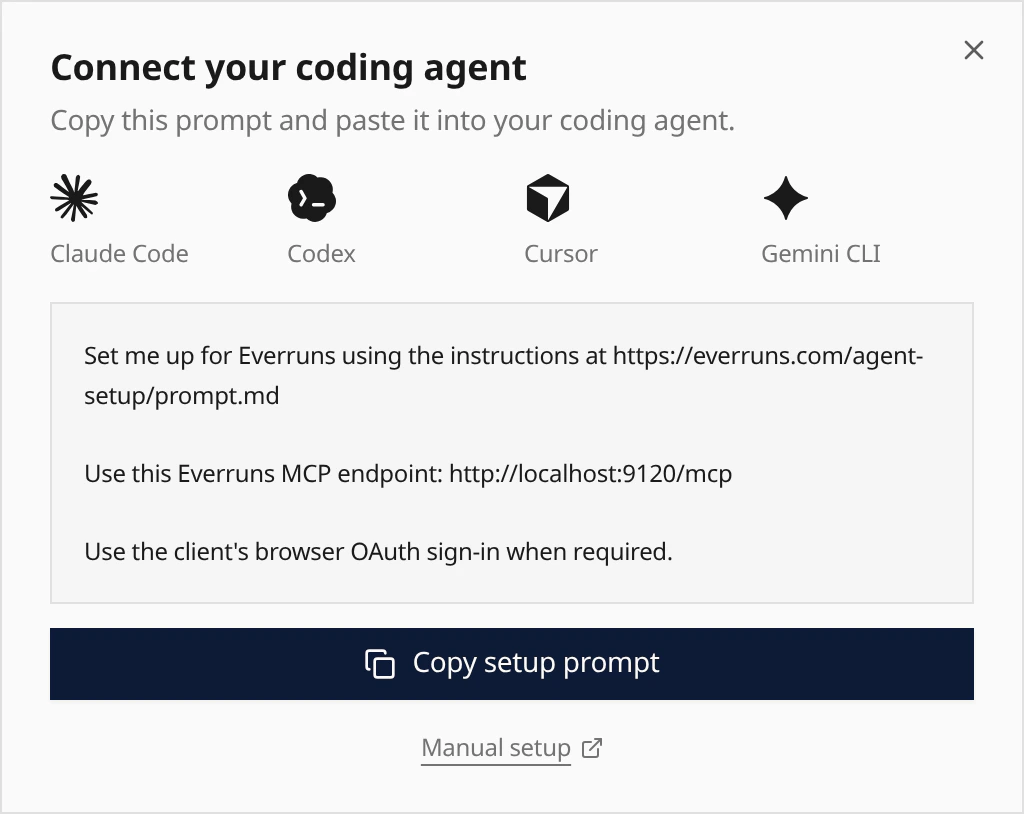
Connect your coding agent from the Everruns UI
Copy one setup prompt for Claude Code, Codex, Cursor or Gemini CLI, with deployment-aware instructions and model-provider setup in its existing flow.
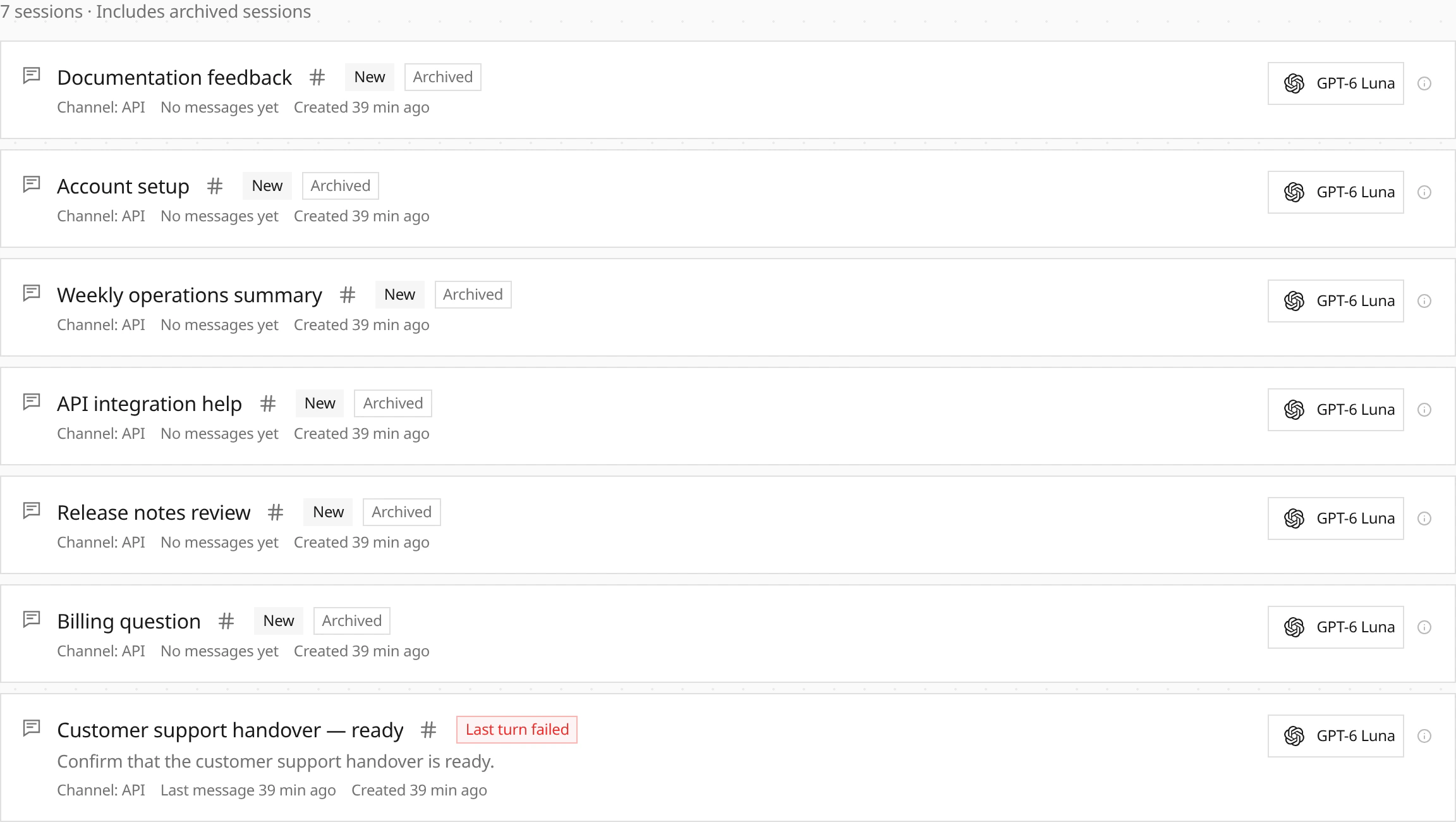
Agent session lists now match their session count
The agent Sessions tab includes archived conversations, with archive labels, channel information and separate creation and last-message times on cards.
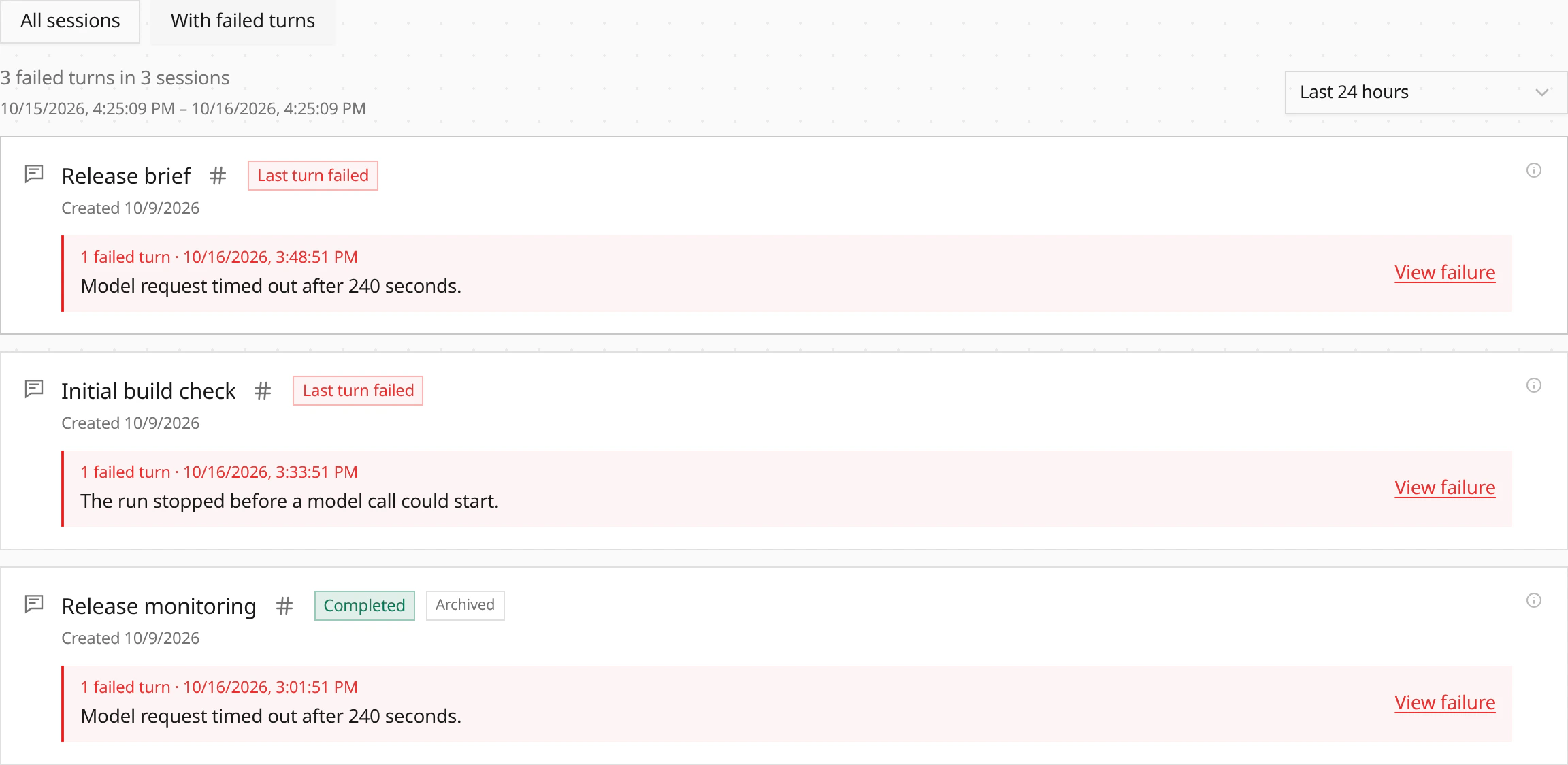
Find failed agent turns from the Agents list
Agent failure counts open sessions filtered by failure time, preserve recovered sessions, and link to the exact failed turn in the existing Trace view.
React session streams can suspend while idle
Opt in to closing settled session event streams in the React UI client, with durable replay when sending, answering approvals, or returning to the tab.
Search model catalogs and test a model from Yolop
Yolop searches provider catalogs, reports model ping latency and errors, and accepts qualified model references without silently choosing another model.
Tool events expose scoped worker CPU observations
Native hosts report worker-thread CPU consumed while polling a tool executor, separately from elapsed time and remote or child-process work.
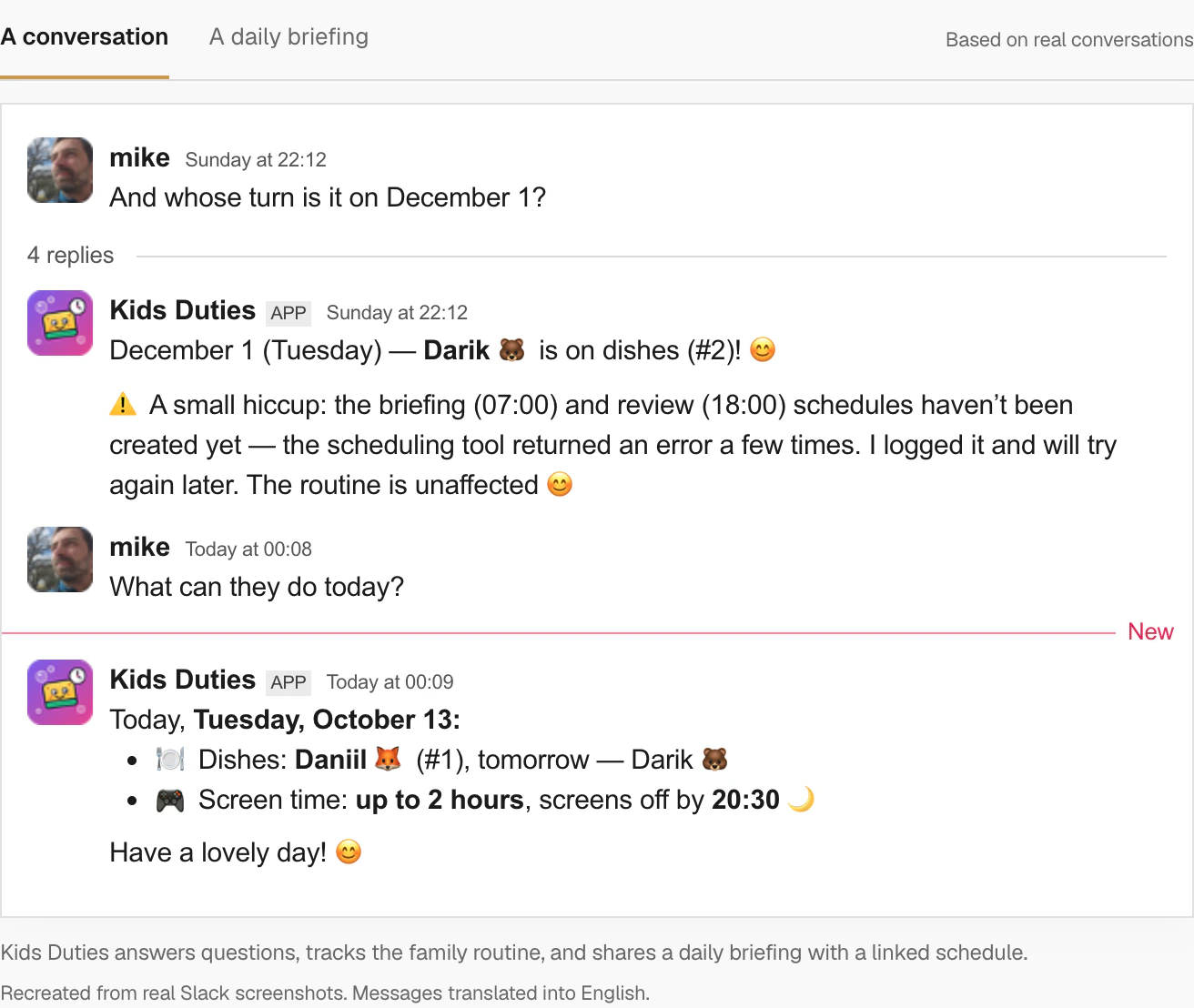
A Slack integration overview for building Agents
The Slack integration page now brings together a real product walkthrough, English conversation examples, Agent-building steps, and setup links.
Recurring schedules reject unverified cron intervals
Session schedules now reject invalid cron and insufficient future occurrences at admission, with the same parser used to calculate triggers.
PACT delegated turns discover the user's MCP tools
PACT delegated turns now discover account tools with the user's session grant, so scoped order lookups and approved cancellations reach the company API.
OpenTelemetry fixes export and cached-token totals
OpenTelemetry fixes background export, cached-token totals, repeated tool-call IDs, error privacy and Framework shutdown failure reporting.
Local stress tests use successful offline tool workloads
Fix local proxy connection failures during stress tests, seed successful offline tool workloads, and improve latency and failure reporting.
More reliable Framework agent sessions
Local background tasks recover after owner loss, MCP discovery pauses failed authentication, and provider tool calls preserve optional arguments.
Gemini setups prefer Argon and include it in favourites
Gemini 4 Argon is the preferred default for new Gemini setups and an enabled favourite in the server model catalogue. Existing defaults stay selected.
Framework and serve keep files in the session
Session::attach keeps a file in the session's /attachments folder, serve's message endpoint takes a files list, and embedded Slack files are kept too.
Concurrent session creation reuses one runtime account
Simultaneous first sessions for the same management account now reuse one runtime identity, avoiding intermittent conflicts during session creation.
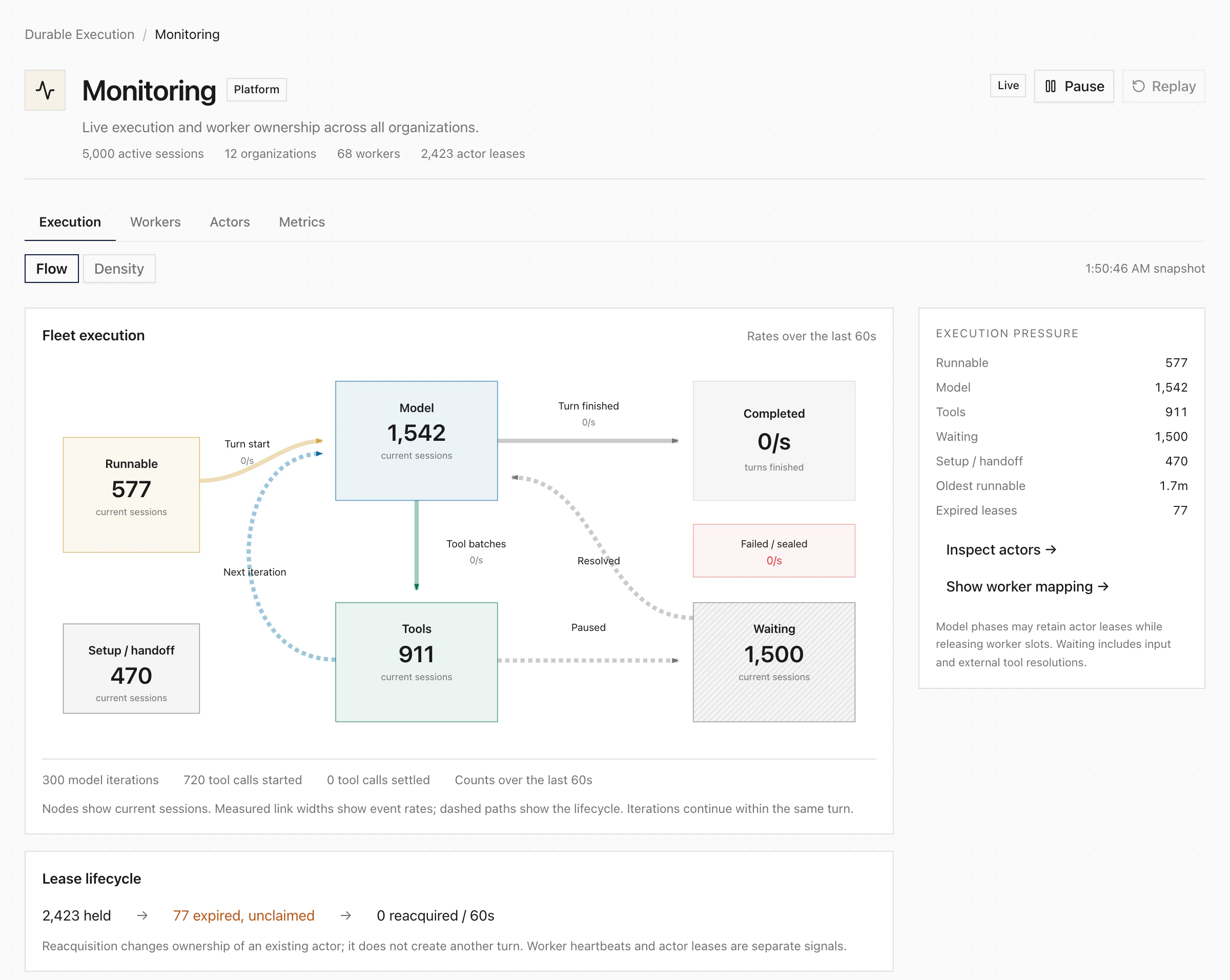
Monitor agent execution and actor leases at fleet scale
Follow thousands of sessions through model iterations and tools, map orgs to workers, and inspect actor leases in live Monitoring views.
Yolop Linux sandbox blocks asynchronous socket paths
Linux sandboxed shell modes deny io_uring entry syscalls while preserving direct socket rules, Unix sockets and synchronous toolchain operations.
Web search no longer fails on some result snippets
A Brave or free search whose result text had an ampersand a few characters before a dash, curly quote or accented letter no longer fails.
Visti and Stend join the product footer
The Everruns landing site and documentation now link to Visti and Stend in their shared Products footer, making both sites easier to find.
Schedule triggers read cron weekdays from Sunday as 0
A 5-field cron such as 0 9 * * 1-5 on an Agent trigger or durable schedule now runs Monday to Friday, and 0 18 * * 0 runs on Sundays.
Tool calls cut off by a crash are rerun when it is safe
After a worker crash, calls that never started, read-only and idempotent calls run again, and MCP servers get a stable idempotency key.
Slack agents answer DMs and keep the files people send
One-click Slack apps open a Messages tab, answer a direct message in the DM, store files sent with a message, and use the agent's avatar as the app icon.
Everruns SDKs drop the agent version methods
The agent version endpoints are gone from the API, so the Rust, Python and TypeScript SDKs remove their version methods. Use change history instead.
Remote workers run turns without an encryption key on the API
A standalone gRPC worker no longer fails every turn when the API has no SECRETS_ENCRYPTION_KEY; it skips checkpoints like the in-process worker.
MCP resource reads enforce conversation attachments
Resource listing and reading retain the conversation's attached-server policy when the runtime binds a request to its current input message.
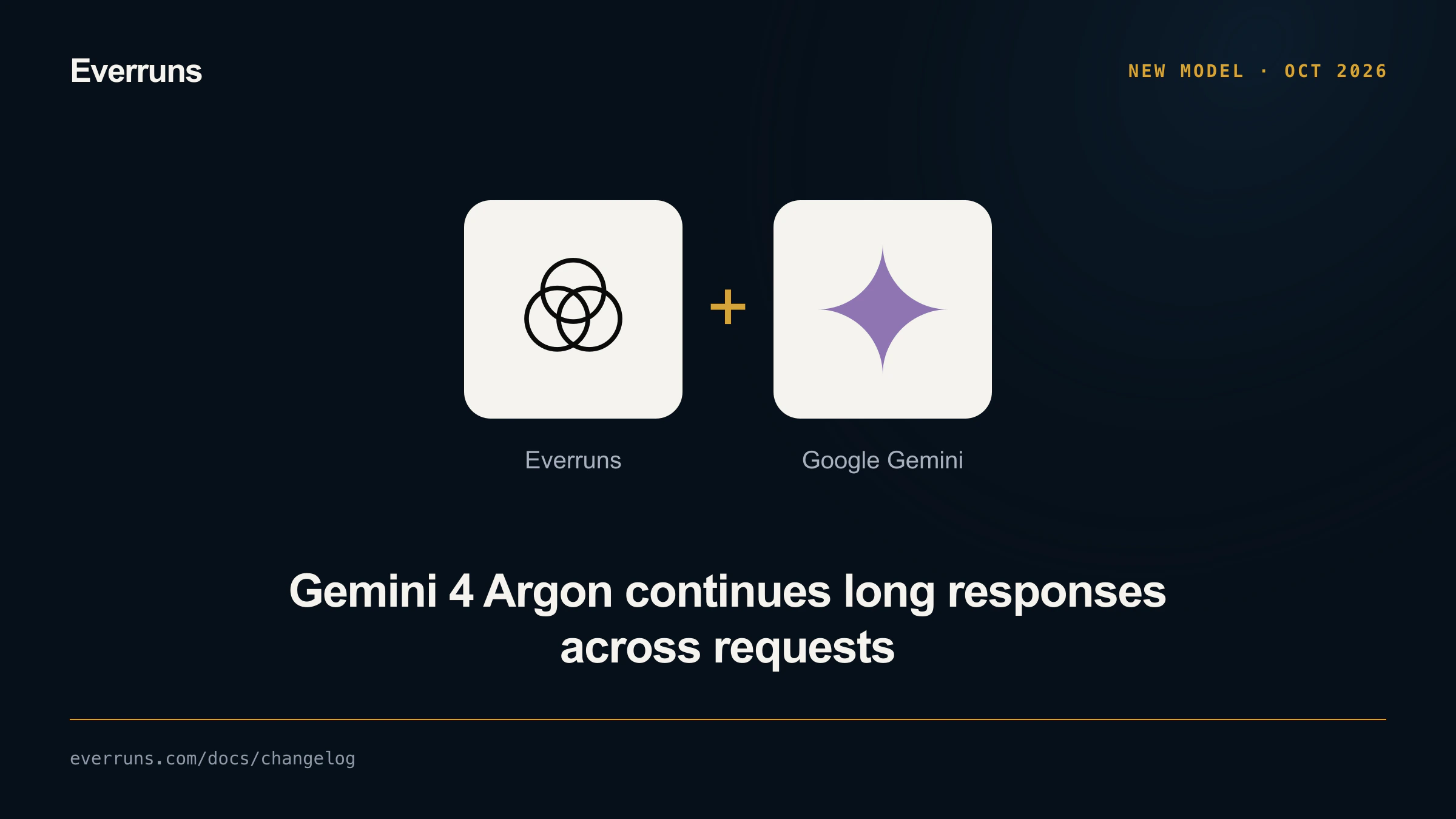
Gemini 4 Argon continues long responses across requests
Gemini 4 Argon can continue beyond a single stream, preserving the total output budget and combining text, reasoning, and billed usage across requests.
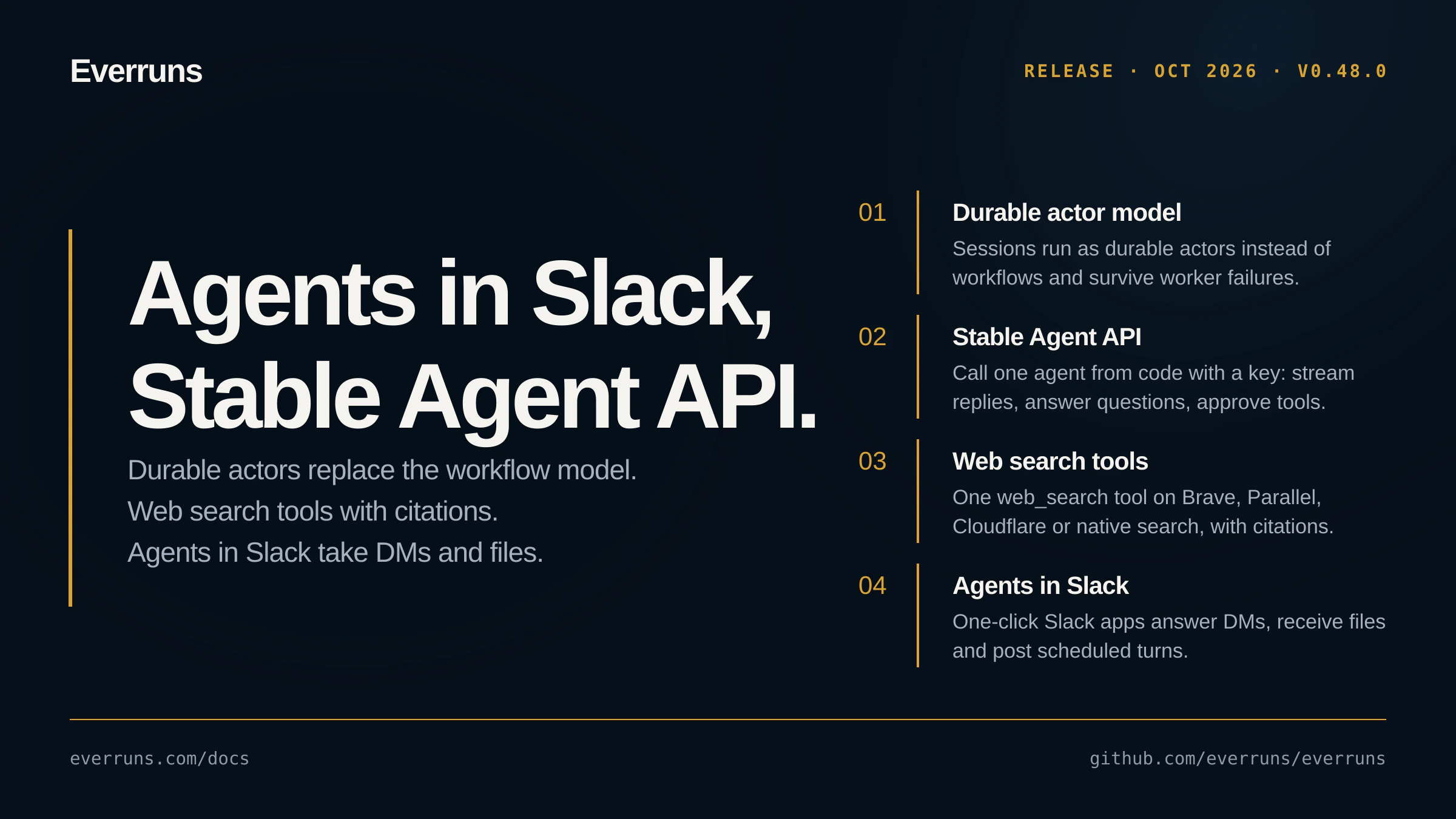
Everruns 0.48.0: Agents in Slack and a stable Agent API
Sessions run as durable actors instead of workflows, the Agent API calls one agent from code, agents get one web search tool, and Slack agents take DMs.
E2B desktop computer use keeps the pointer where it was moved
On an E2B desktop, a mouse move or held button no longer snaps back to the screen center when the desktop session has not connected yet.
Dev mode PostgreSQL requires a non-root user
Development mode now uses the PostgreSQL lifecycle library and cleans up its temporary database when the owning server process exits.
Attachments stay readable after compaction, from every channel
Files sent to an agent are kept in the session's /attachments folder, so the agent can reopen them after compaction, whichever channel they came from.
Stored attachments download safely in browsers
Stored files now download as inert binary attachments while agents retain their original bytes and media types across Slack, AG-UI and A2A.
Answers cut off by a provider error are retried
When a model stream breaks after some answer text, the runtime retries it instead of keeping the cut-off text as the answer.
Agents can no longer read secrets back
Session secrets are now write-only to agents: secret_store stores, lists and deletes them, but no tool returns a value to the model.
Hard approvals preserve the full command
Yolop rejects oversized approval text, preserves complete commands through thread relays, and denies requests from older hosts after an upgrade.
Sessions no longer attach to another workspace
Every session now gets its own workspace: create-session refuses workspace_id, and POST /v1/workspaces and everruns workspaces create are removed.
Web search answers cite their sources, sentence by sentence
The Web Citations capability links each sentence an agent backs with a web search result to that page, from the web_search tool or the model's own search.
Fixes for triggered sandboxes, blocked tools and agent prompts
Trigger-started sessions use the organization sandbox account, tools blocked on a connection report a failure, and agent prompts lose the generic opener.
Recovered tool failures show as issues, not red errors
A failed tool call the agent carries on from now shows as an amber issue in chat, and events mark its severity so clients can tell it from a failed turn.
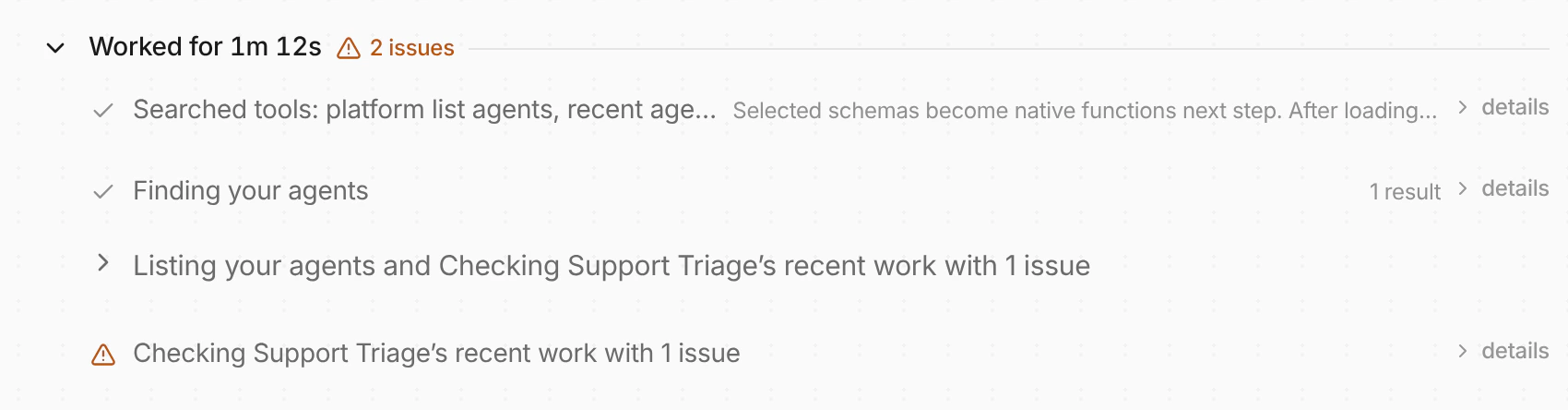
Tool reveals keep the prompt cache on current Claude and GPT-6 models
Tool search reveals keep the cached tool list on current Claude models and on GPT-6 and GPT-5.6 through the OpenAI API, and Session Trace shows each change.
Tool-call repair drops null placeholders on optional parameters
When a model fills optional tool parameters with null or the string null, tool-call repair now leaves them out instead of letting a strict tool reject the call.
Agent sessions now run as actors instead of workflows
One worker leases a session and runs its whole turn from the session's event log, replacing the per-step turn workflow, its queue hops and checkpoints.
Session Trace names prompt cache resets and their cause
When a model call loses the prompt cache the previous call built, the trace now says so and names the likely cause, such as changed tools or an idle gap.
Agent-login MCP tool calls now show in chats people start
Tool calls through an MCP server acting as the agent now reach sessions people start, including the connect prompt shown before an admin signs in.
Scheduled turns in a Slack conversation post to it
A session schedule that fires in a Slack-bound session can now send_message to that Slack conversation instead of failing with no Slack session.
Agents now see why a session schedule cron was rejected
An invalid cron or timezone in create_schedule now returns the reason to the agent instead of an internal error, and Sunday crons obey the interval.
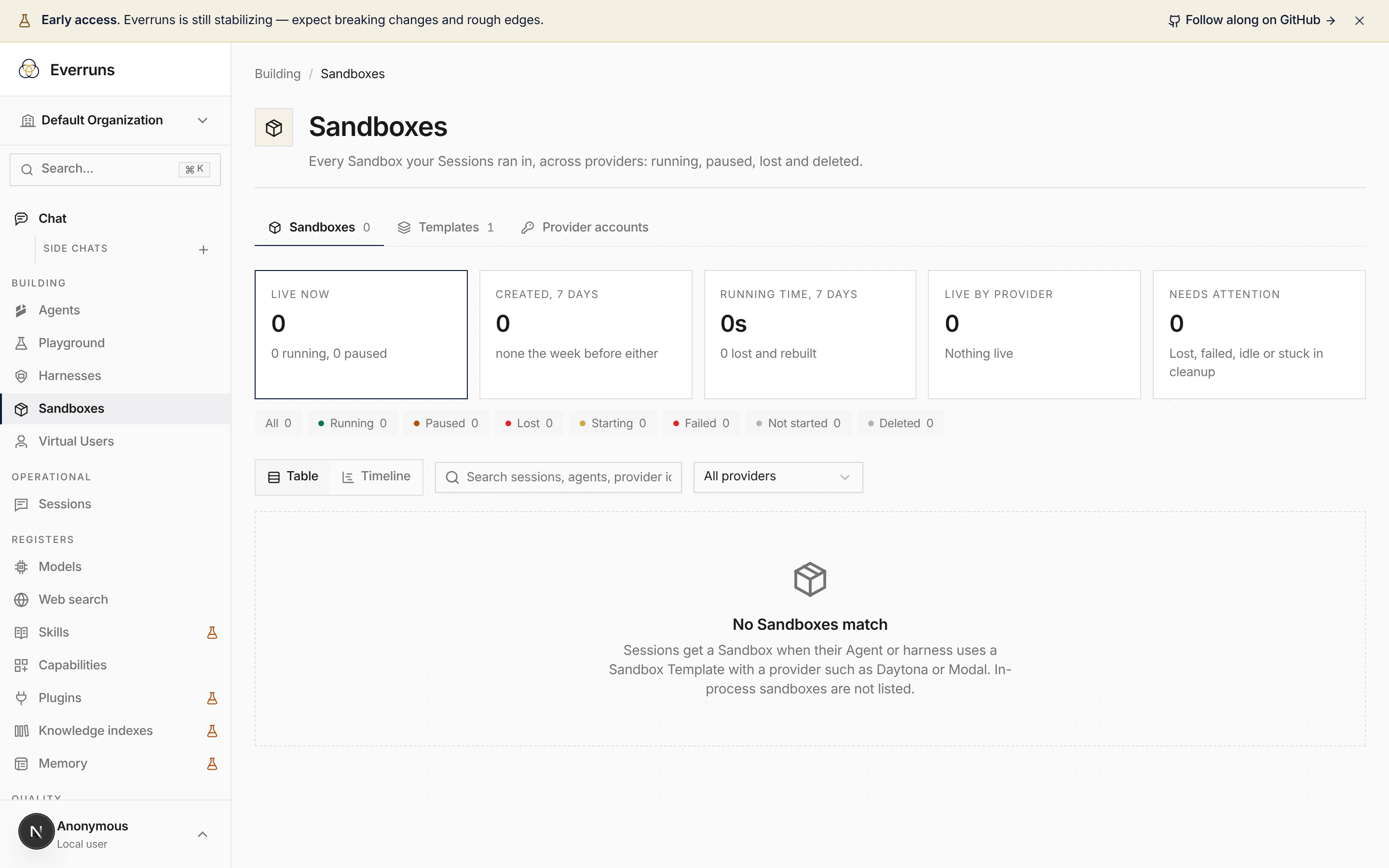
Sandboxes page with tabs, and tab links you can share
Sandboxes, Templates and provider accounts are now tabs of one Sandboxes page, and the Models, Web search and Sandboxes tabs each have their own URL.
Sandbox file tools all read the managed Sandbox workspace
With a managed Sandbox, read_many_files and list_directory now read the Sandbox's /workspace, so files the agent cloned there no longer read as not found.
Create read-only personal access tokens
A personal access token can now be read-only: it reads every organization you belong to, and is refused anything that creates, changes or runs.
Sessions recover from provider limits and follow the agent's model
A session retries after a short provider rate limit, explains OpenRouter credit shortfalls, and follows the agent's default model unless one was set.
Prompt caching on Bedrock, OpenRouter Claude and Mistral
Prompt caching now writes cache points on Bedrock Claude and Nova, turns on caching for Claude through OpenRouter, and routes Mistral by cache key.
Prompt caching gets a retention setting and a prompt-only mode
Ask for one hour Anthropic cache entries with retention 1h, and use the explicit strategy on Claude to cache tools and instructions but not the conversation.
Parallel joins Brave as a Web Search provider
Connect a Parallel API key as a search account, and the web_search tool sends searches to Parallel's Search API, with excerpts the model can quote.
Web search: one tool, search providers and organization defaults
Agents search the web with one web_search tool. Admins connect search providers and set defaults, each agent picks its own, and free search is the fallback.
Muse Wonder, Meta's new top model, is available in Everruns
Meta's Muse Wonder joins the model catalog with pricing, a 1M-token context and its model card, and every Muse model gets a reasoning effort picker up to Max.
Model card links on the Models page
Models with a published vendor model card or system card now link to it from the Models page and carry the link in their model profile.

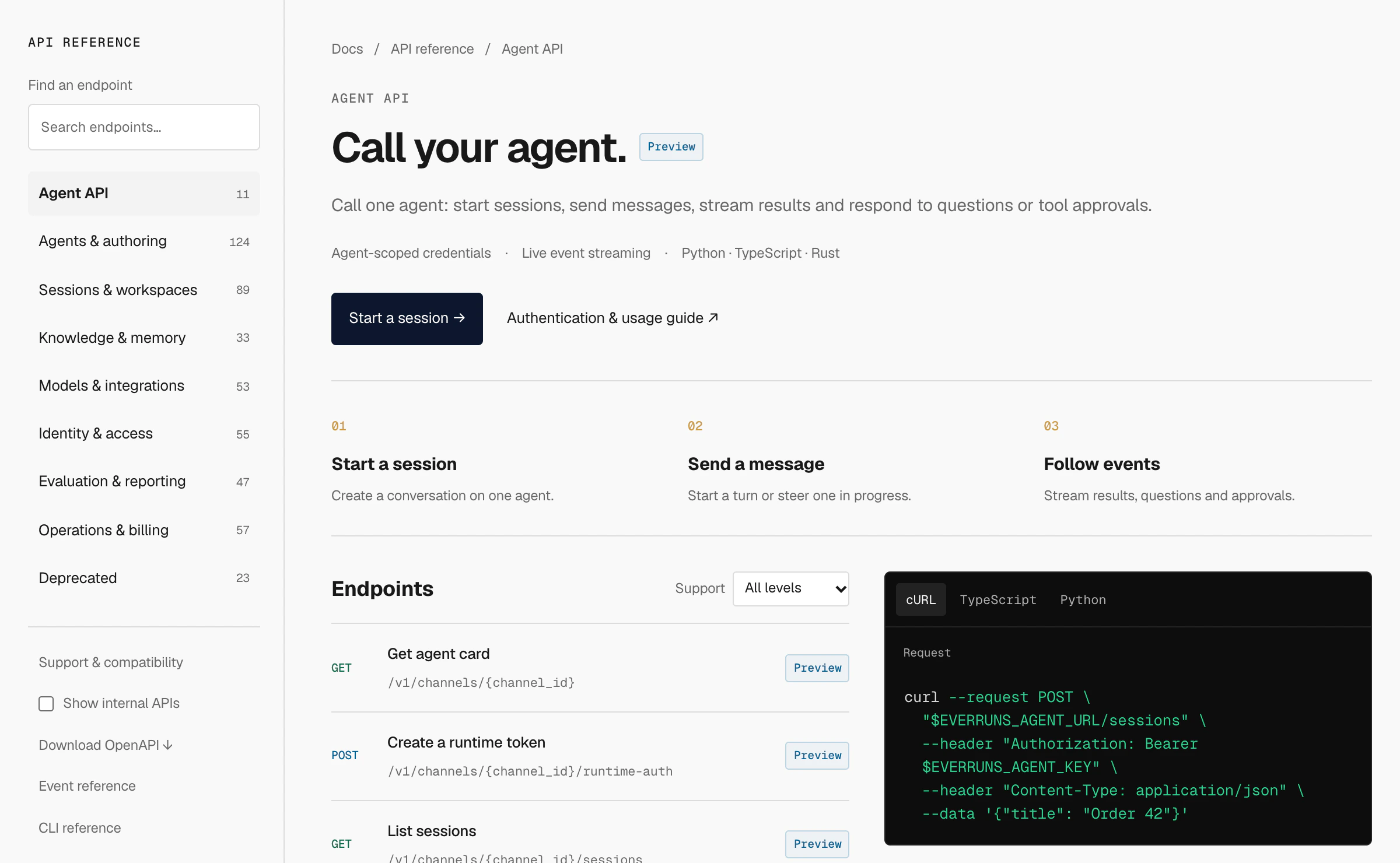
API reference groups endpoints and shows support
The API reference puts Agent API first, groups management endpoints, and shows support, availability and replacements for deprecated routes.
GitHub triggers narrow CI events by branch and workflow
The GitHub trigger form takes the branches and workflow names a CI trigger accepts, offers one session for every event, and the agent builder fills both in.
GitHub tools act as one chosen identity, with narrowed tokens
A new acts_as setting picks whose GitHub identity the tools use, and each call gets a token limited to one repository and the permissions it needs.
Check out private pull requests into the managed sandbox
The new github_checkout_pull_request tool fetches a pull request into the managed sandbox with a read-only token that never stays in the sandbox.
Org admins link the Everruns GitHub App, agents choose it explicitly
Org admins link Everruns GitHub App installations in Settings, and each agent chooses between its own GitHub App and a linked account.
Docs moved to everruns.com/docs
The documentation now lives at everruns.com/docs, and every docs.everruns.com link, Markdown file and schema redirects to the same page there.
Cloudflare Web Search joins as a Web Search provider
Connect a Cloudflare account as a search account and the web_search tool searches Ceramic, Exa or Linkup through the Cloudflare Web Search API.
Adopt agent examples and list provider accounts from the CLI
The everruns CLI and MCP can list and adopt agent examples such as pr-reviewer, and list an organization's provider accounts without their credentials.
Browser agents see their screenshots and keep their page
Browser screenshots now reach the model, Browserless tools no longer race on one page, and key presses report where focus landed.
API keys a Bashkit agent uses but never sees
Bind an API key to one URL and the Bashkit shell can call that API with $NAME, while the model only ever sees a placeholder and never the key.
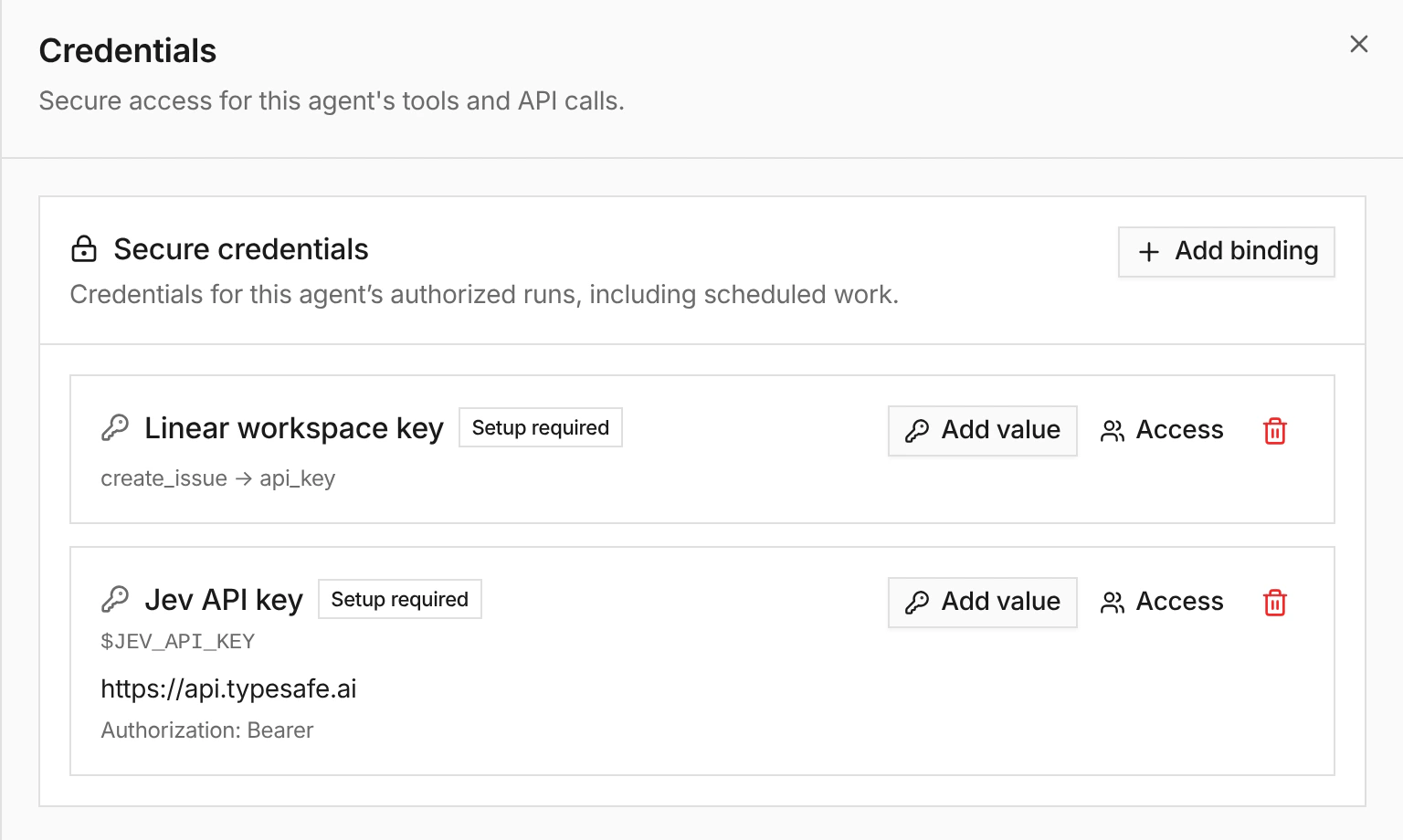
Agents can sync provider models with the Platform capability
sync_provider_models now works from an agent, and provider create and update from an agent discover models and set the organization's default model.
Agents can cap output tokens per response
A per-agent Max output tokens setting caps every model response, so agents keep running on a provider balance too low for the model's full output limit.
An agent's GitHub App gets its own section, name and avatar step
GitHub moves out of Triggers into its own section on the agent's Integrations tab, new Apps take the agent's name, and a step helps set the App's avatar.
Choose where an agent's GitHub App lives, and manage it from the CLI
Connect GitHub suggests the organizations your team already uses for an agent's App, an uninstalled App can start over, and the CLI manages it.
Set an agent's avatar from the CLI and MCP
The set_agent_avatar command takes a curated preset id or a base64 image, so an agent building another agent over MCP can give it a picture.
Yolop 0.21.0 release
Code search works without ripgrep installed, coordinators run threads as separate processes, and new setups default to the latest model on each provider.
SDK 0.3.0 release
SDKs default to the Everruns Cloud API URL, record why a change was made, and add an AgentClient for calling one agent through the Agent API.
Framework apps act as Poppy personal agents
PoppyPersonalAgent makes a Framework app a person's own agent over the Personal Agent Protocol, with the same tools Platform Chat uses and a runnable example.
Load Everruns workflow skills through MCP
The Everruns MCP endpoint serves two workflow skills for running sessions and authoring agents, with metadata and verified file manifests.
Call one agent from code with an Agent API key
An Agent API channel gives an application a key that reaches one agent's sessions, with streaming, approvals, end users, browser origins and spend limits.
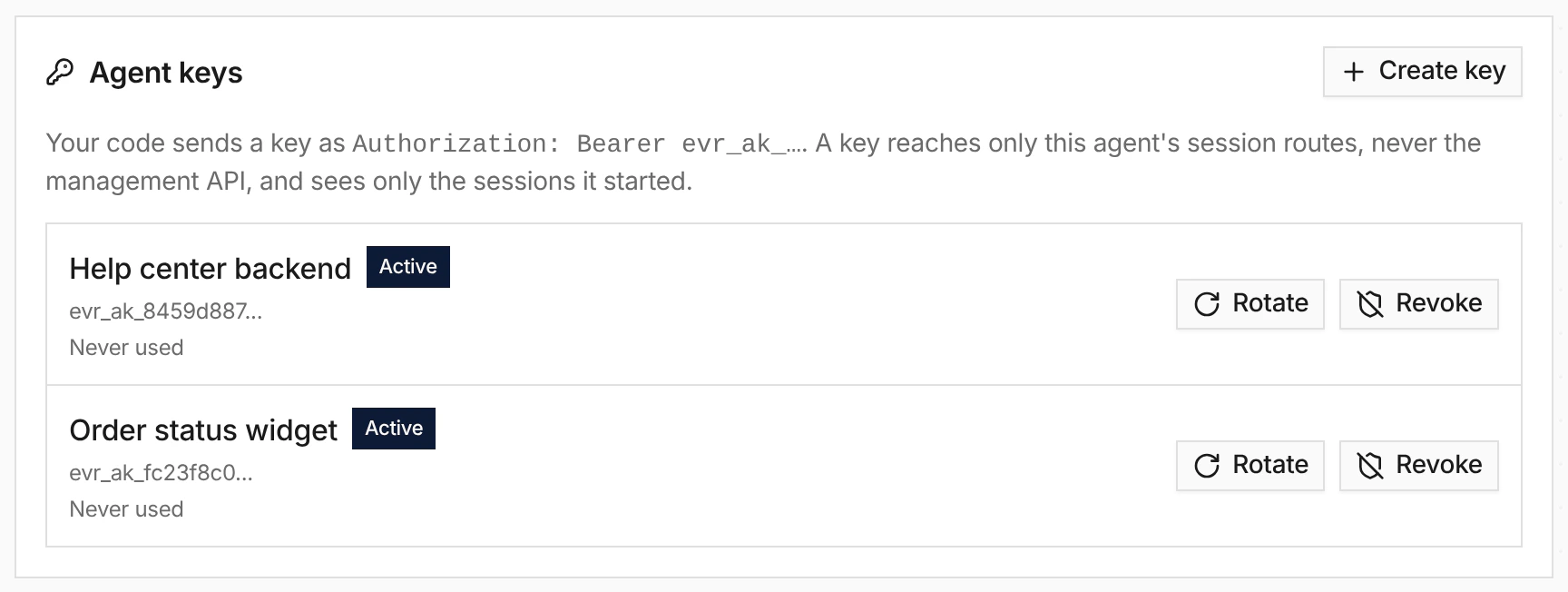
New setups default to the latest model on every provider
New Yolop setups default to gpt-6.1-sol, claude-opus-5-5, muse-spark-1.3 and gemini-3.8-flash; a saved model setting or the -m flag still takes priority.
Coordinators run threads as separate processes
Yolop now uses the Everruns coordination capability: each thread runs as a headless Yolop process in its own worktree and shows on a THREADS board in the TUI.
Code search works on machines without ripgrep
Yolop ships a built-in rg search as yolop utils rg and, when no system ripgrep is found, as an agent tool backed by the same engine as its search tool.
Tools in Shell runs an agent's tools from Bashkit scripts
The tools_in_shell capability moves most tools into one tools shell command, so a script can chain calls, preview them with tools plan and ask approval first.
Session Trace view replaces Transcript and Timeline
Sessions open on a Trace tab that lays out turns and steps with timing bars, an inspector for each step's input, output and model request, and event search.
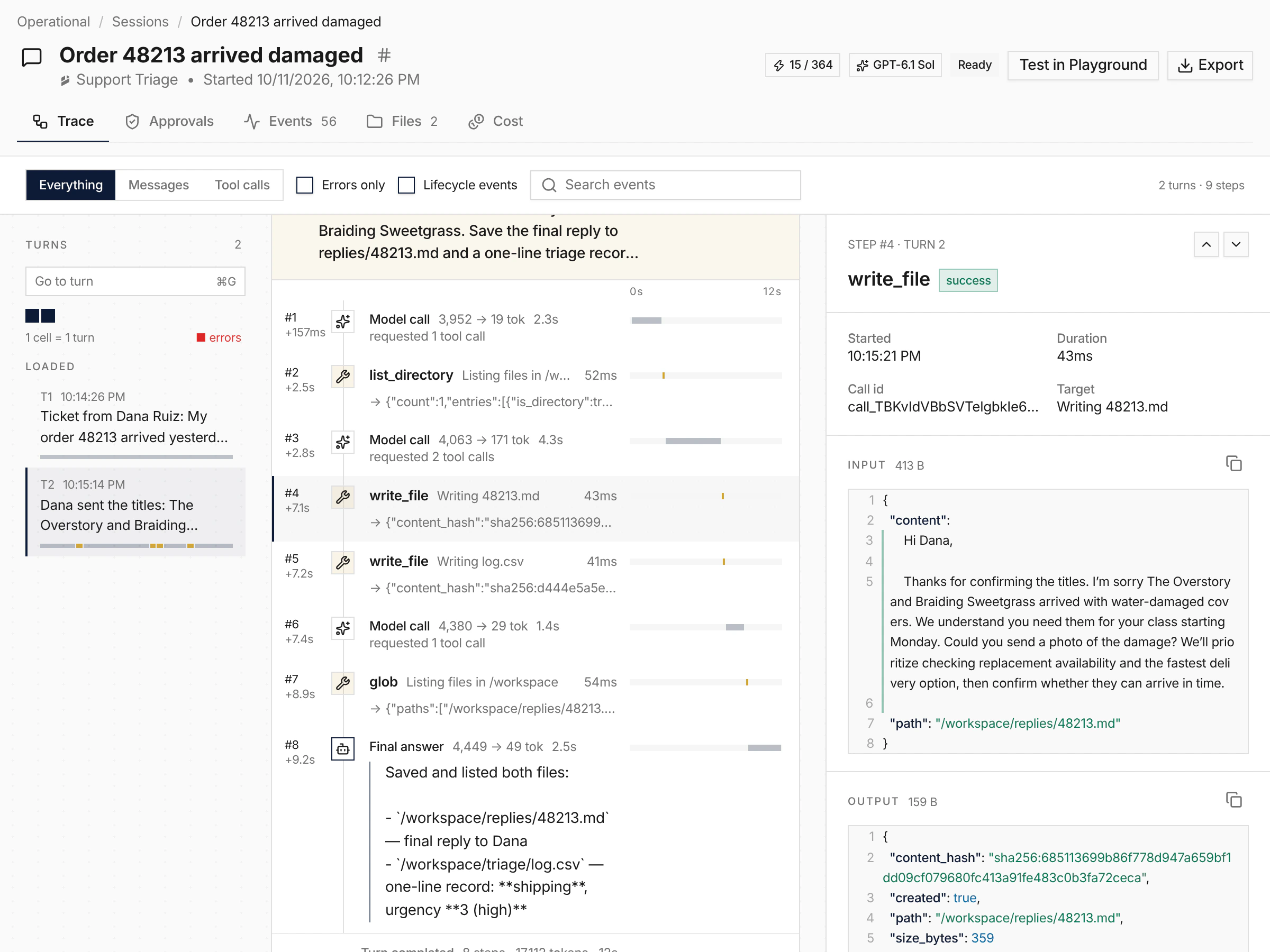
Session SQL databases survive server restarts
Session SQL databases are now stored in PostgreSQL page by page, so a server restart no longer loses them and every server instance sees the same data.
serve keeps daemon data in S3 and can require API keys
serve start --store s3:// keeps a daemon's data in an object store, agent routes can require API keys or OIDC, and serve resumes cut-off sessions at boot.
Everruns SDKs add AgentClient to call one agent with a key
The Python, TypeScript and Rust SDKs gain AgentClient, which calls a single agent through the Agent Execution API with an agent key, including SSE streaming.
Everruns agents act as Poppy personal agents
The poppy_client capability lets an Everruns agent find a company's agent through the Personal Agent Protocol, talk to it and hand off to a person there.
Add your own MCP servers and use them in chat
People add personal MCP servers in Settings, and agents with the User MCP Servers capability use them, including servers connected in the middle of a chat.
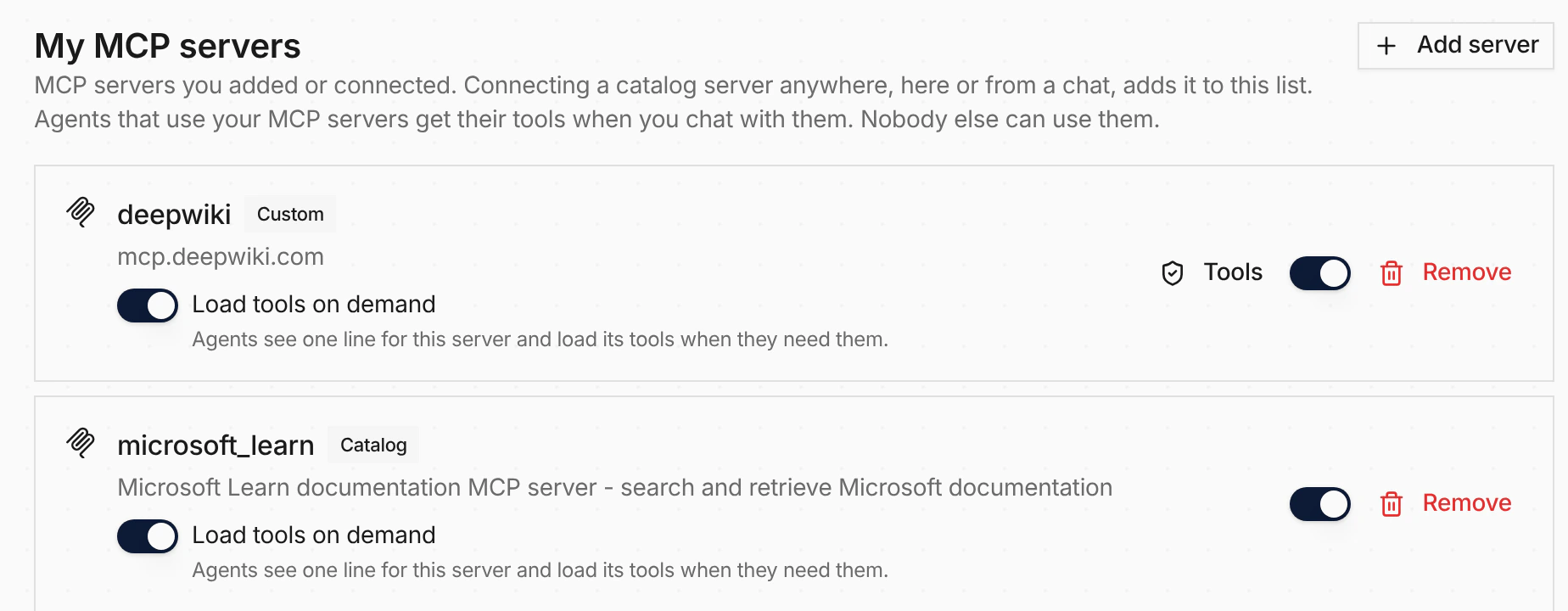
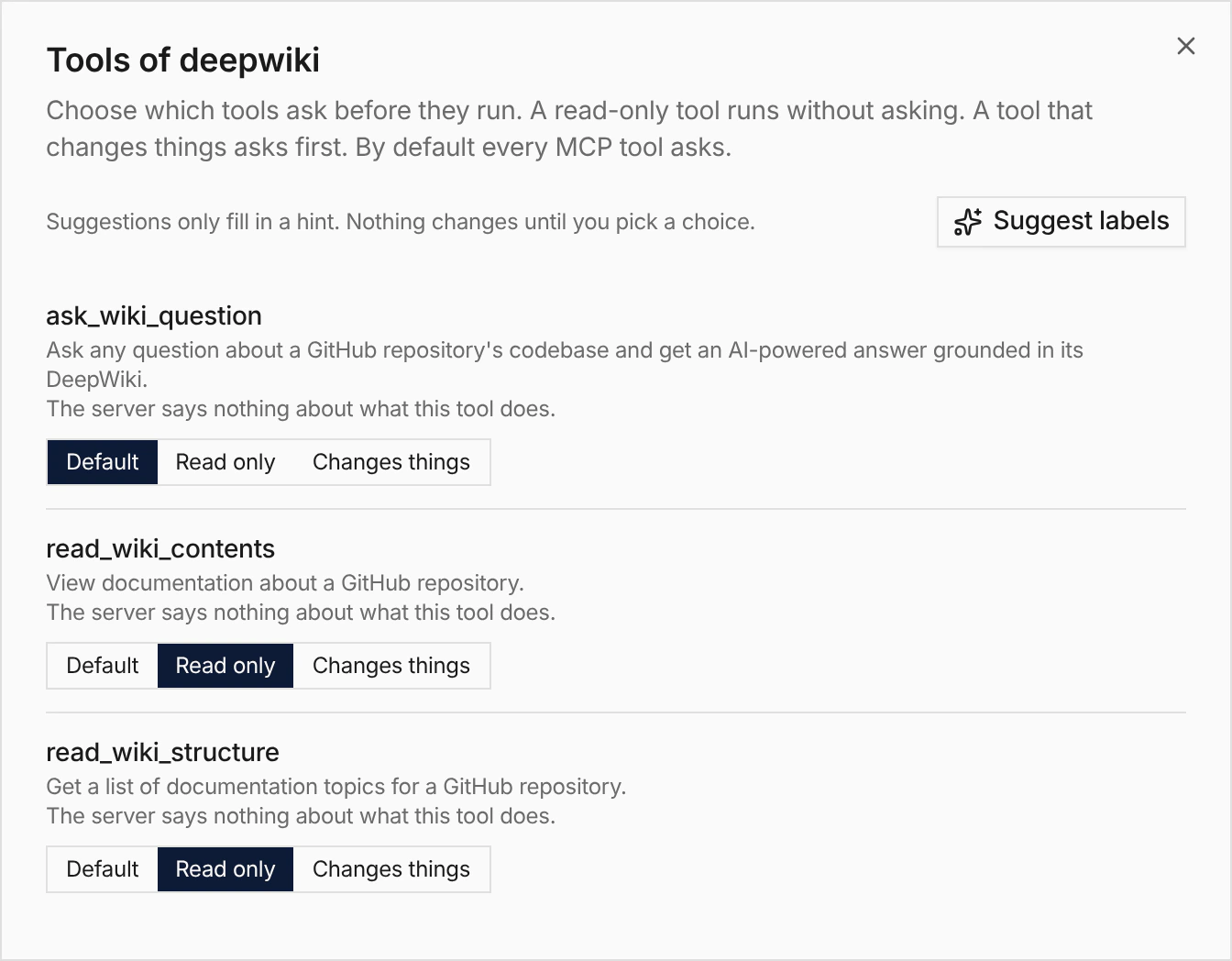
Label MCP tools as read only or changes things
Save a risk label on each tool of an organization MCP server to decide whether it asks for approval, with model-suggested labels a person can accept.
Built-in harnesses reorganized as a tree by use case
Base, Conversation, Worker, Bashkit Worker and Sandbox Worker now form a tree of built-in harnesses, and existing Worker bindings move by sandbox policy.
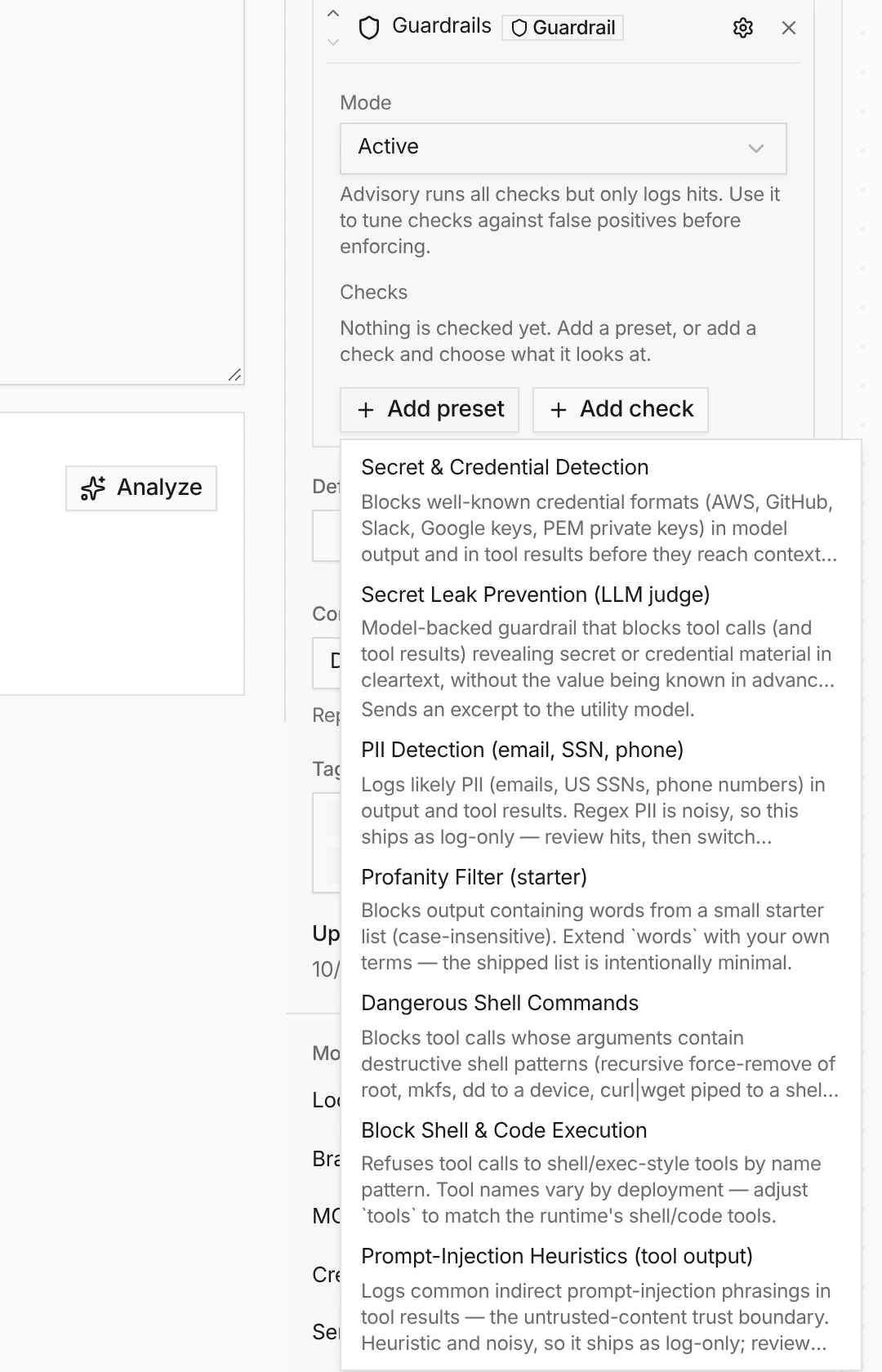
Pick and configure guardrail checks in the agent editor
The Guardrails settings panel lets authors add presets or single checks and set their stage and action, and model-backed checks can now judge the final reply.
GitHub triggers wake agents on CI results
GitHub triggers now receive workflow run and check suite completions, and a changes-only filter wakes the agent only when a workflow's CI result changes.
Explicit communication lets agents choose when to reply
An agent's Communication setting can be Explicit, so assistant text stays as private notes and the agent speaks only through send_message or stays silent.
Outbound network policy modes, audit log and org allowlists
Operators choose open or curated outbound access, every outbound request is audited with its org and session, and admins can widen the allowlist for one org.
Everruns Cloud verify-email screen sends a new link again
The email verification step on Everruns Cloud now offers Sign in again, which sends a fresh link, replacing a resend action that never sent any mail.
Everruns Cloud shows spend per model and agent on a Usage tab
A Usage tab breaks down Everruns Cloud charges by day, model and agent with token counts and CSV export, and a credit chip and banner warn on low credit.
Everruns CLI help shows a worked example for every command
Every everruns command now prints a worked example in --help, command groups describe themselves, and a generated reference documents each command group.
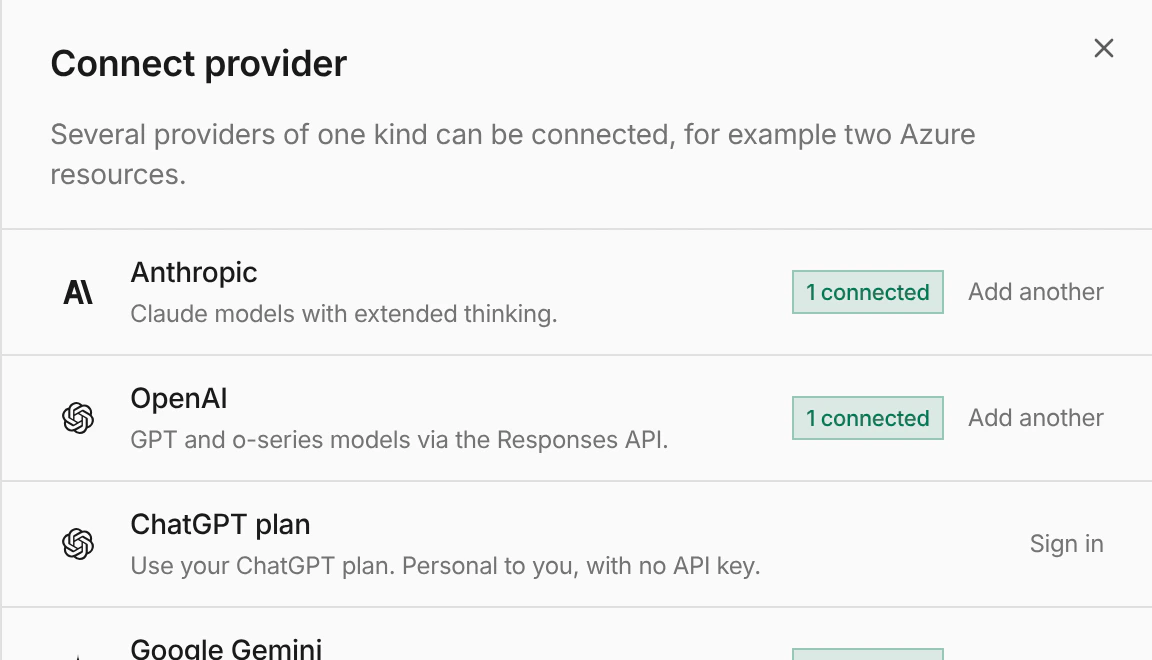
ChatGPT plan connections no longer need a feature flag
The ChatGPT provider now shows in Connect provider on every deployment, including Everruns Cloud, because signing in is already personal to each user.
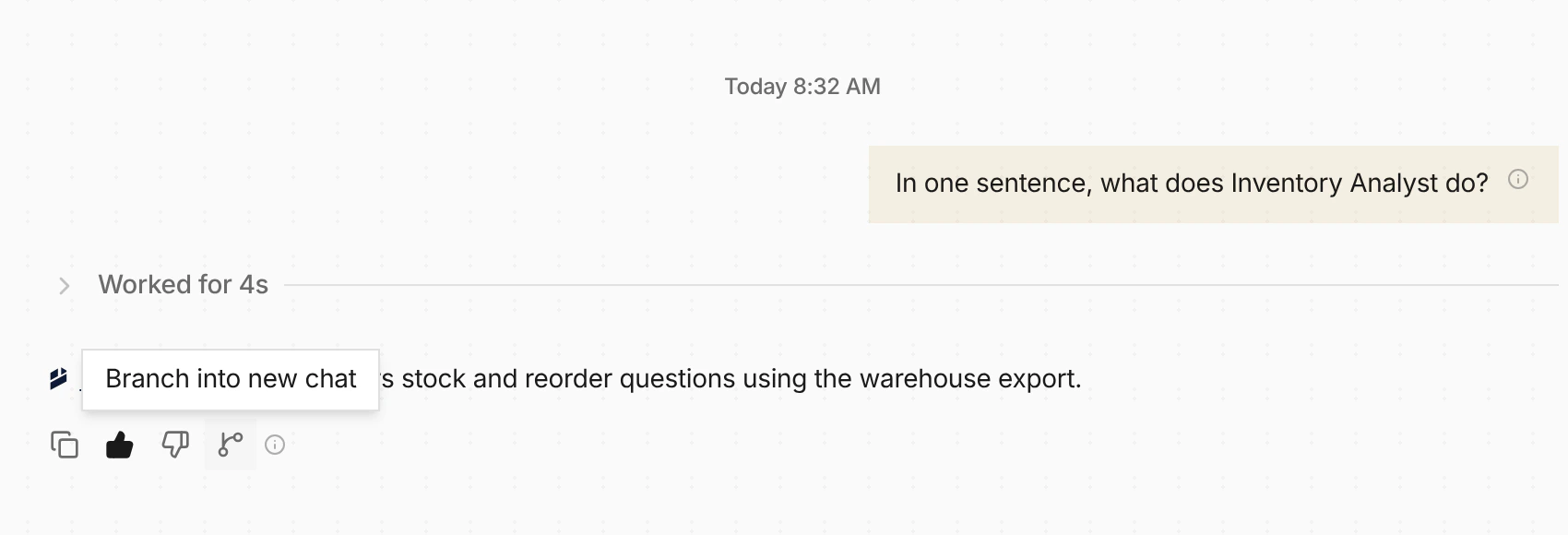
Rate agent replies and branch a chat from any message
Agent replies in Chat get Good, Bad and Branch into new chat actions, and each message shows one status row from sending until the answer arrives.
api_endpoint channels convert to Agent API channels
Existing api_endpoint channels become Agent API channels at startup with the same keys, and old request shapes now return api_endpoint_retired or HTTP 410.
Agents must give a reason for every change by default
Require reasons from agents is now on by default, so an agent's change without a reason fails with reason_required; organizations can turn the flag off.
Agent budgets stop turns before each model call
Agent budgets are now checked before every model call in the native agent loop, so an exhausted budget stops the turn with a typed reason and budget events.
Opt-in apply_patch editing for OpenAI models
The native_edit_tools capability gives OpenAI models in Yolop the Codex apply_patch tool, and every yolop subcommand now has a description and an example.
Yolop 0.20.0 release
OpenAI models can edit with apply_patch as an opt-in, integrations prefer known CLIs, and command help includes runnable examples.
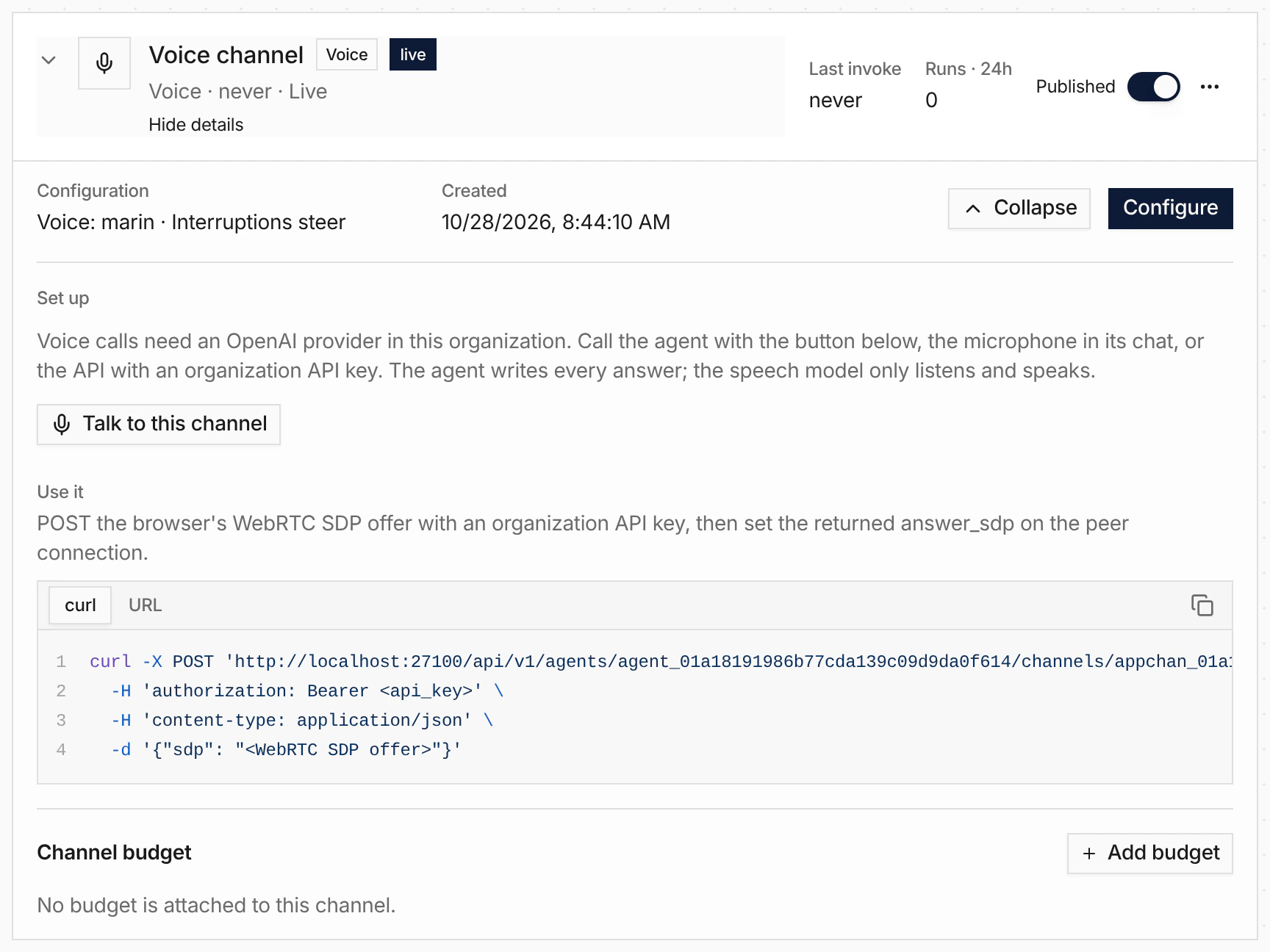
Voice channels let people call an agent
A voice channel lets people talk to an agent over WebRTC while it keeps its own model, tools and instructions, on the platform and in the Framework.
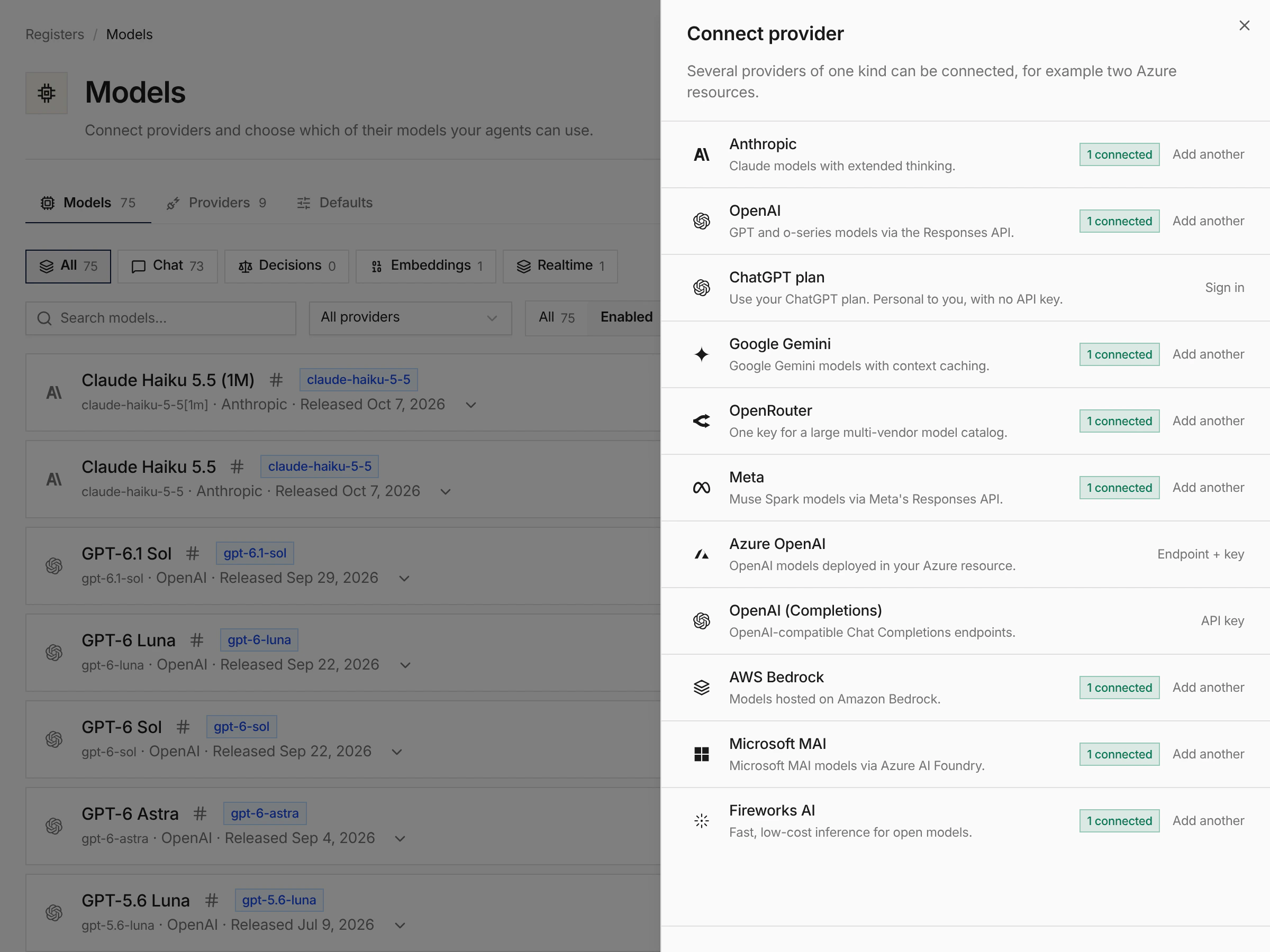
Models and providers move into one registry page
Registries → Models now holds Models, Providers and Defaults tabs, so connecting a provider, choosing its models and setting org defaults happen in one place.
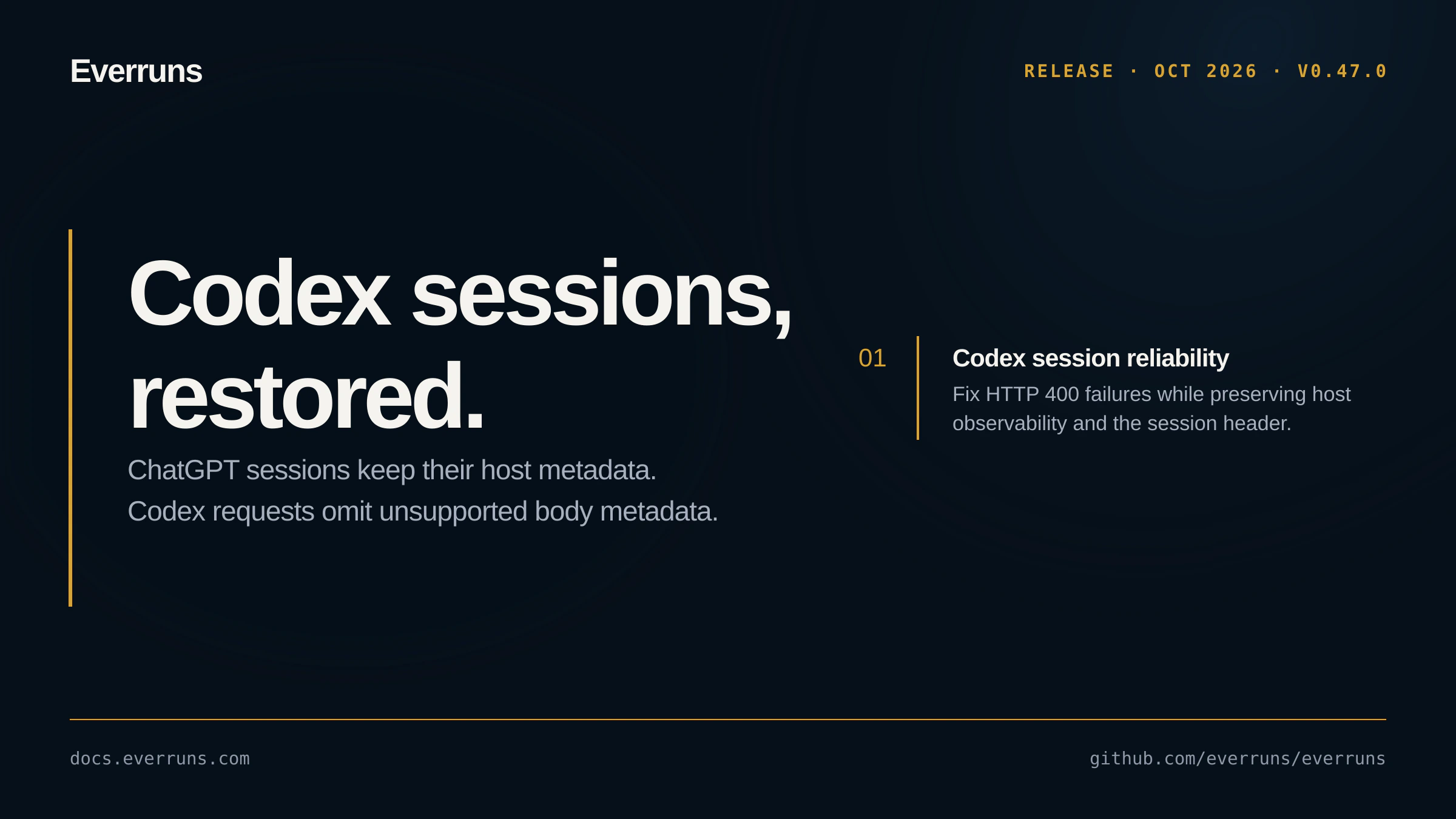
Everruns 0.47.0: Codex session reliability
An Agents home and a New agent page with an agent builder, a fix for ChatGPT plan sessions failing with HTTP 400, and a list of connected AI clients.
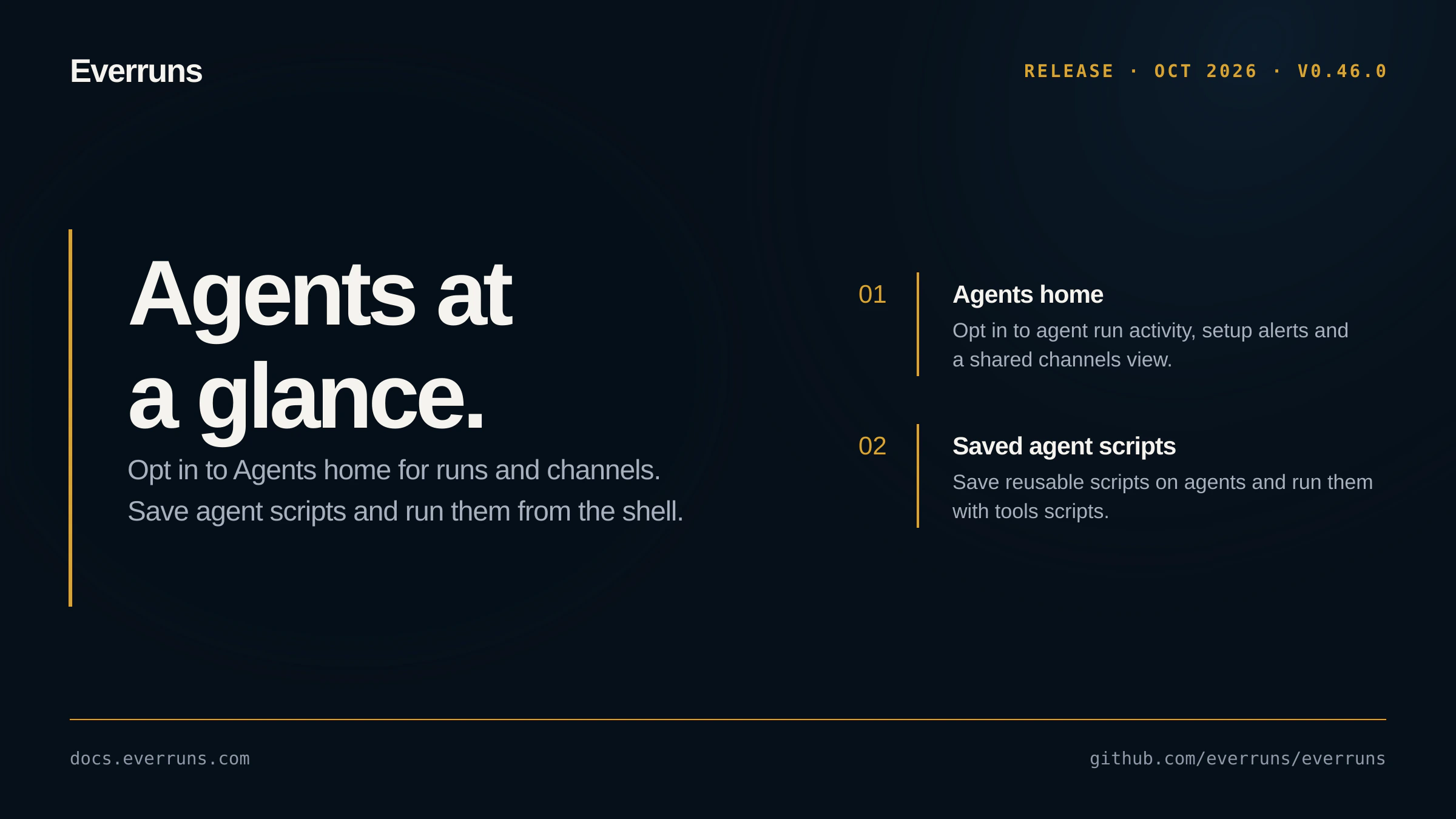
Everruns 0.46.0: Agents home
Save shell scripts on agents and run them with tools scripts, and the Agents home shows run activity, setup alerts and a shared Channels view.
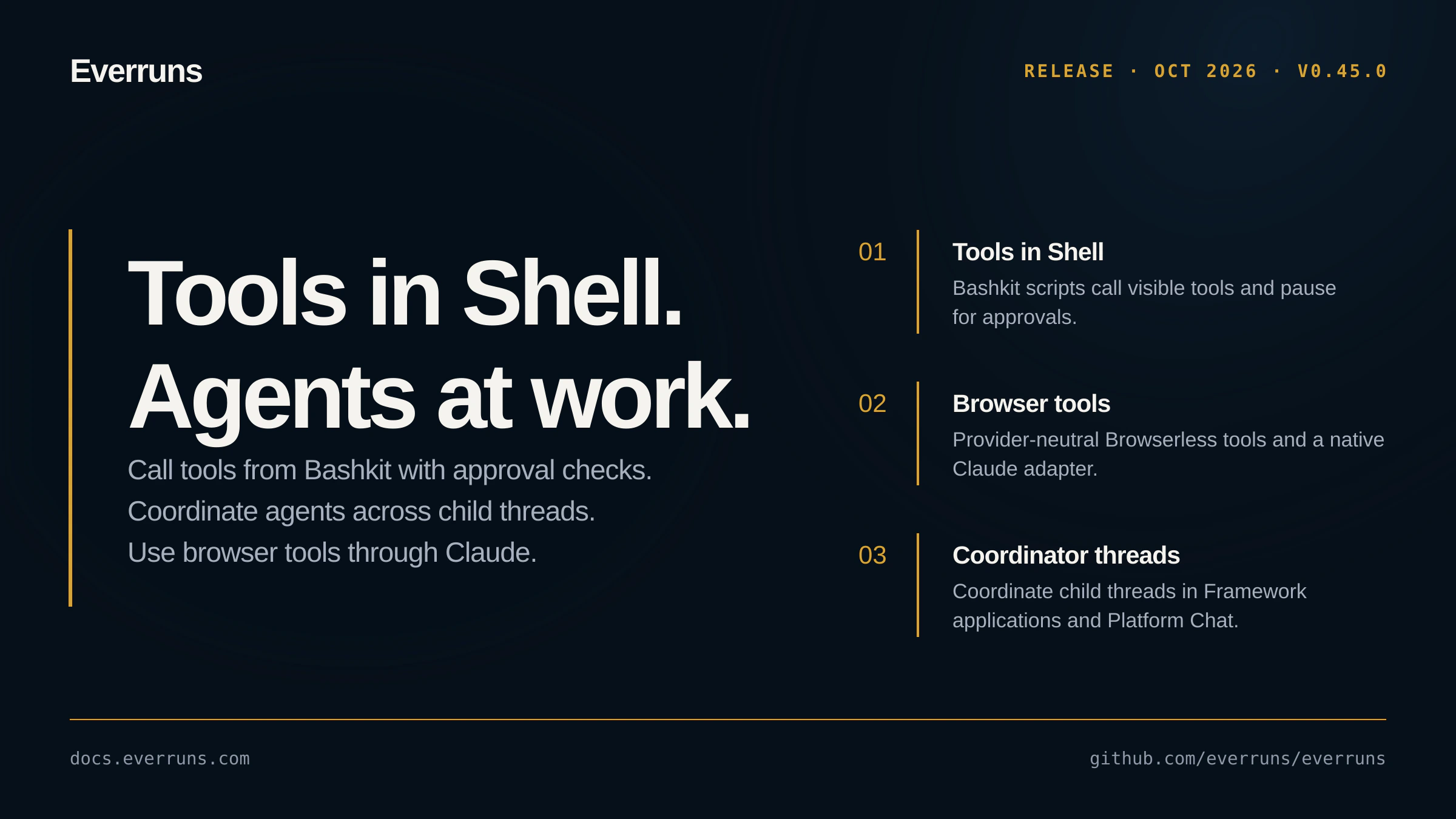
Everruns 0.45.0: Tools in Shell
Agents get a browser tool on Browserless, coordinator threads arrive in Platform Chat and the Framework, and agents can run tools from the shell.
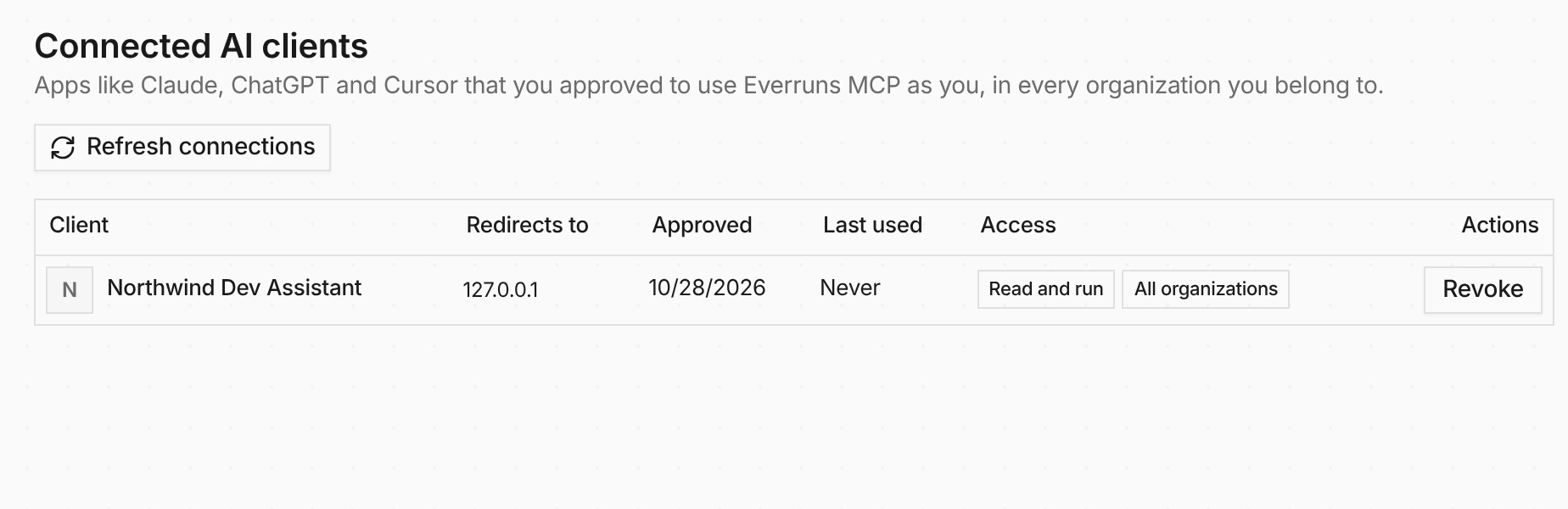
See and revoke AI clients connected to Everruns
Settings → My agent experience lists the AI clients you connected to Everruns over MCP OAuth, shows when each was last used, and lets you revoke one.
app.everruns.com serves llms.txt and auth.md for AI agents
AI agents and crawlers can discover Everruns Cloud from app.everruns.com itself through llms.txt, auth.md, Link headers, robots.txt and a sitemap.
Fix ChatGPT plan sessions failing with HTTP 400
Sessions that use a ChatGPT plan connection no longer fail with HTTP 400, because Everruns stops sending request-body metadata the Codex backend rejects.
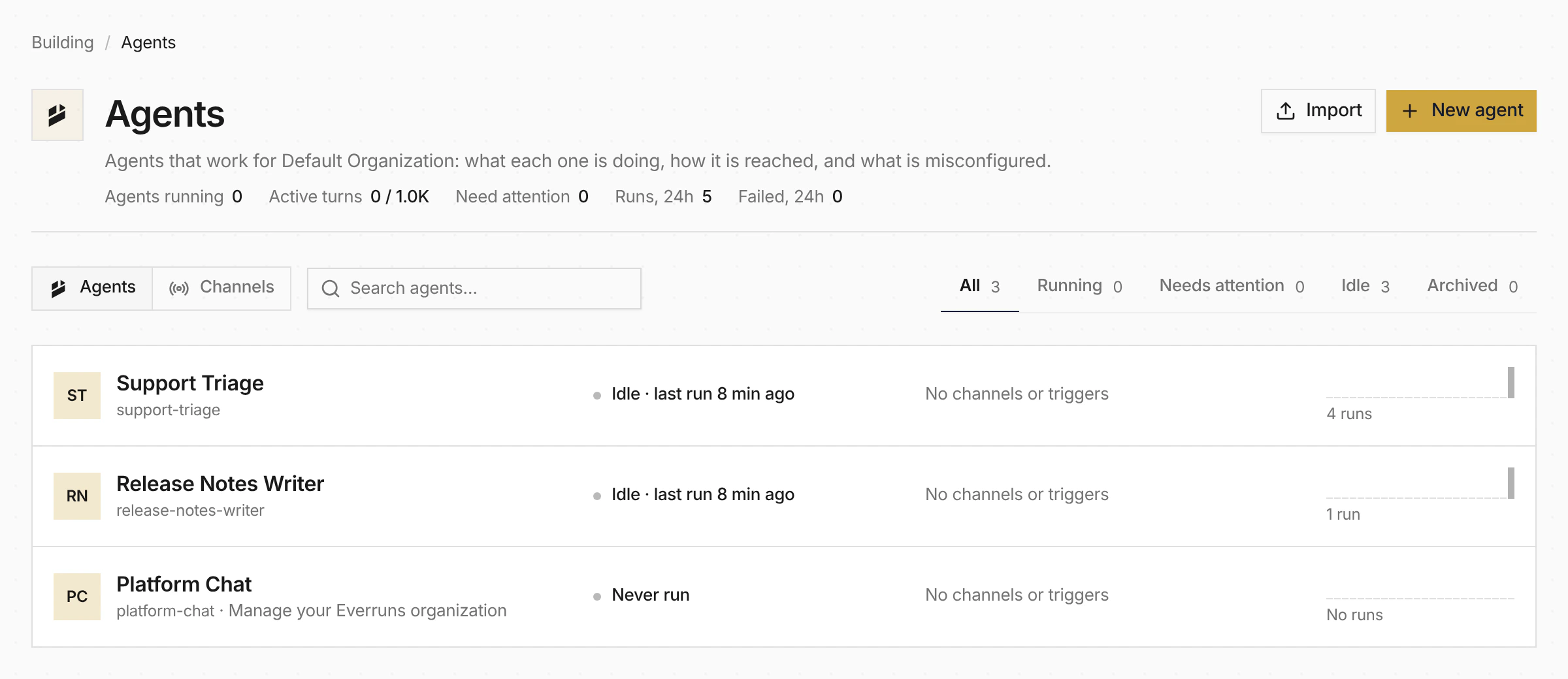
Agents home and a New agent page with an agent builder
The Agents page now shows run activity, channels and setup problems for each agent, and New agent drafts an agent from a description, an example or an import.
Save shell scripts on agents and run them from triggers
Agents keep named shell scripts that run in Bashkit with their tools, and schedule or webhook triggers can run one with the event payload and no model call.
Everruns SDKs record why a change was made
All three Everruns SDKs add with_reason, a derived client that sends a change reason the server stores in the changed entity's change history.
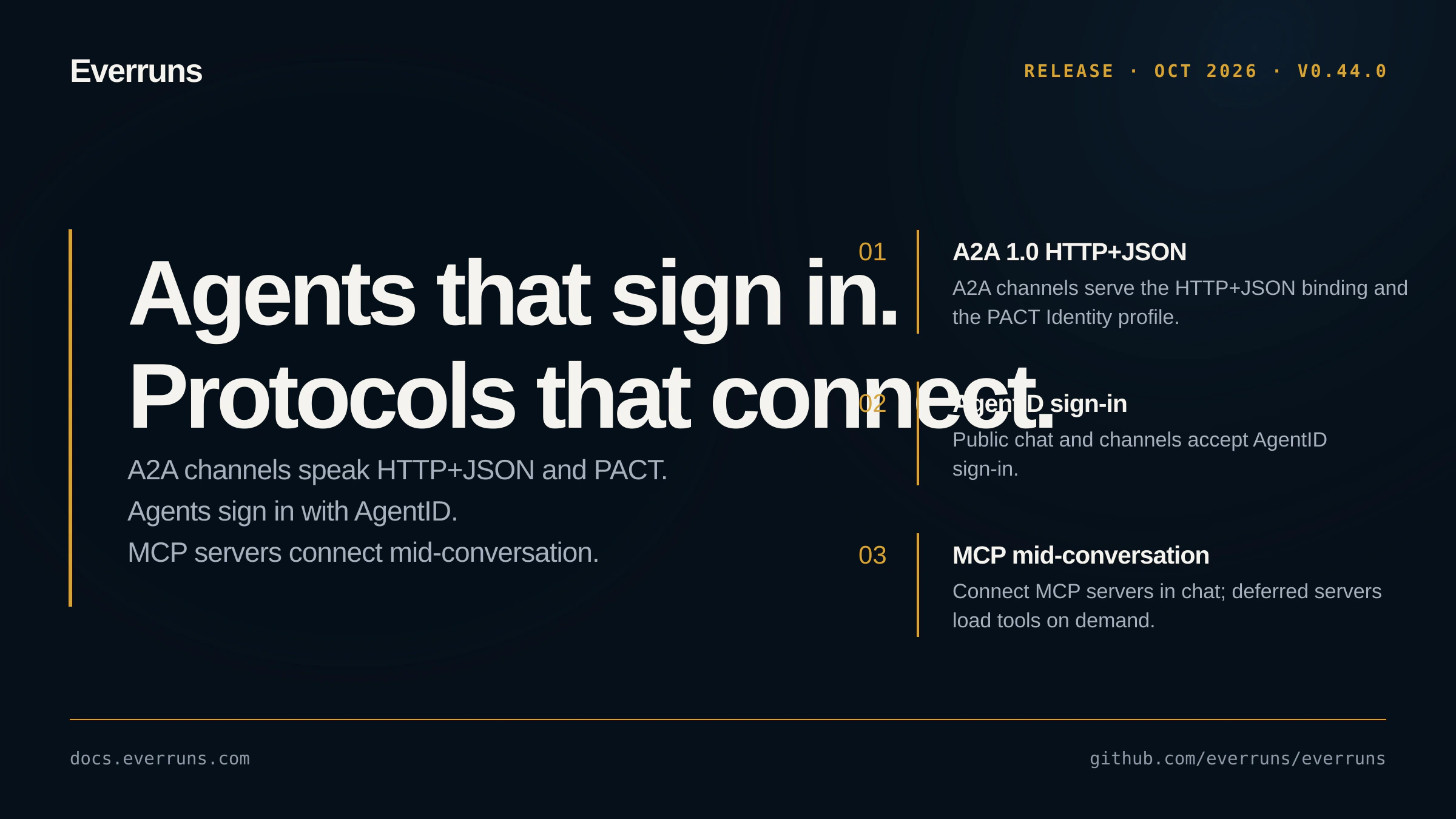
Everruns 0.44.0: A2A 1.0 HTTP+JSON and PACT
Agent versions are retired in favor of change history, A2A channels serve HTTP+JSON and the PACT profiles, and MCP works inside conversations.
Desktop computer use on E2B and Daytona sandboxes
Experimental capabilities run the computer tool on a full Linux desktop in an E2B or Daytona sandbox, now with zoom, cursor, mouse button and hold-key actions.
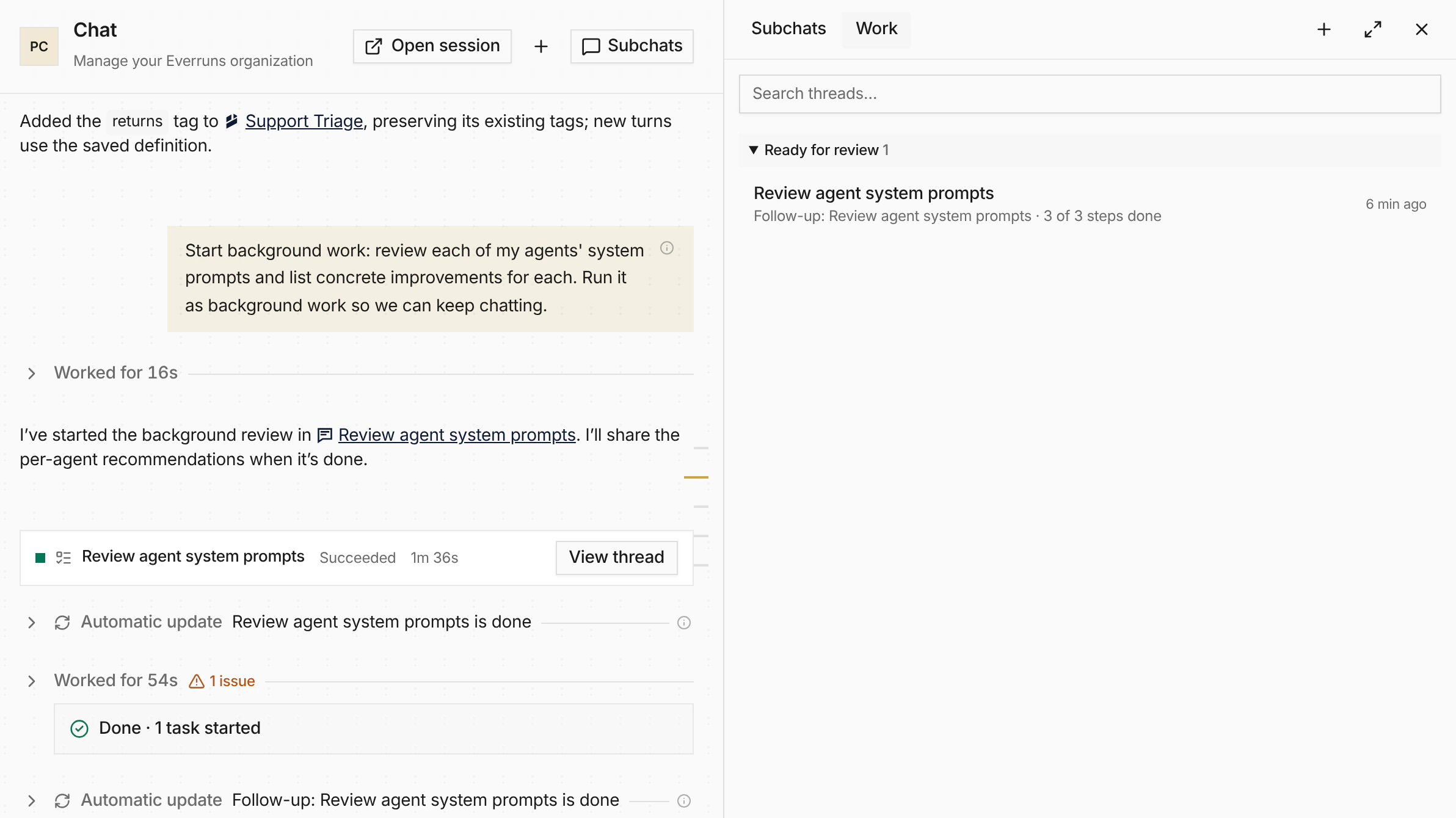
Coordinator threads in Platform Chat and the Framework
Platform Chat and Framework agents can hand focused work to child threads and keep a board of what is working, what needs you and what is ready for review.
Browser tool for agents on Browserless
The experimental browser_use capability lets an agent read pages as an accessibility tree, act on elements by ref, fill forms and manage tabs in Browserless.
History, completion and bash -i work like bash
Bashkit adds history and fc, complete and compgen, bind, prompt expansion and an interactive bash -i child shell, each with state kept per interpreter.
Everruns 0.43.0 release
The 18 deprecated integration shim crates are removed after their forwarding release; integrations stay available from everruns-integrations.
Claude Haiku 5.5 model added for Anthropic providers
The claude-haiku-5-5 model and its 1M-context twin are seeded as an enabled favorite, with adaptive thinking, tool search and the computer toolset.
An in-process terminal and TerminalTool for agents
A terminal feature runs a Bashkit session in an in-memory terminal with vi, less and more, and TerminalTool lets an LLM agent type keys across named tabs.
A make builtin and 21 everyday commands
Bashkit gains a GNU make 4.3 subset that runs recipes in the sandbox shell, plus nohup, flock, getconf, free and 17 other commands that scripts often call.
Real CPython 3.14 runs as python3 in a sandbox
An opt-in cpython feature makes python3 in Bashkit real CPython 3.14 in a WebAssembly sandbox, with the stdlib and HTTP through Bashkit's network policy.
Background jobs and pipeline stages run concurrently
Bashkit now runs cmd & jobs alongside the shell and streams pipeline stages into each other with SIGPIPE, adding jobs, wait -n, kill and related builtins.
awk is rewritten to follow gawk 5.2
Bashkit's awk, gawk, mawk and nawk builtins now target gawk 5.2, with POSIX awk, common gawk extensions, and system() and pipes through the sandbox shell.
Sign in to channels and Public Chat with AgentID
A2A, AG-UI and Public Chat channels accept AgentID tokens, Public Chat shows Continue with AgentID, and agents can sign in to apps with their AgentMail inbox.
A2A channels serve HTTP+JSON and the PACT profiles
Every A2A channel also answers the A2A 1.0 HTTP+JSON binding, and a channel can accept personal agents through the PACT Identity and Delegated profiles.
Everruns 0.42.0 release
Agents get avatars from presets or an uploaded image, sandboxes can start from templates, and a Sandboxes fleet view shows every running sandbox.
Change history with reasons and restore for every entity
Every configuration change records who made it, through which surface and why, with numbered revisions you can compare and restore from the History menu.
Sessions start with a default root filesystem
Every Bashkit session now has read-only /etc, /proc and /usr/bin entries, so scripts that read os-release or cpuinfo or call /usr/bin/env find what they expect.
Agent versions are retired in favor of change history
Agent publishing, default versions and version pins are removed; channels, triggers and sessions now run the agent's current configuration instead.
Sandbox Templates and a Sandboxes fleet view
Reusable Sandbox Templates with immutable revisions decide where an agent's commands run, and a fleet page lists every sandbox in the organization.
Agents get avatars from presets or an uploaded image
Give an agent an avatar from 25 curated presets or a cropped upload, and it shows in the console, on the A2A Agent Card and as the Slack app icon.
Yolop 0.19.0 release
GPT-6.1 Sol, the GPT-6 family and Claude 5.5 models are available, and ChatGPT sign-in goes through the open-source route.
Framework crates consolidated into everruns-core and the facade
Engine, host, builtins, MCP, AG-UI, driver and contract crates merged into fewer packages, so Framework users update dependencies and imports when upgrading.
Everruns 0.41.0 release
Framework crates are consolidated into everruns-core and the everruns facade, and the deprecated forwarding shims are removed. Read the upgrade notes.
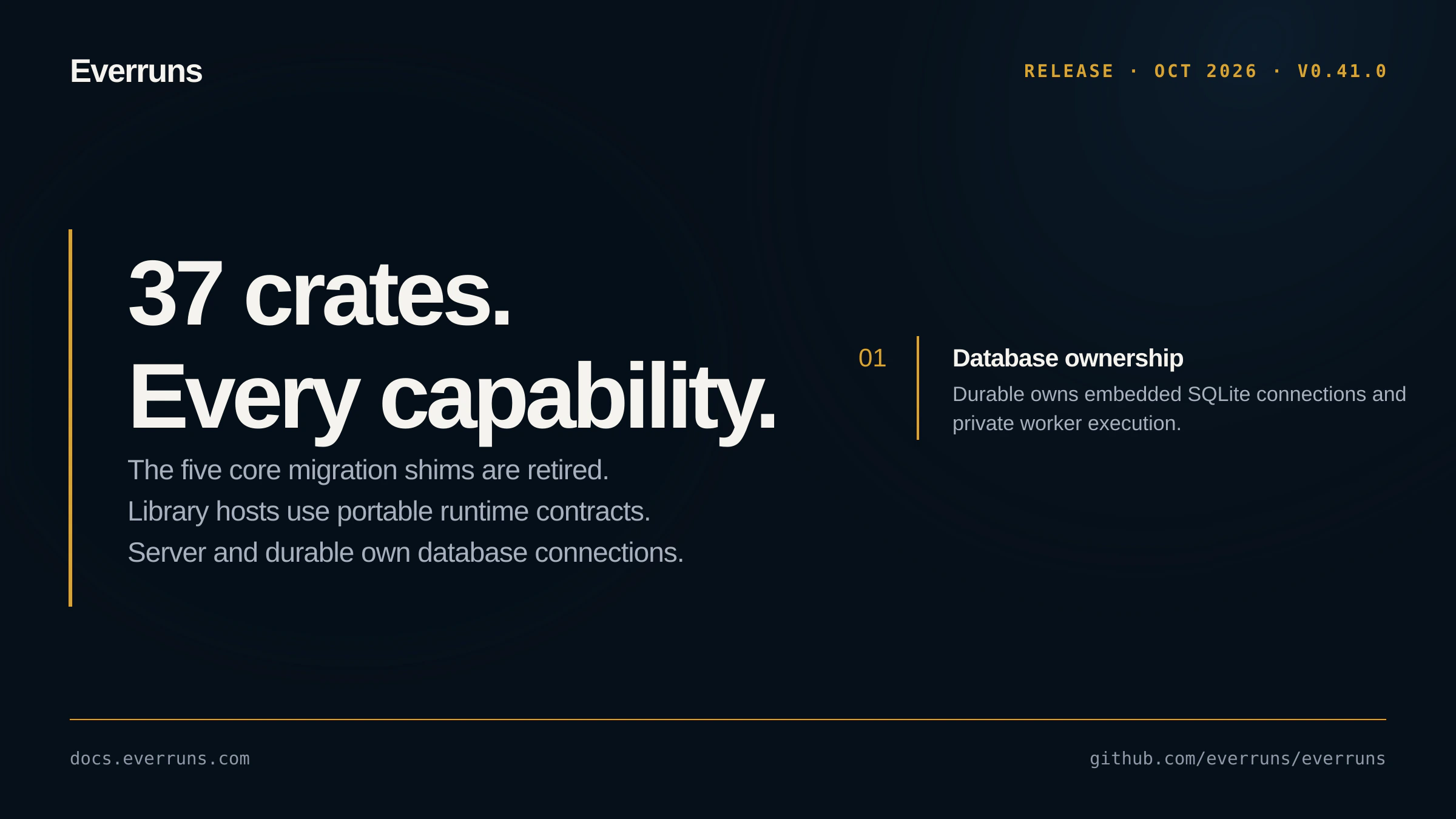
Everruns 0.40.0 release
Engine, host, builtins, MCP and AG-UI become everruns-core features, operators can enroll adoption features, and the MCP card reports the version.
Everruns 0.39.0 release
Chat threads keep conversations and ongoing work beside Chat, and Slack permission problems appear in Health with steps to recover.
Slack permission issues appear in Health with recovery steps
Slack installations missing a permission or credential raise a persistent issue in Settings > Health, with guided recovery, per-user snoozing and rechecks.
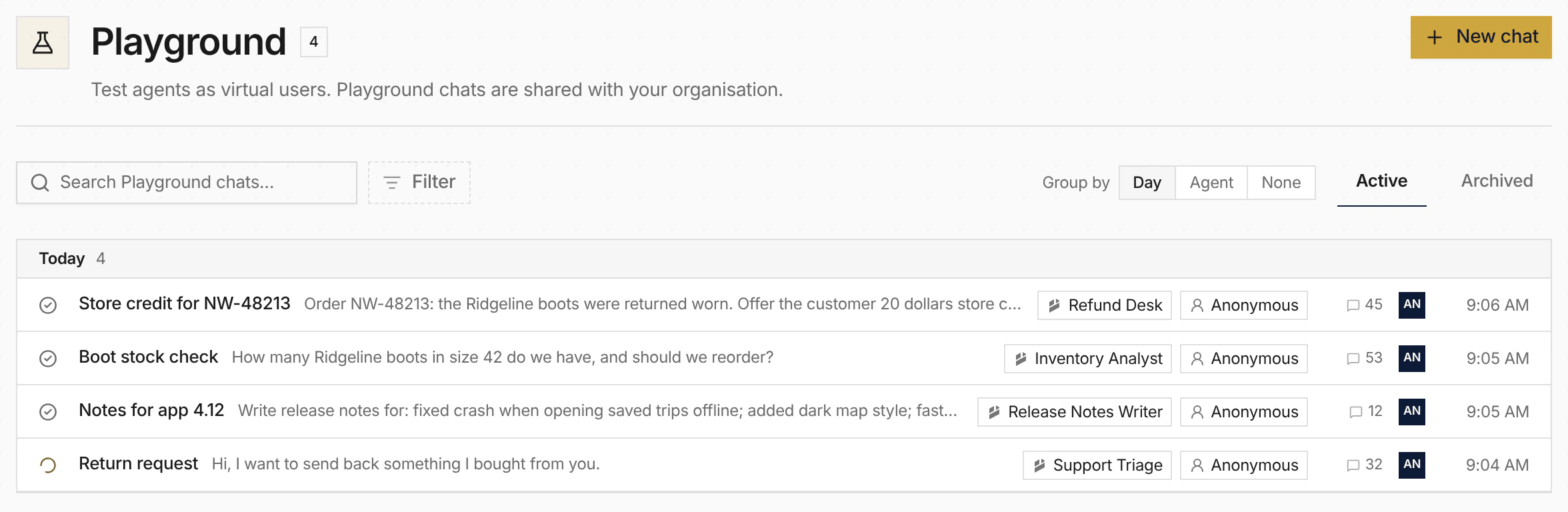
Playground for testing agents, and Chat as one permanent conversation
Agent testing moves to a shared Playground where members pick the agent and the user it runs as, while Chat becomes your permanent Platform Chat conversation.
Feature flag grade preview renamed to internal for operators
Self-hosted operators must replace FEATURE_*=preview with internal, as rollout grades now set availability, organization defaults and who may enable a feature.
Everruns 0.38.0: Personal ChatGPT plan connections
Connect a personal ChatGPT plan as a model provider, Conversation becomes the default harness with Generic deprecated, and custom hosts get stock subagents.
Everruns 0.37.0: Approval history in context
Approval history shows in chat and on a new Approvals audit page, agent channels are visible at a glance, and navigation keeps your place.
Everruns 0.36.0: Choose an Agent Environment
Agents can choose their environment, a broken Slack installation can be repaired in place, and session storage gets its own permissions.
Everruns 0.35.0: Safer sandbox tools
A computer use capability lets agents operate a browser screen, sandbox tools are safer, questions are answered in chat, and every org gets Platform Chat.
Conversation becomes the default harness and Generic is deprecated
Built-in harnesses form progressive presets from Base to Worker, Conversation is the new default, and agents that inherited Generic are pinned to it on upgrade.
Computer use capability lets agents operate a browser screen
The experimental computer_use capability drives a Browserless page with clicks, typing and screenshots, using native OpenAI or Anthropic tools when available.
Connect a personal ChatGPT plan as a model provider
Self-hosted users can sign in with ChatGPT from provider settings to run on their own ChatGPT plan, with account status, reconnect controls and private models.
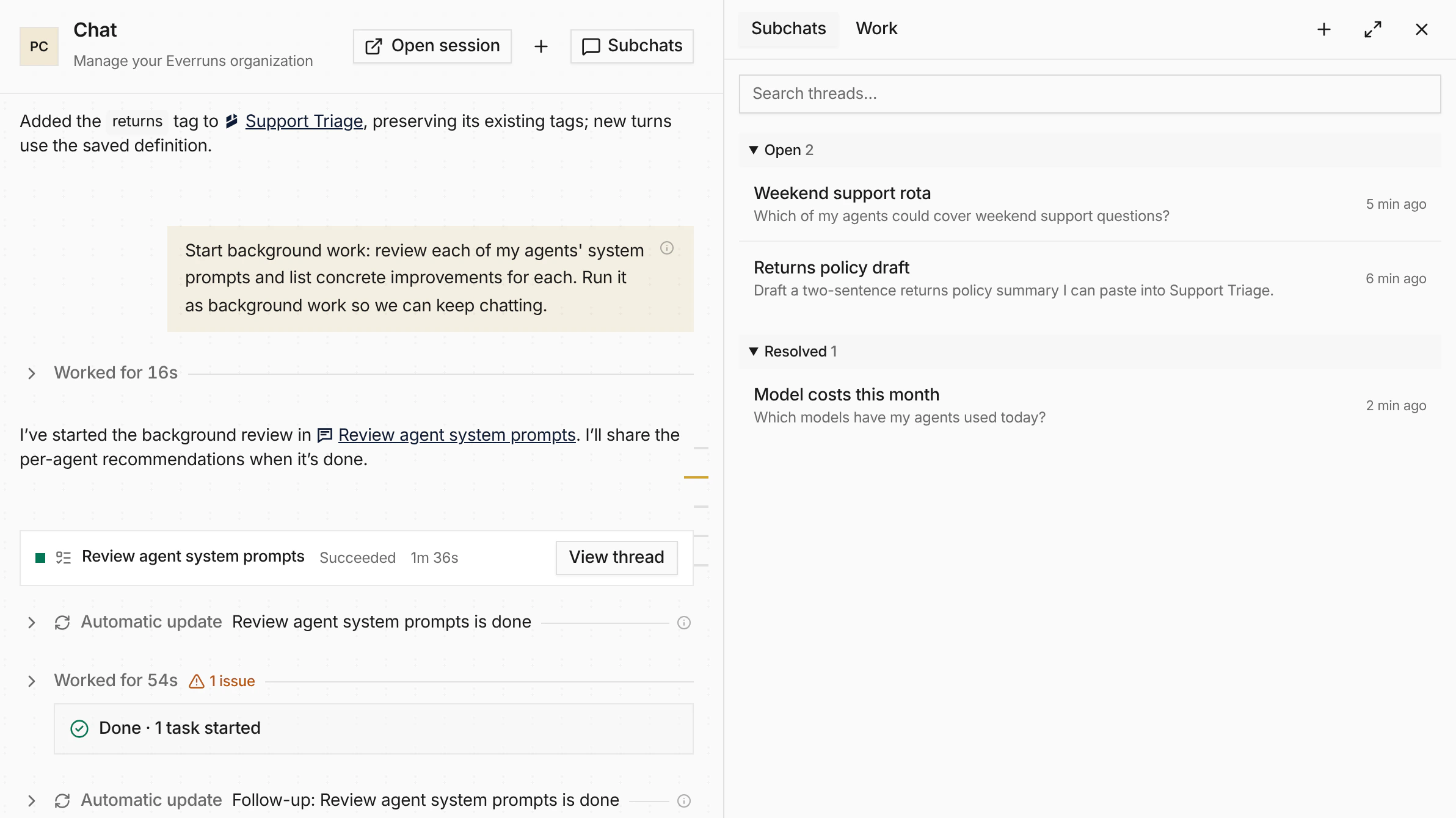
Chat threads keep conversations and ongoing work beside Chat
Organizations can opt into Chat threads, a panel beside the permanent Chat for searching conversations, following background work and resolving threads.
Approval history in chat and a new Approvals audit page
Chats show approval requests and recorded consent as clear entries, and organization admins get an Approvals page that filters approvals across sessions.
ChatGPT sign-in through the open-source route
Yolop's codex provider now signs in with OpenAI's open-source Sign in with ChatGPT by default and runs turns on the public Responses API on your ChatGPT plan.
Host Everruns serve apps on Amazon Bedrock AgentCore Runtime
The experimental everruns-serve-agentcore crate runs a serve app on AgentCore Runtime with AG-UI streaming, a WebSocket transport and Bedrock models.
Everruns SDKs default to the Everruns Cloud API URL
An Everruns SDK client created with only EVERRUNS_API_KEY now reaches Everruns Cloud instead of a placeholder URL; EVERRUNS_API_URL still overrides it.
everruns-durable workflow engine published on crates.io
The durable workflow engine behind Everruns ships as its own crate with timers, child workflows and a bundled idempotent PostgreSQL schema you can migrate.
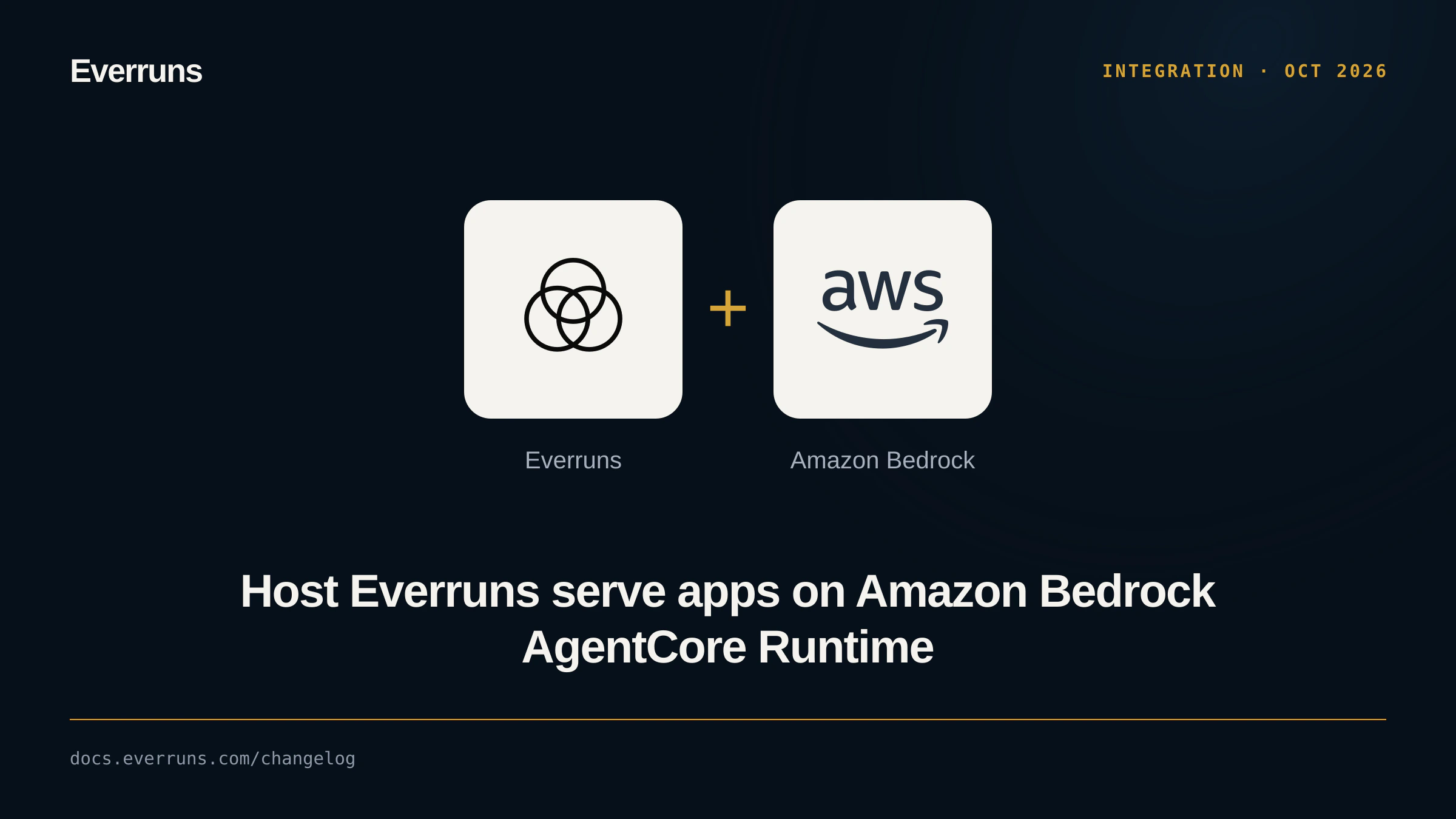
Everruns 0.34.2: Execution kernel in a JavaScript isolate
Cloudflare AI Gateway and Vercel AI Gateway become model providers, Workers AI models are discoverable, and the kernel runs in a JavaScript isolate.
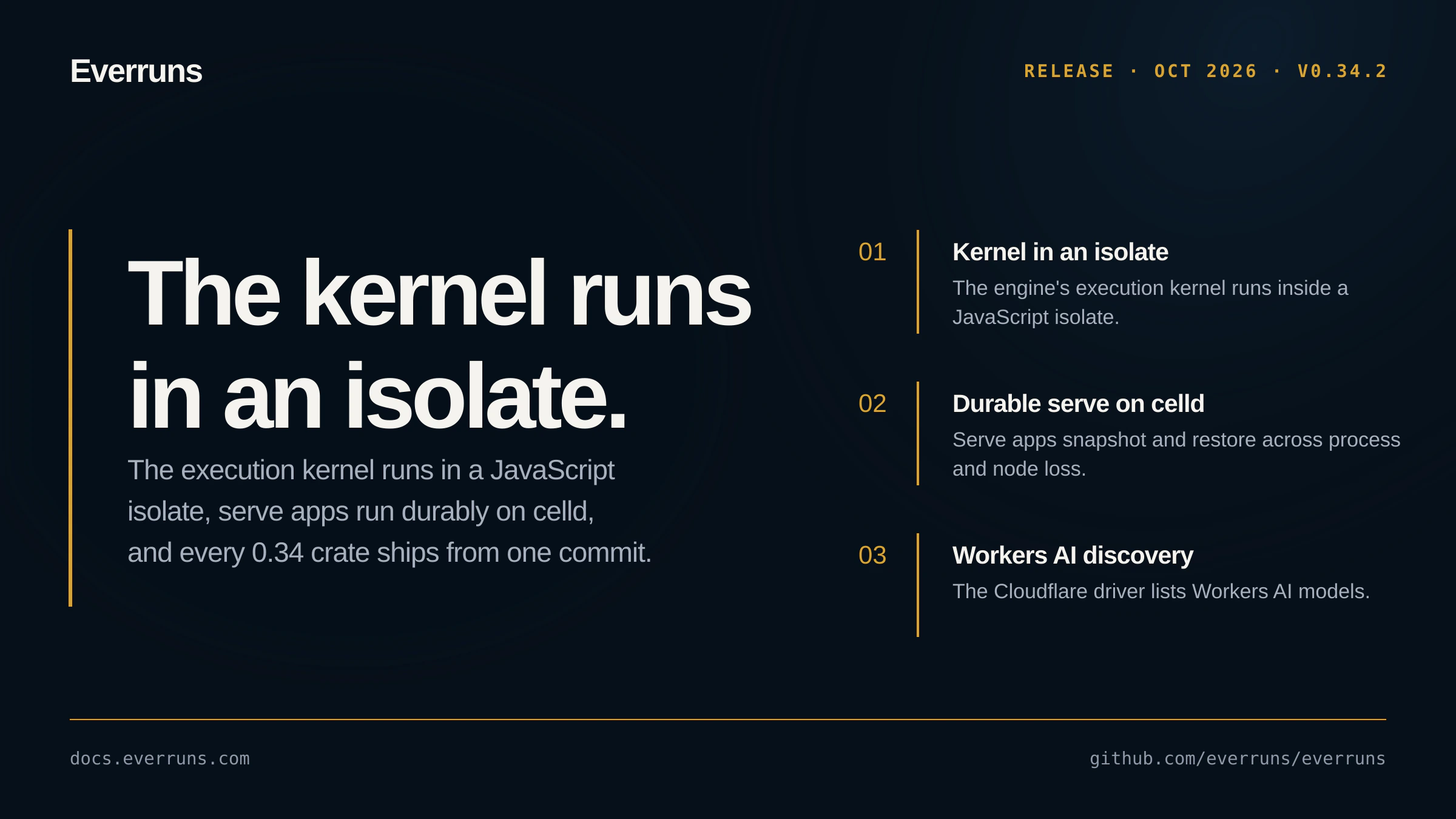
Everruns 0.34.1 release
The everruns-durable workflow engine is published on crates.io, and Everruns serve apps can be hosted on Amazon Bedrock AgentCore Runtime.
Everruns 0.34.0: AG-UI 1.0
PR reviewer and security scanner templates for GitHub, MCP Events with session webhooks and triggers, and AG-UI 1.0 and A2A 1.0 support.
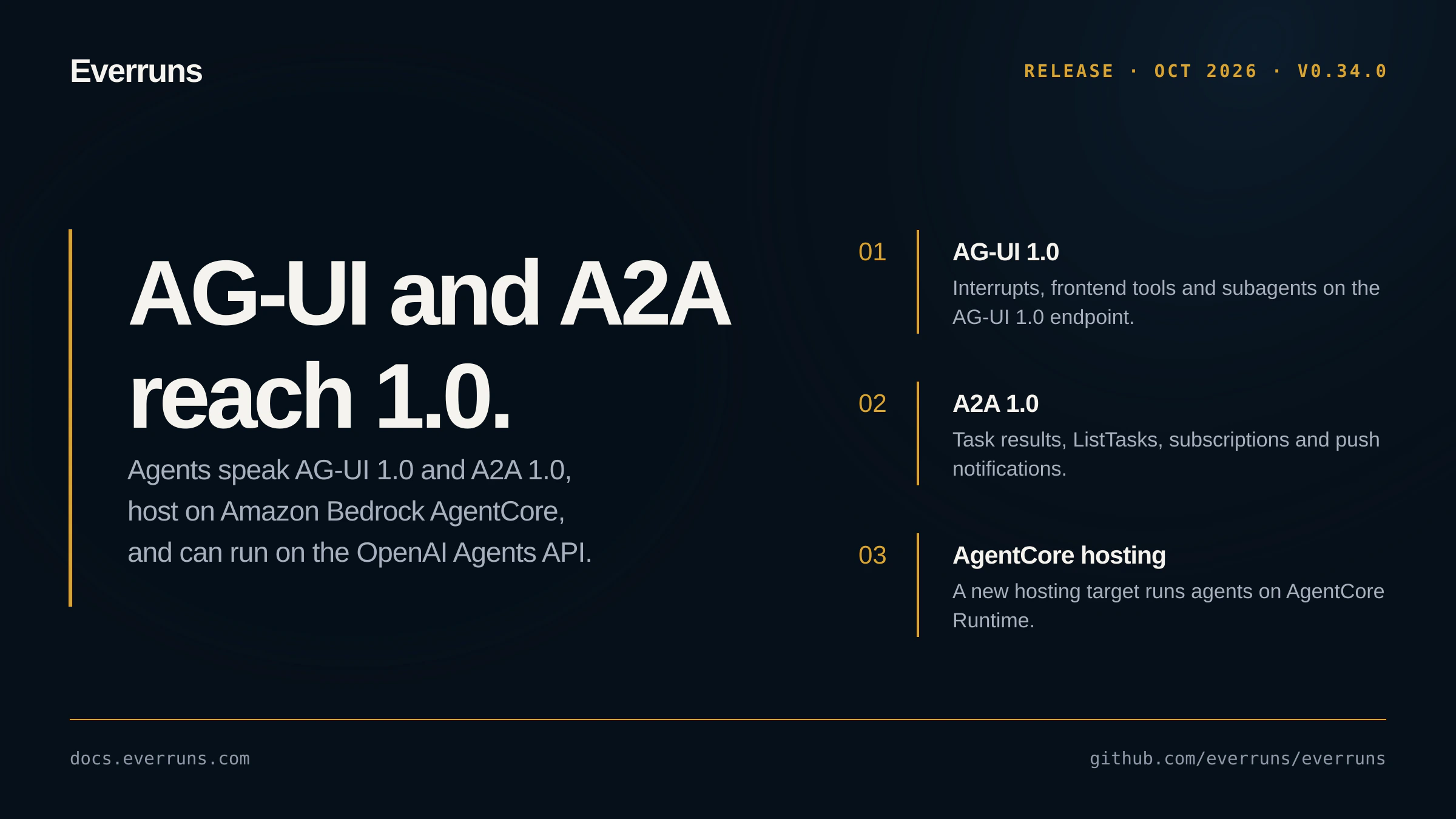
Cloudflare AI Gateway and Vercel AI Gateway model providers
Agents can run models through Cloudflare AI Gateway or Vercel AI Gateway, and the Cloudflare provider lists Workers AI text-generation models automatically.
AG-UI 1.0 endpoint and AG-UI streaming for Framework sessions
The AG-UI channel moves to protocol 1.0 with interrupts, resume, frontend tools and subagents, and any Framework session can serve AG-UI from your own server.
A2A 1.0 endpoint with task results, streaming and push notifications
Everruns A2A channels negotiate protocol 1.0, return agent output as task artifacts, support ListTasks and SubscribeToTask, and send push notifications.
GPT-6.1 Sol, the GPT-6 family and Claude 5.5 models
Yolop's model menus list GPT-6.1 Sol with a speed setting for service tiers, the rest of the GPT-6 family, Claude Opus 5.5, Sonnet 5.5 and Fable 5.1.
Connect several Slack workspaces per organization
An organization connects its Slack workspaces once in Settings, and adding an agent to Slack becomes picking a workspace and approving one consent screen.
OpenAI structured output and background mode for long reasoning
OpenAI drivers enforce JSON Schema structured output, and xhigh or max reasoning calls run as background responses that resume after a drop or worker restart.
MCP Events add session webhooks and triggers on MCP server events
With the experimental MCP Events flag, MCP clients subscribe to signed session webhooks, and agents wake on events published by their own MCP servers.
PR reviewer and security scanner agent templates for GitHub
Two guided agent templates use the agent's GitHub App to review pull requests with inline comments and to run a weekly scan that files GitHub issues.
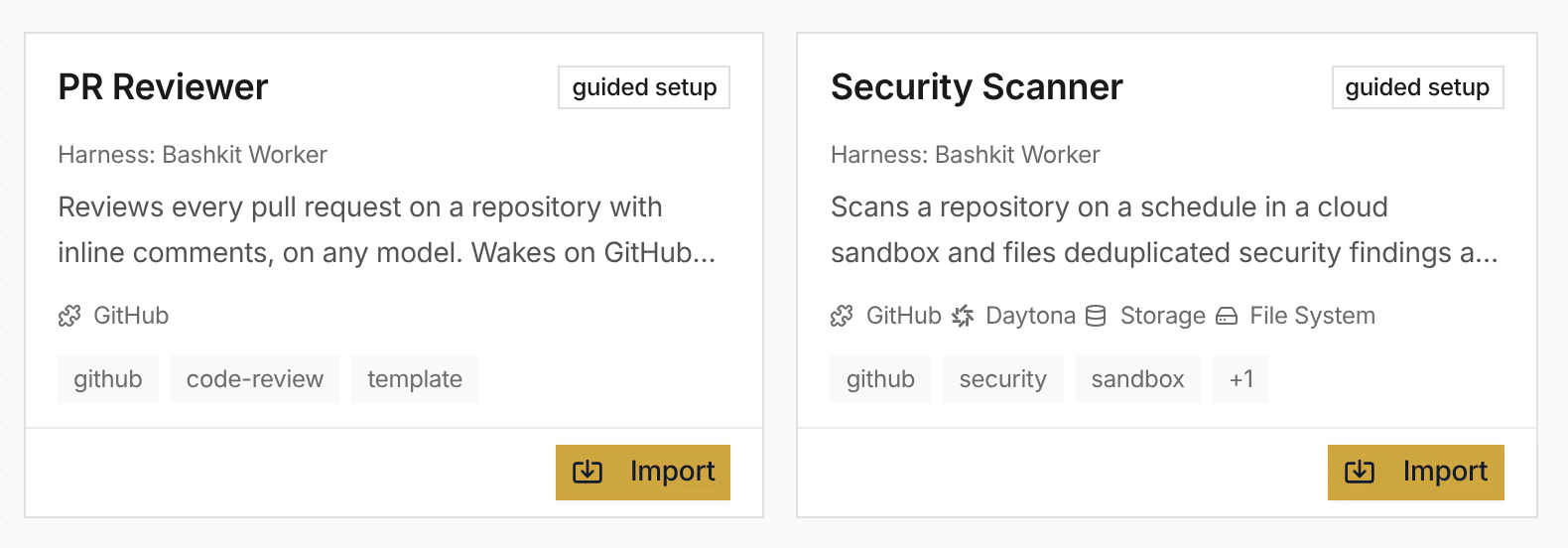
Everruns 0.33.0 release
The agent page is one view-and-edit workspace, the Everruns MCP server renders as an MCP App in ChatGPT and Codex, and triggers react to agent events.
September 2026
45 changes · 18 releasesOpenAI hosted code interpreter, shell, file search and remote MCP
The openai_server_tools capability adds code interpreter, hosted shell, file search and approval-gated remote MCP next to web search on OpenAI Responses agents.
GitHub pull request triggers with a per-agent GitHub App
Each agent can create and install its own GitHub App by clicks, read pull requests and diffs, post comments, and start sessions from pull request events.
Claude Sonnet 5.5 and GPT-6.1 Sol with fast and ultrafast tiers
Claude Sonnet 5.5 becomes the favorite Sonnet model, GPT-6.1 Sol adds fast and ultrafast speed tiers, and the sunset Claude Sonnet 4.5 profile is removed.
Everruns MCP server renders as an MCP App in ChatGPT and Codex
MCP App hosts such as ChatGPT and Codex show a live session view, answer agent questions in a form, approve pending actions and open an Everruns panel.
Agent page rebuilt as one view-and-edit workspace
The agent page shows the system prompt as the page with settings in a side column, and you edit everything in place with one Save or Discard.
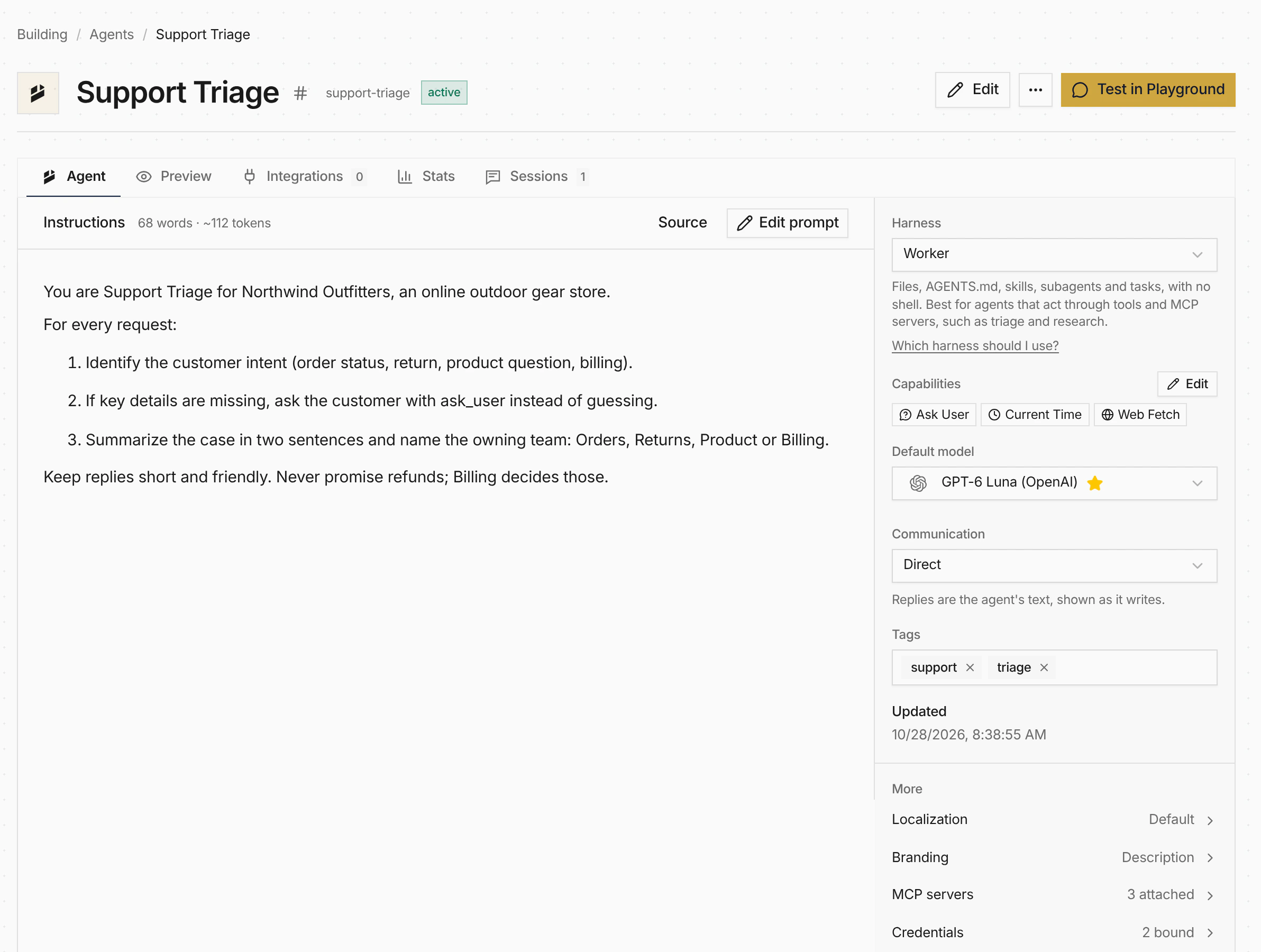
Everruns 0.32.0: Per-organization Slack app provisioning
Ask User questions reach MCP, A2A and Tasks clients, and Framework engines gain event listeners, OpenTelemetry export and an app framework.
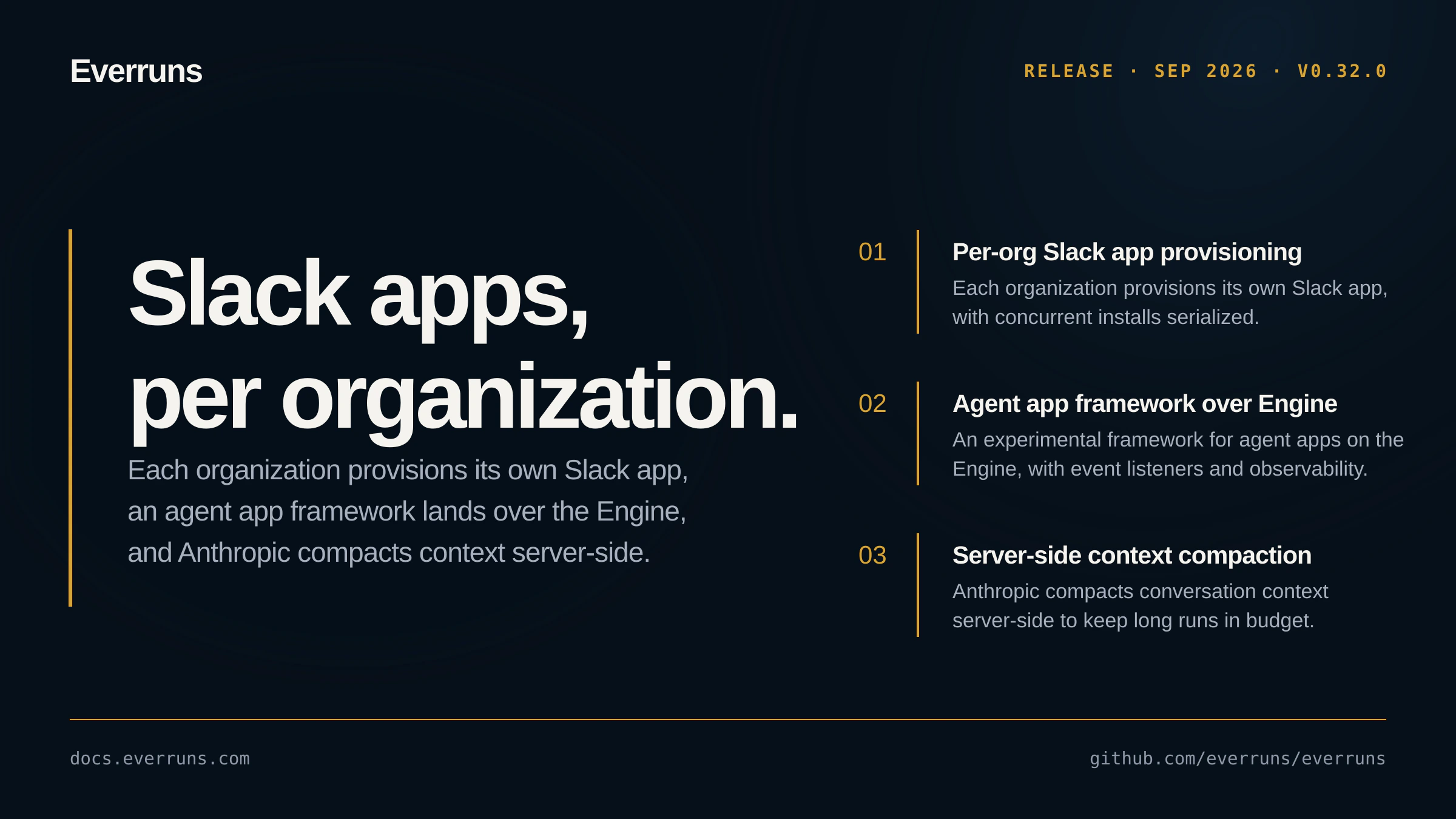
Yolop 0.18.4 release
ACP advertises user-invocable skills to clients and announces finished background work even when the wake turn itself stays silent.
Framework engines get event listeners and OpenTelemetry export
Register a listener once per Engine to receive events from every session it owns, and export Framework sessions to OpenTelemetry or Braintrust.
Ask User questions reach MCP, A2A and Tasks clients
A session waiting on ask_user now shows its question to MCP clients as a form elicitation, to A2A callers as a typed data part, and to Tasks clients.
Everruns 0.31.0: Ask User over MCP and A2A
Claude always-thinking models no longer return 400s or empty answers, and Ask User lets an agent pause mid-run to ask you a question.
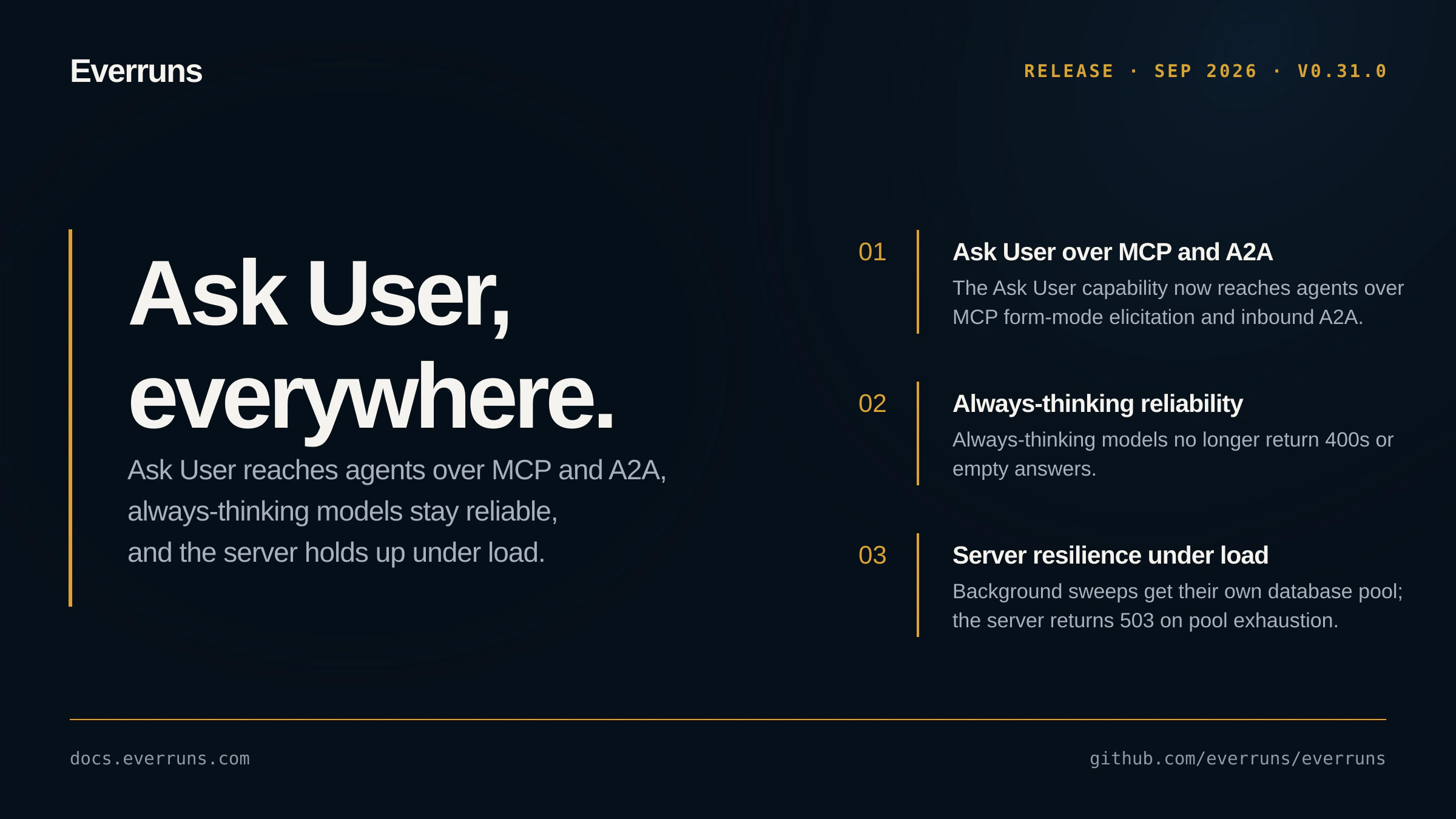
Ask User lets agents pause and ask you questions mid-run
Agents with the ask_user capability pause a run to ask one to four choice, text or secret questions, shown as an inline card that you answer in place.
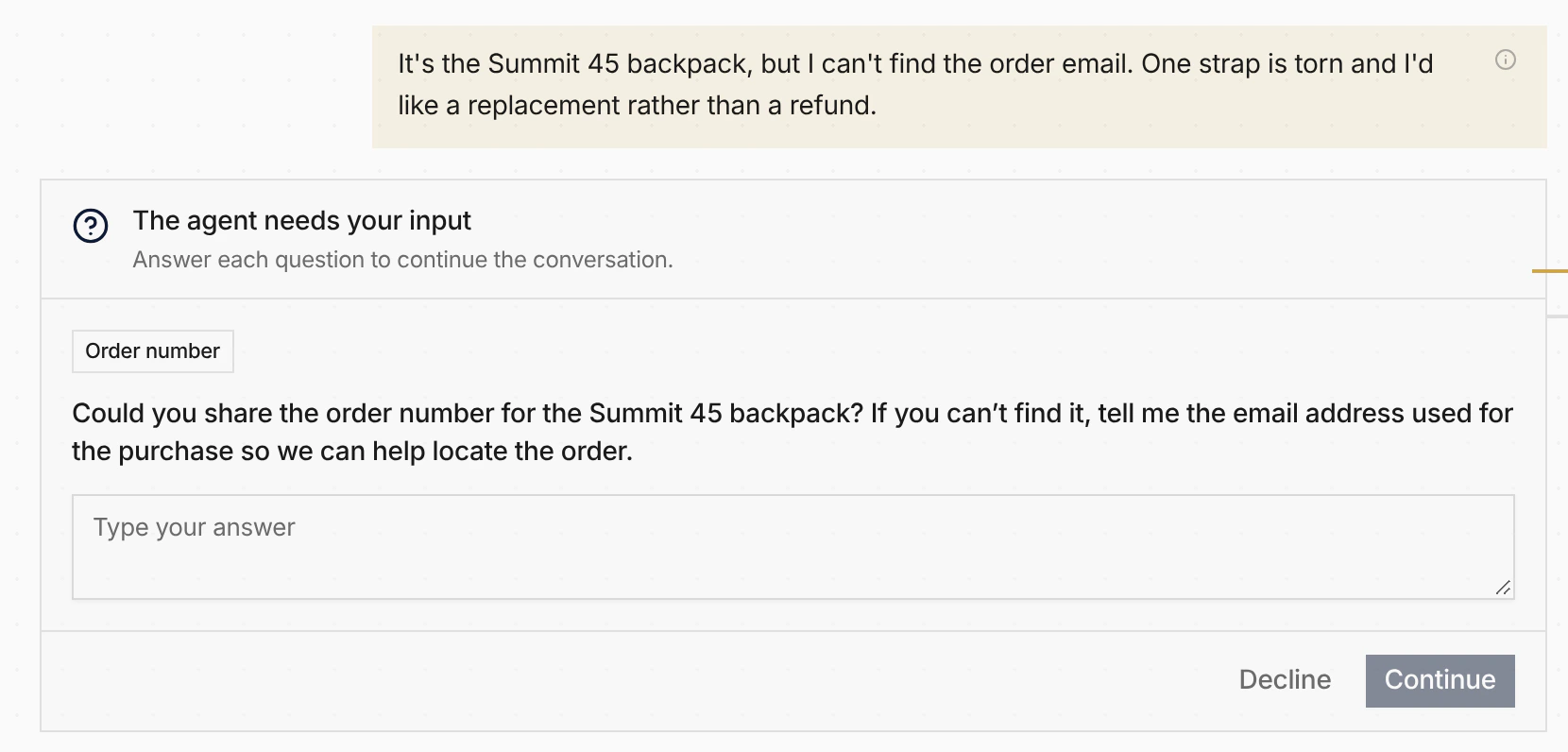
Everruns 0.30.0: Ask User
Agent endpoints and triggers replace Apps, Slack agents ask for approval with buttons and show task progress, and agents can ask the user questions.
Claude always-thinking models no longer return 400s or empty answers
The Anthropic driver rejects prefill early, maps an explicit none effort to low, and keeps requests append-only on Opus 5.5 and other always-thinking models.
Everruns Cloud sign-in failures return to the login page
A failed Everruns Cloud sign-in now lands on the login page with the reason and a way to try again, instead of a raw JSON error on the callback URL.
Claude Opus 5.5, GPT-6 Sol and GPT-6 Luna models added
Claude Opus 5.5 becomes the recommended Opus model, and GPT-6 Luna replaces GPT-5.6 Terra as the platform default model and the default utility model.
Bashkit 0.18.2 release
sed is rewritten to follow GNU sed 4.9 so scripts written for Linux behave the same, Windows paths resolve correctly, and releases are hardened.
sed is rewritten to follow GNU sed 4.9
Bashkit rewrote its sed after an audit found 46 differences from GNU sed 4.9, adding missing commands, GNU address ranges, case conversion and atomic -i.
Install an Everruns agent in Slack with one click
Connecting an agent to Slack no longer needs credentials copied from api.slack.com: Everruns creates the Slack app and takes its credentials from OAuth.
MCP catalog presets, acts-as identity and personal connections
MCP servers gain an org catalog of presets, an actsAs setting for whose sign-in a server uses, an agent MCP tab and a place to revoke your own sign-ins.
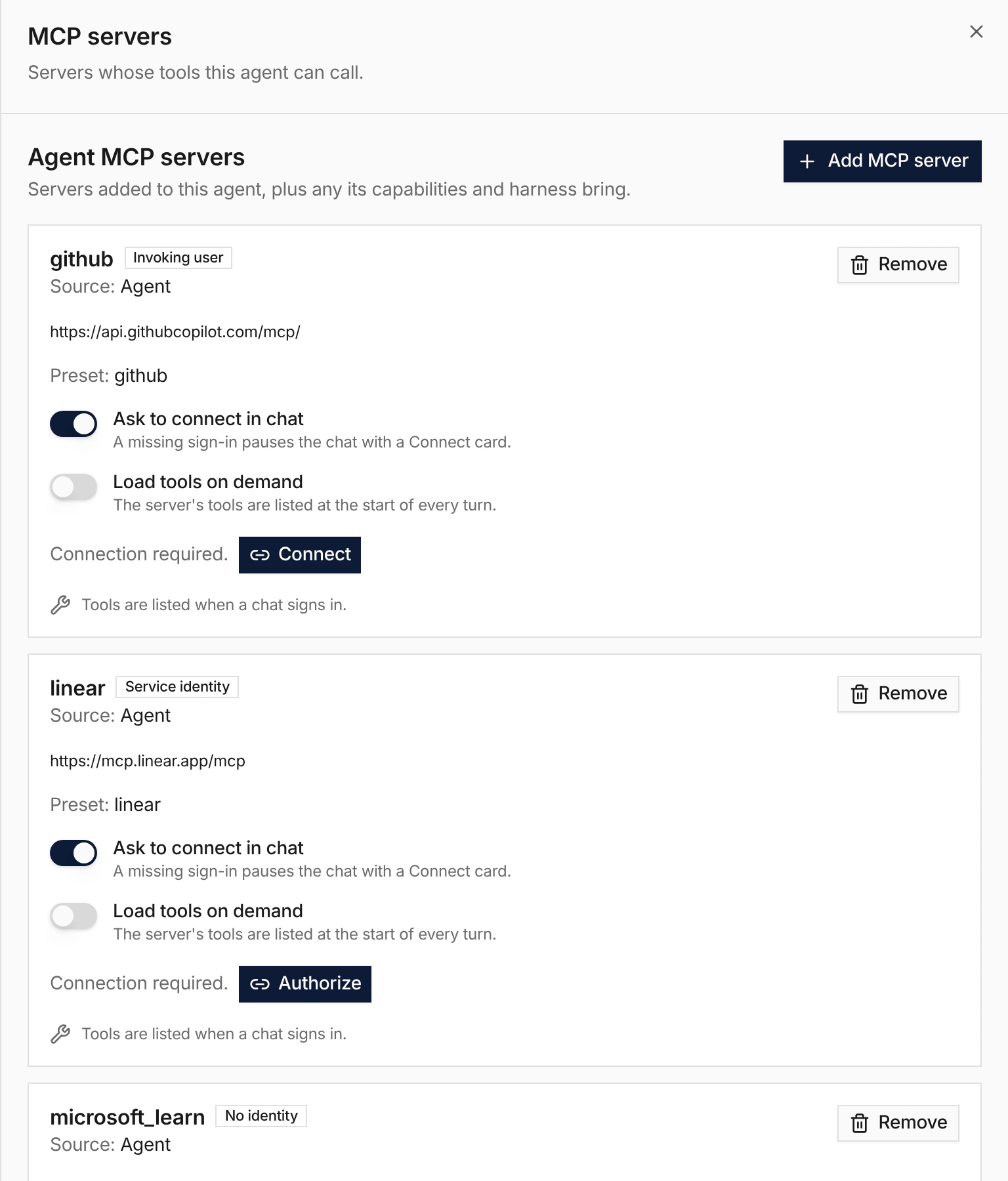
Host Shell gives Framework agents a kernel-contained Bash
The new host_shell capability lets an embedded Everruns agent run real host processes inside a Seatbelt or Landlock policy that fails closed.
Set spend budgets on agent endpoints from the Integrations tab
Agent and endpoint budgets can be managed on the agent's Integrations tab, and sessions are attributed to the endpoint they arrived through.
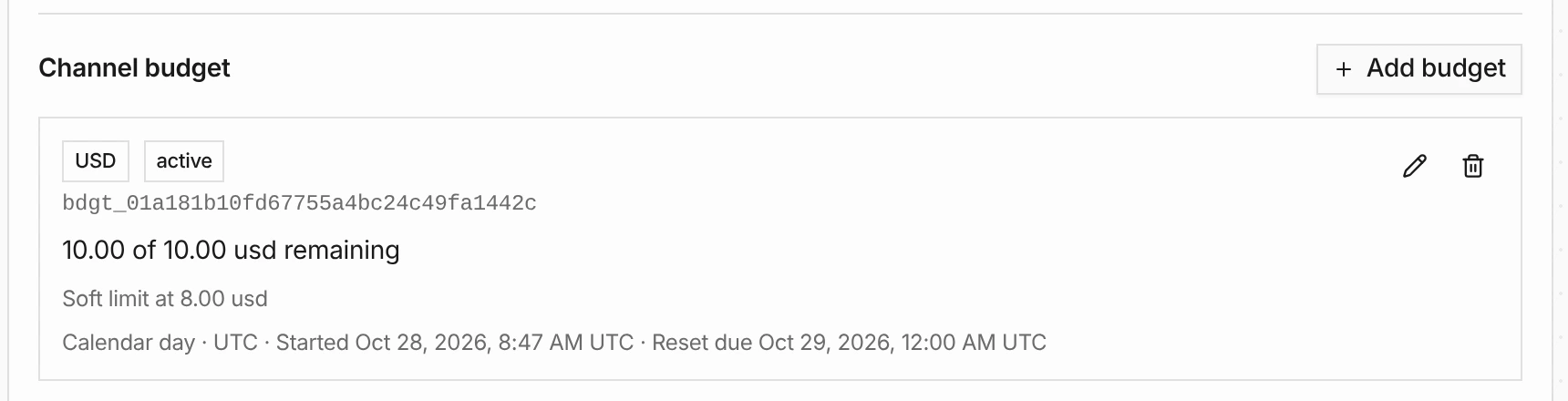
Yolop 0.18.3 release
yolop coordination spawn-workers prints validated launch commands for each worker, and yolop_spawn routes agent and session spawns separately.
Slack agents ask approval with buttons and show task progress
Agents deployed to Slack can take approvals through Approve and Decline buttons, show live sub-task progress and act as the channel's own bot.
Everruns 0.29.0: Platform Chat v2 on a unified command line
Framework code calls models directly with Model::complete, one everruns command line serves the CLI, MCP and agent shells, and MCP catalogs can be scoped.
Agent endpoints and triggers replace Apps in Everruns
App management is retired: an agent's endpoints and triggers now live on its Integrations tab, with an org-wide Exposures view and per-agent suspend.
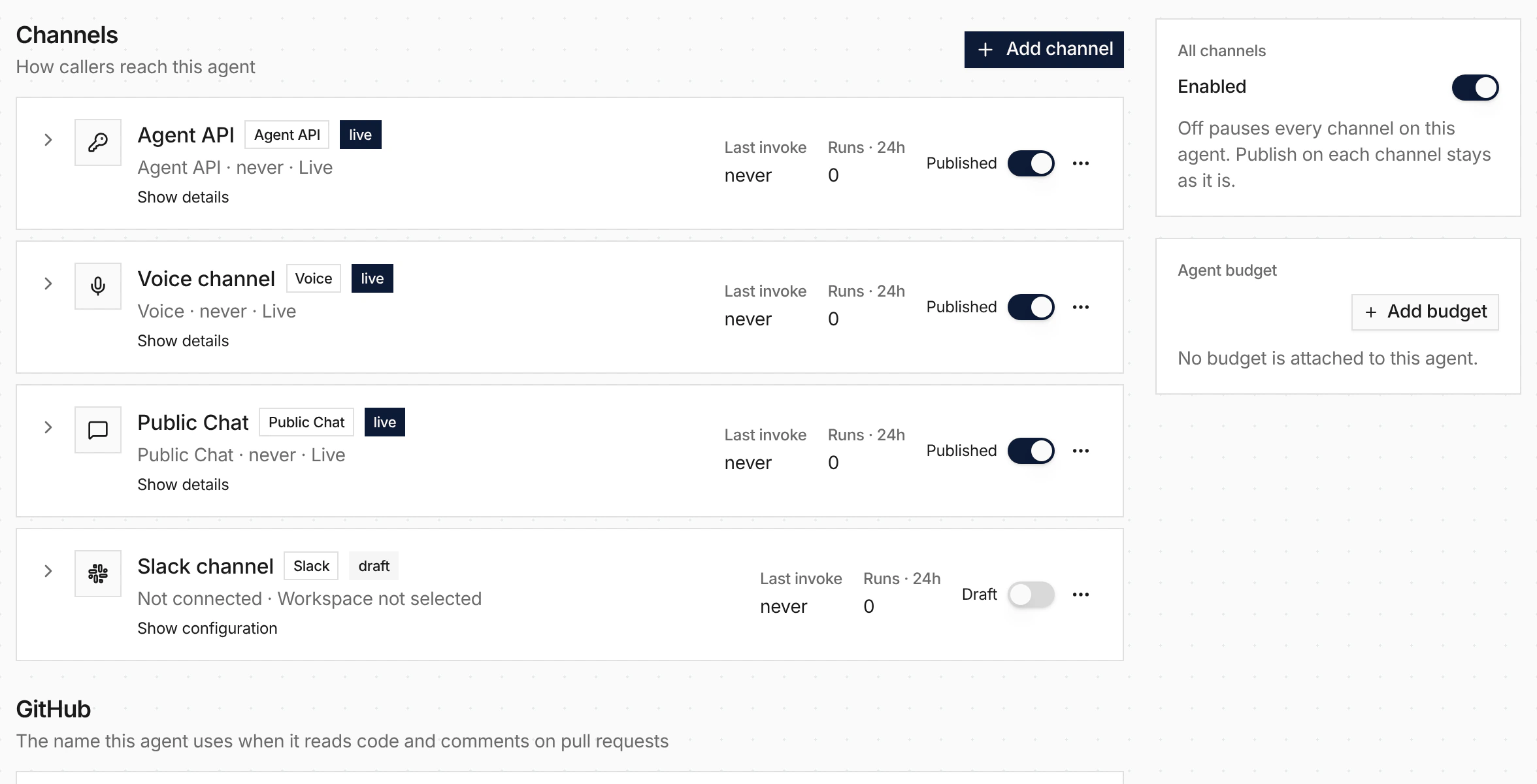
Soft approval: agents pause before destructive or outward actions
The new soft_approval capability, on by default for Generic and Platform Chat, has agents ask before risky actions and records who approved in the audit log.
Guardrails can use typed judgments as their check engine
LLM judge and moderation guardrails can run on calibrated probabilities from TypeSafe judgments, batching every check on a stage into one request.
One everruns command line for the CLI, MCP and agent shells
Every Everruns operation now has one noun-verb spelling with --help that works the same in the everruns CLI, the /mcp endpoint and an agent's shell.
ScriptedTool accepts clap-based builtins
ScriptedToolBuilder::builtin registers raw-argv builtins next to ToolDef tools, and closed schemas now reject unknown flags with an error naming valid ones.
Bashkit 0.18.1 release
ScriptedTool accepts clap-based builtins, and closed schemas reject unknown flags instead of passing them through to the script.
The Everruns UI supports dark mode with a theme setting
The Everruns web UI can now be shown in light, dark or system theme, chosen from the user menu and remembered without a flash on navigation.
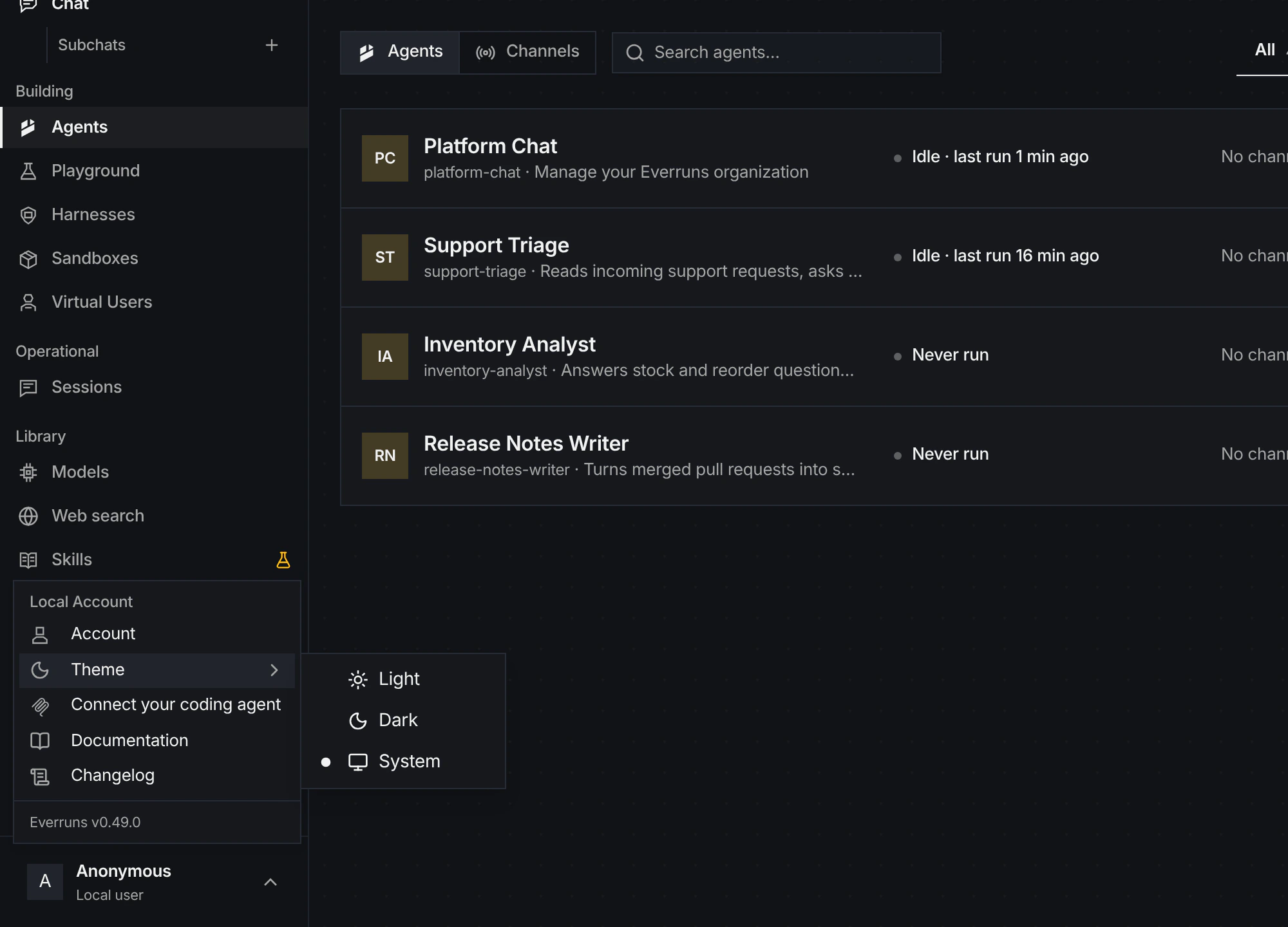
Framework direct model calls with Model::complete
The Everruns Framework adds a promoted path for one prompt and one answer, and each driver now reads its vendor's standard credential environment variables.
Everruns 0.28.0: Agent exposure management
The Everruns UI gains dark mode with a theme setting, plus agent exposure management and sessions and budgets attributed to the endpoint that started them.
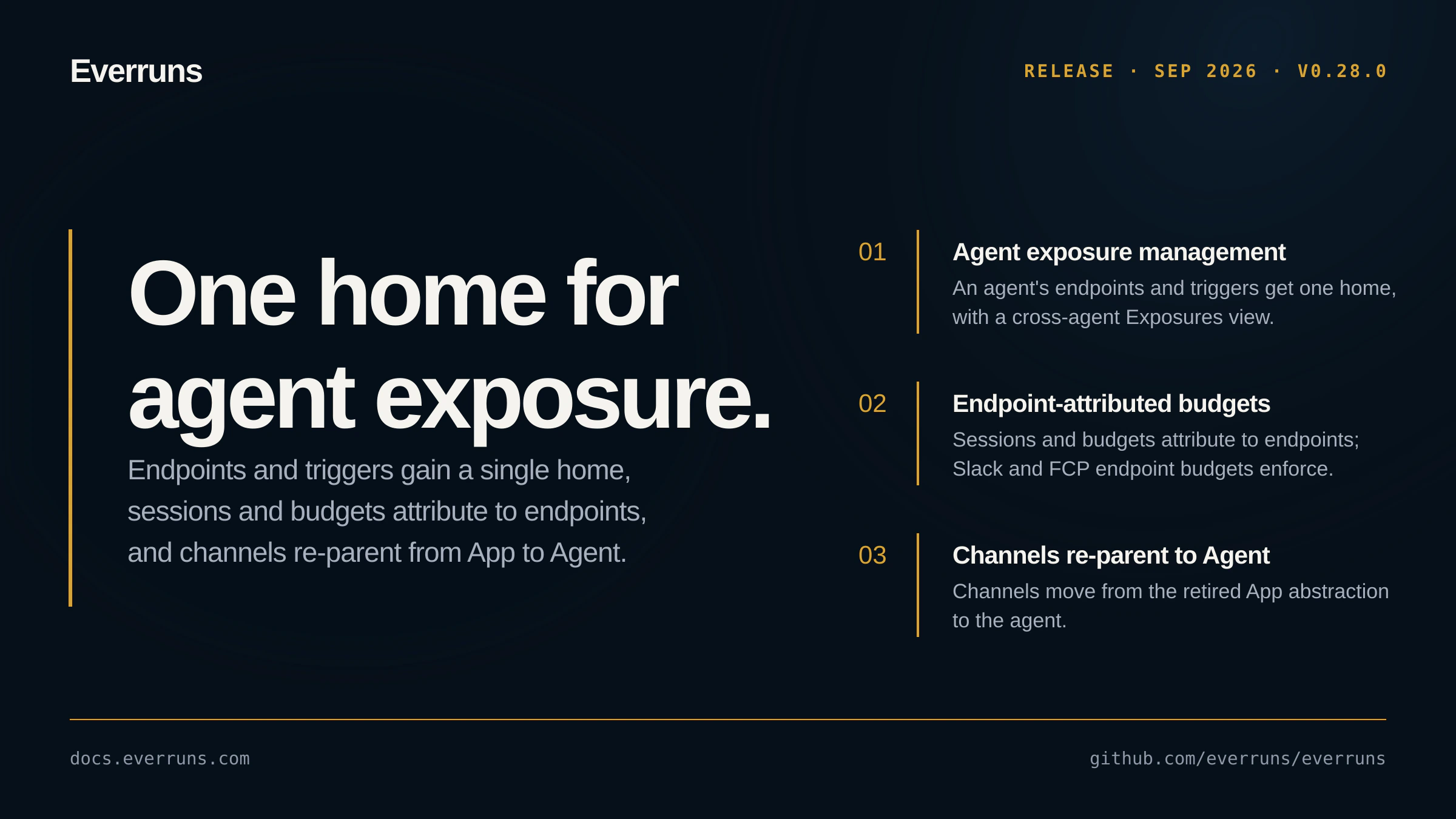
Everruns agents run in Slack's agent pane
A Slack channel can now serve Slack's agent pane, with streamed replies, a stop button, live status and thread context, alongside channel replies.
Everruns 0.27.0: Slack agent surface
Sessions show where their commands run and what they may touch, and Everruns agents run in Slack's agent pane with session environments.
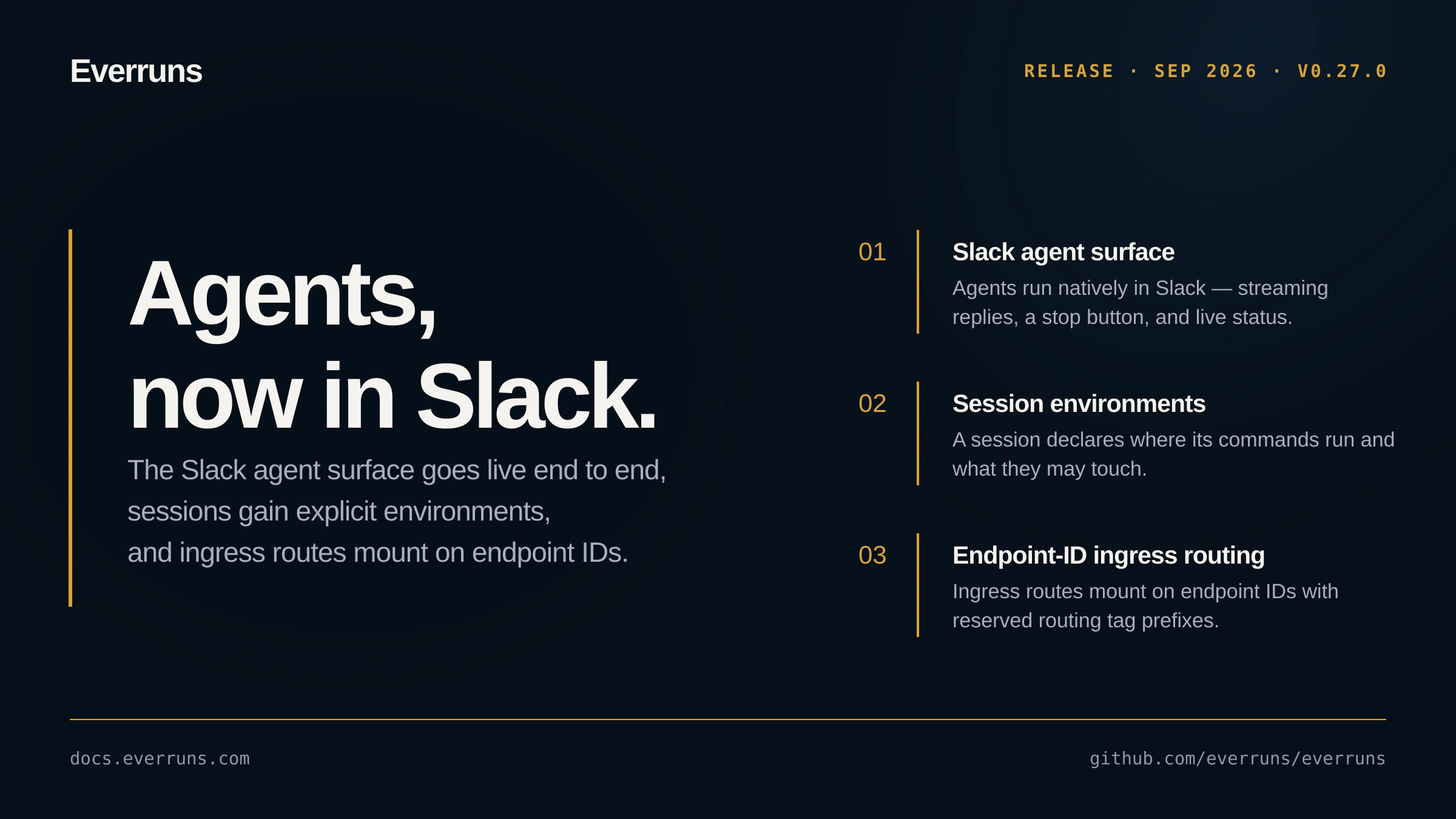
Everruns Cloud adds a built-in model provider with starter credit
New Everruns Cloud organizations run agents without provider keys, paid from prepaid credit that starts at $5 and is topped up in Settings > Billing.
Yolop 0.18.2 release
Setup checks provider auth before finishing model selection, and the CLI attaches through shell descendants so managed sessions stay reachable.
Sessions show where their commands run and what they may touch
Each session now declares its execution environment, readable through the API and shown in an Environment panel on the session Workspace tab.
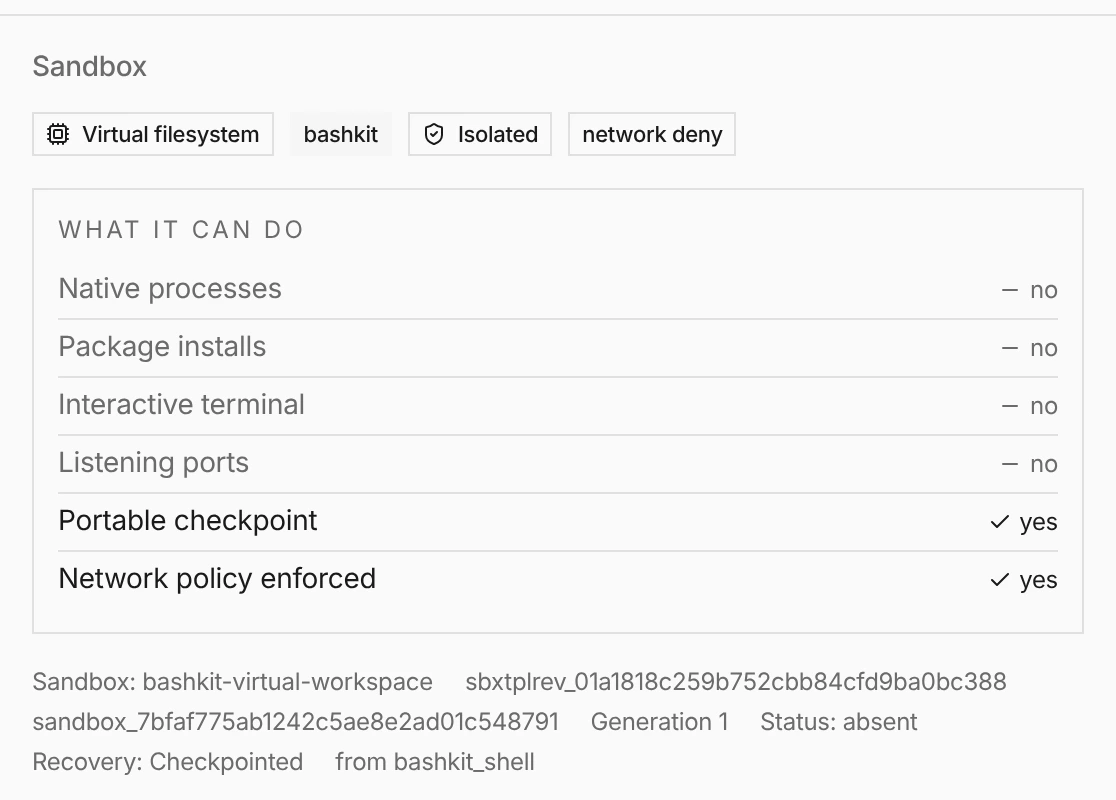
Everruns Cloud loads Sessions, Harnesses and Skills pages faster
Moving between the Sessions, Harnesses and Skills pages on Everruns Cloud no longer stalls for seconds while the server renders the page.
Everruns 0.26.0: PDF input with file attachments
Servers publish an MCP server card and auth.md for agent discovery, and an LLM provider connects with one pasted key that is checked before saving.
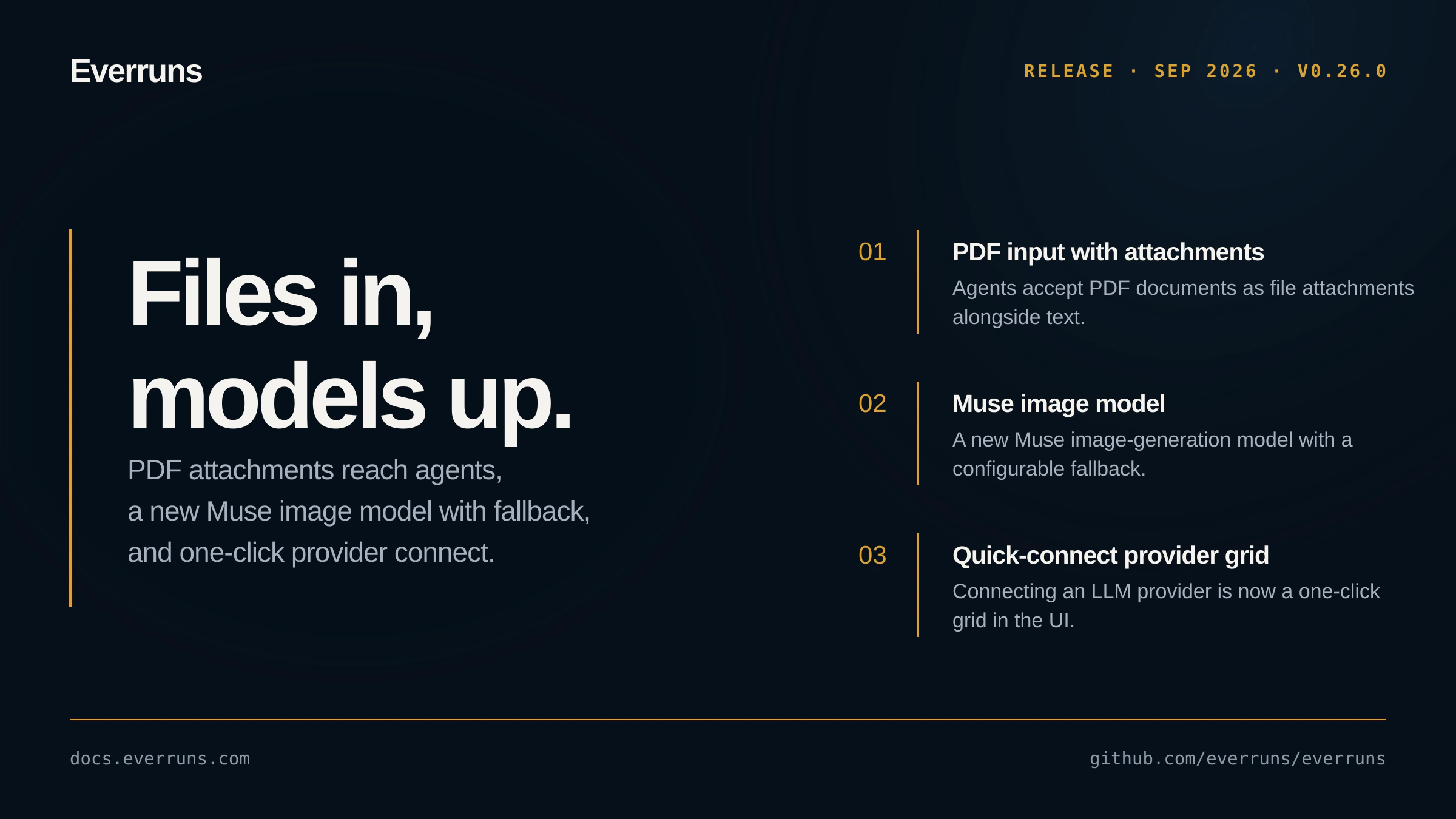
Yolop 0.18.1 release
Named profiles can be managed from the CLI and the control plane, and configured MCP servers are listed in the agent system prompt.
Send a message and wait for the turn result in one request
The sessions API can now hold a message request open until the turn finishes, and Framework runs accept a timeout, for callers that do not consume SSE.
Attach PDF files to agent messages
Messages can now carry PDF attachments, uploaded through a new files API and passed to each provider in its native document format.
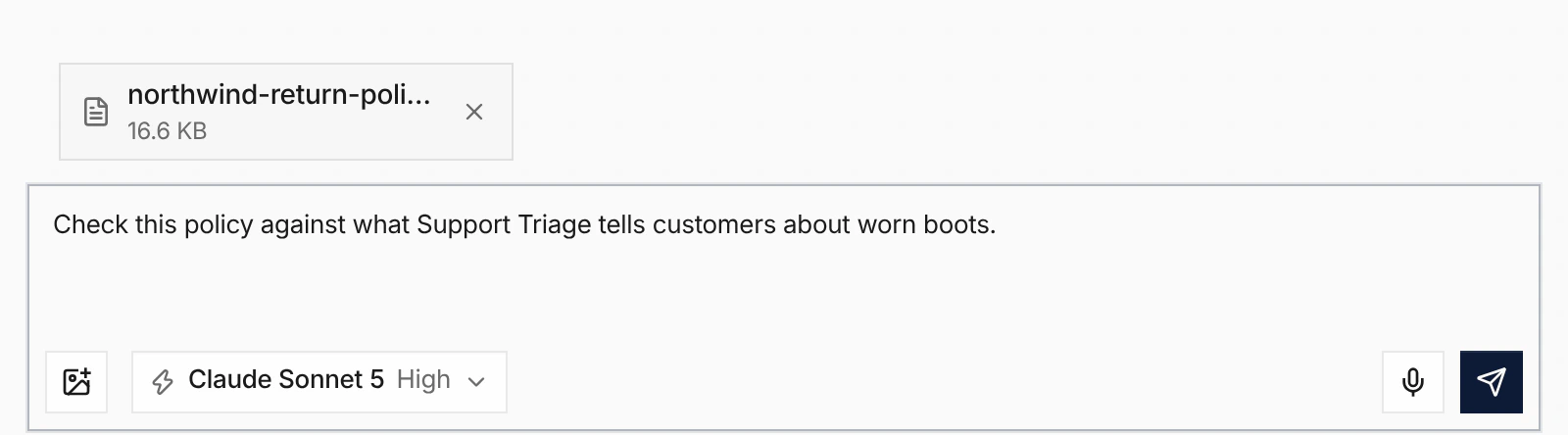
Session search and self-configuration move to CLI commands
Yolop 0.18.0 replaces search_sessions and the configuration tools with yolop sessions, mcp and connectors commands and drops the yolop_ ID prefix.
Yolop 0.18.0 release
Manage and log in to MCP servers from the CLI, and session search and self-configuration move to CLI commands, with fixes listed in the release notes.
Session schedules no longer fire twice on multi-replica deployments
Everruns servers running more than one replica now claim each due session schedule atomically, so a scheduled message is sent once.
platform_management capability retired in favor of platform
Capabilities gain a deprecated and retired lifecycle, and platform_management is the first one retired: it stays registered but no longer contributes tools.
Every Everruns user starts in a pinned Platform Chat thread
New users now land in a precreated, pinned Platform Chat thread instead of an empty Chats list, and Platform Chat gains more built-in capabilities.
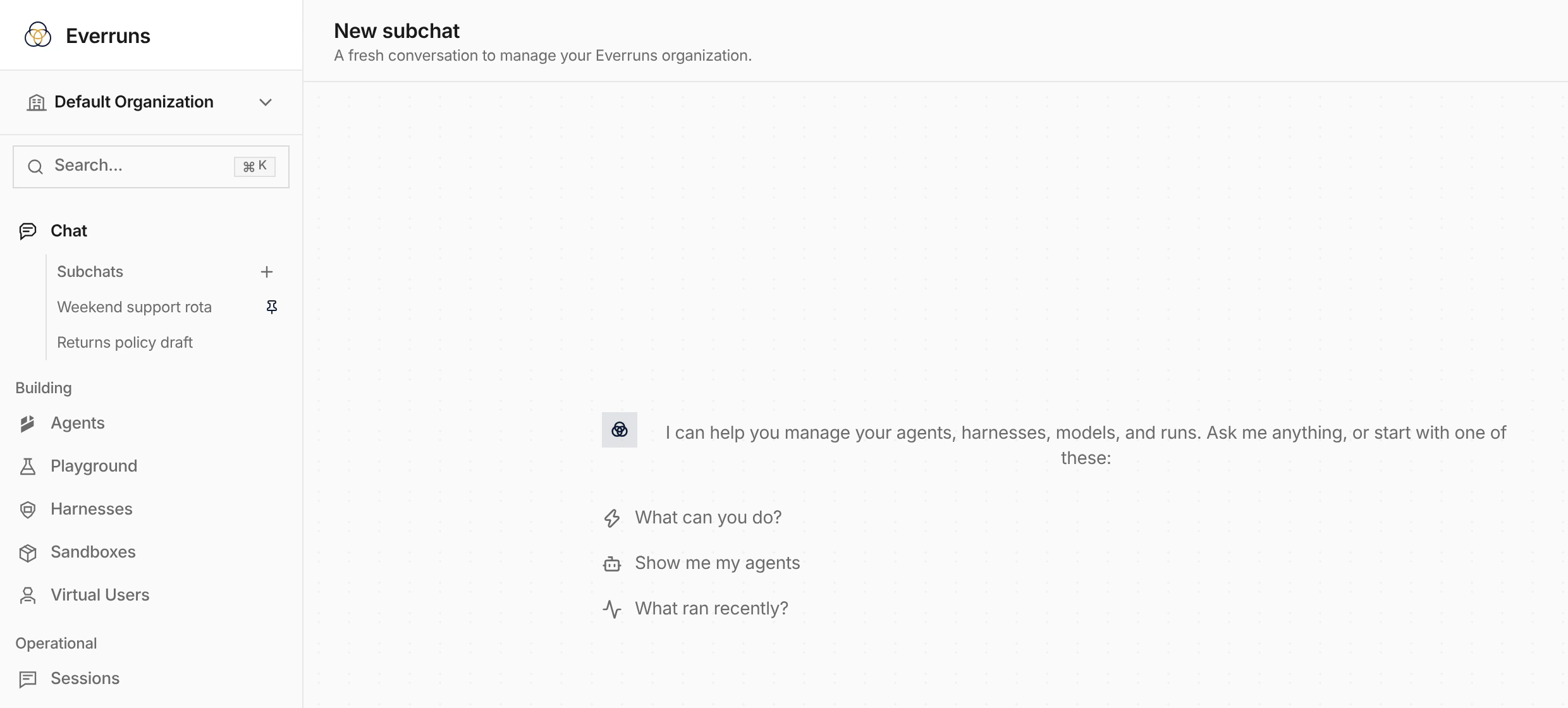
Image generation adds the Muse image model with a fallback
The image generation capability can now use Meta's Muse image model through Meta or OpenRouter, and falls back to it when only those credentials exist.
Connect an LLM provider with one pasted key, checked before saving
LLM provider setup now offers a one-click grid of common providers, verifies the API key with the provider, and enables models and a default for you.
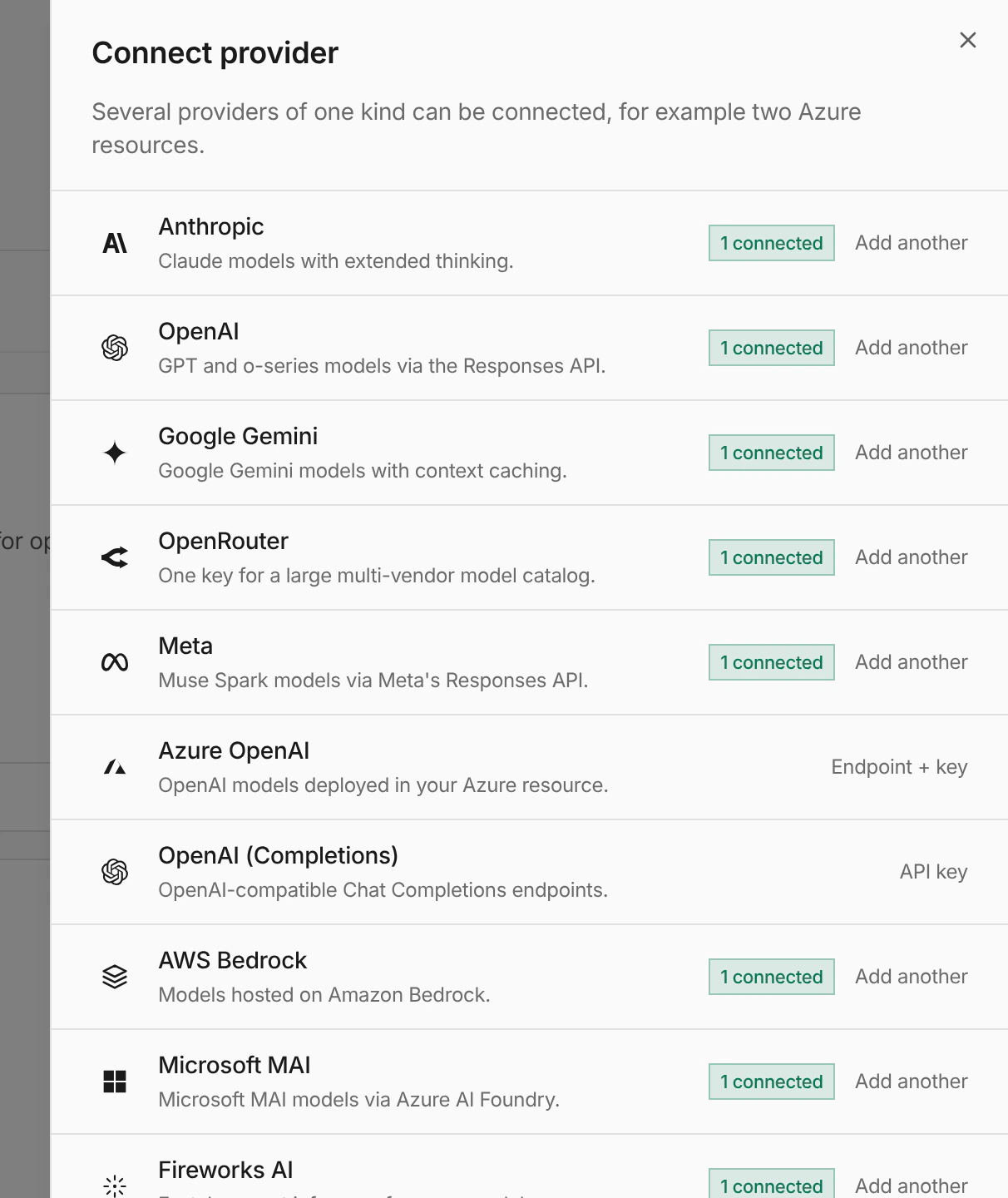
Everruns 0.25.0: Hierarchical AGENTS.md as conversation context
AGENTS.md files resolve hierarchically as conversation context, and every Everruns user starts in a pinned Platform Chat thread with more built-in tools.
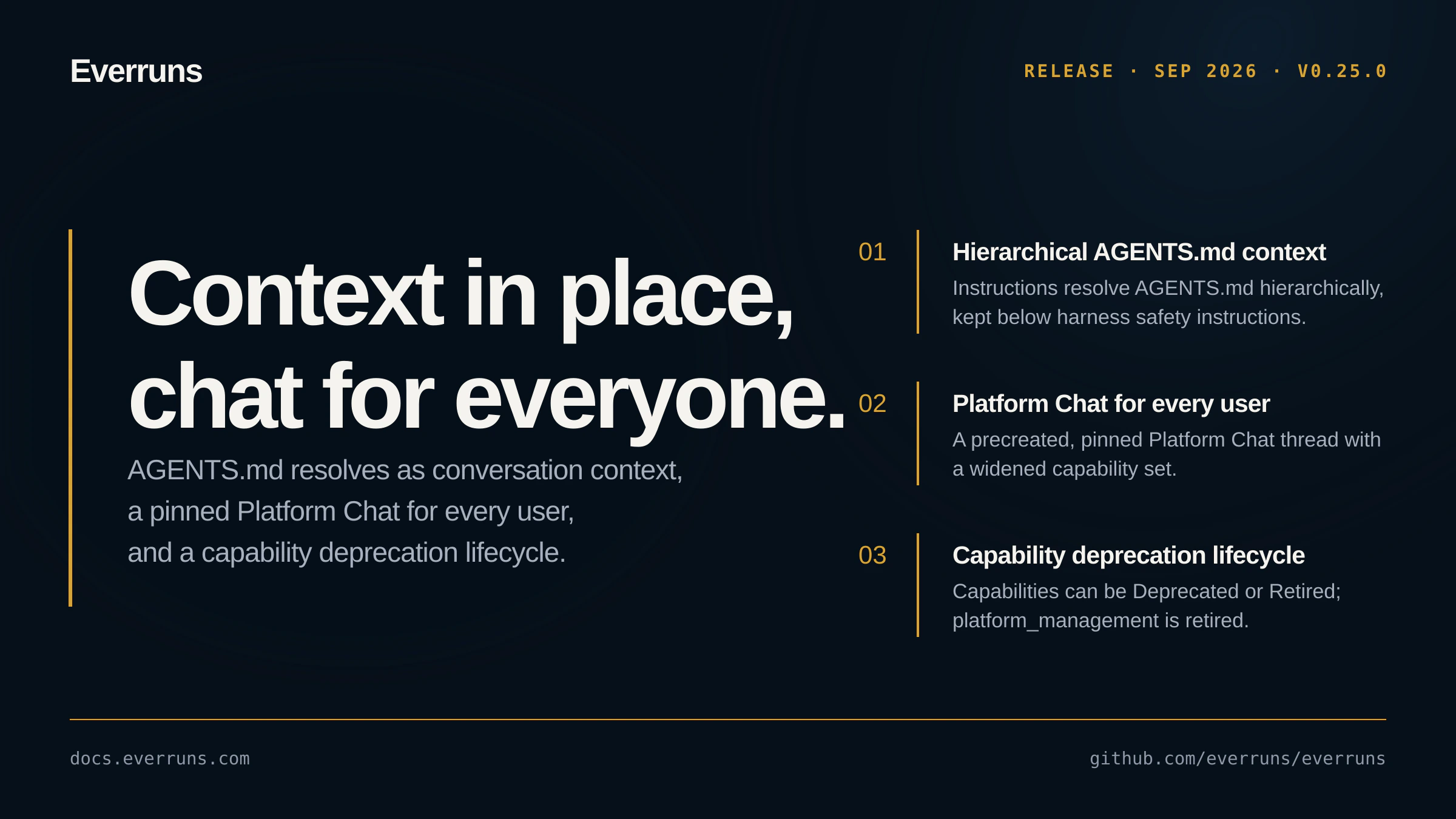
Everruns servers publish an MCP server card and auth.md
Every Everruns deployment now serves an MCP Server Card and an auth.md document, derived from live config, so agents can discover how to connect.
Manage and log in to MCP servers from the CLI
The yolop mcp command now covers show, enable, disable and an OAuth login for remote MCP servers, so MCP setup no longer needs the TUI or config files.
Yolop 0.17.3 release
Turn activity compacts into one summary row, yolop mcp covers show and disable, cargo install works again, and web_fetch reaches public URLs.
Read-only host directory mounts, also over the C ABI
Bashkit's Python and Node bindings can mount a host directory read-only, and the C API gains allowlisted host-directory mounts on a running session.
Bashkit 0.18.0 release
Python, Node and C ABI callers can mount host directories read-only, with security hardening and C ABI improvements across the bindings.
AGENTS.md files resolve hierarchically as conversation context
Agent instructions now load AGENTS.md from the workspace root down to the working directory and place them below harness safety instructions.
Everruns 0.24.0: ~3.5x faster agent startup
The first message of a new chat no longer drops or shows out of order, and the CLI plugins, skills and knowledge-bases commands work again.
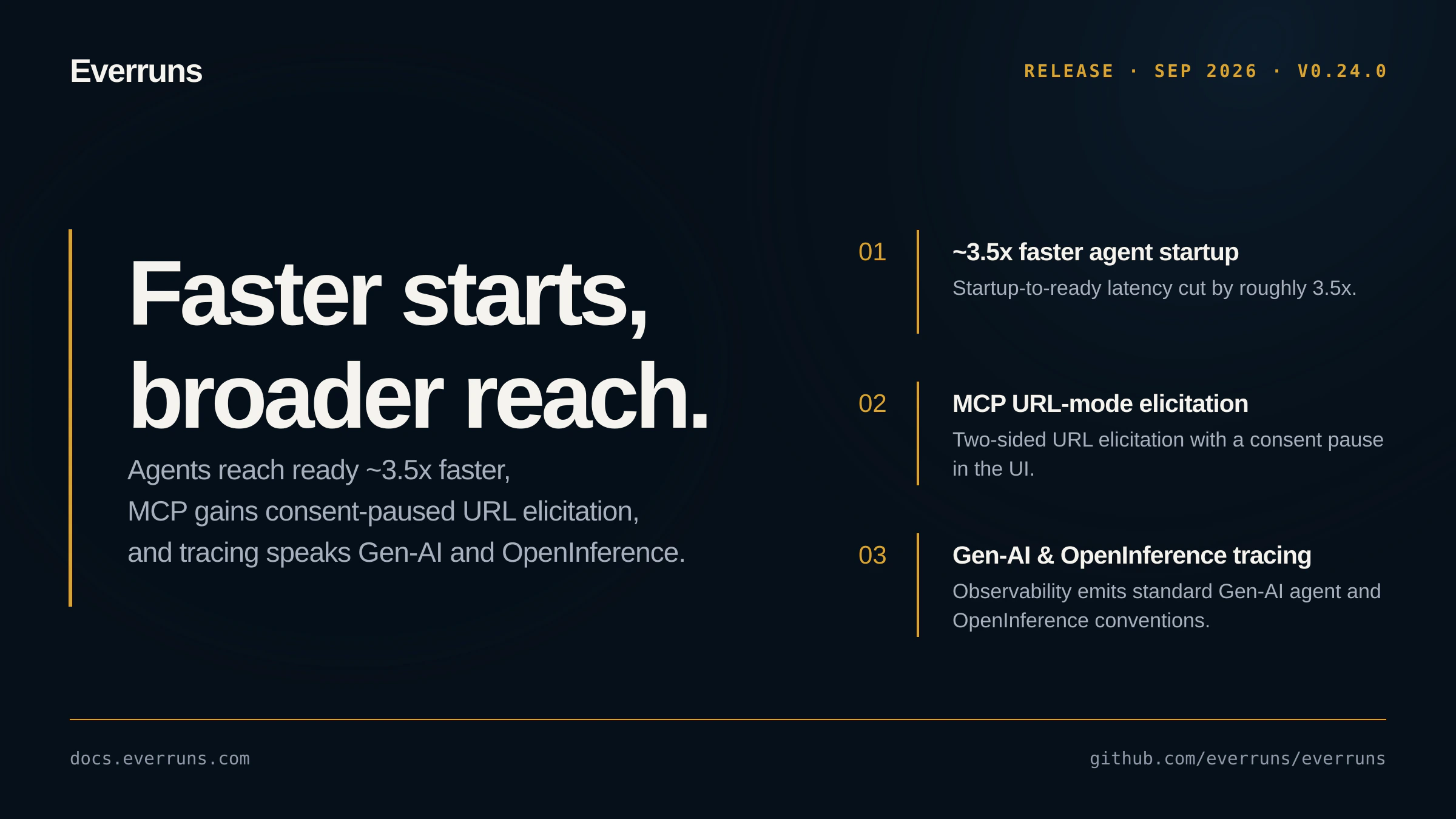
Framework agents start about 3.5 times faster
Building an agent and creating a session in the Everruns Framework now takes roughly a third of the time, with no change to steady-state behavior.
GPT-6 Astra, Claude Fable 5.1 and Muse Spark 1.3 model profiles
Everruns adds model profiles for OpenAI GPT-6 Astra, Claude Fable 5.1 and Muse Spark 1.3, seeds them for new organizations and covers them in live tests.
Turn activity compacts into one summary row by default
Fullscreen Yolop turns now collapse narration and tool output into one summary row that Ctrl+O expands; pass --no-compact-work to keep the full transcript.
MCP URL elicitation pauses for consent in the Everruns UI
When an MCP tool asks a person to finish a step in the browser, the turn now pauses on a consent card and the secret never enters the model context.
OpenTelemetry traces follow Gen-AI and OpenInference conventions
Agent turn traces now carry the OpenTelemetry Gen-AI agent attributes and OpenInference attributes on the same spans, selectable per deployment.
August 2026
34 changes · 15 releasesYolop 0.17.2 release
Yolop 0.17.2 is a maintenance release with dependency updates and internal fixes and no user-facing change. Every pull request is in the release notes.
Tool calls are validated against their schema before running
Everruns checks every tool call's arguments against the tool's JSON Schema and enables strict schemas for compatible OpenAI Chat and Responses tools.
Only organization admins can rename an organization
Every PATCH /v1/orgs/{org} request now requires an organization admin, closing a path where members could rename non-default organizations.
Organization default model can fall back to the platform default
An organization's default model is now an explicit override that admins can clear, falling back to a platform default shown in Models and Settings.
Everruns CLI plugins, skills and knowledge-bases commands work again
The everruns plugins, skills and knowledge-bases commands called unversioned API paths and got 404 responses; they now use the /v1/ routes.
Yolop 0.17.1 release
Run models on your machine with the local provider, plus recovery from repeated tool failures, batch file reads, and a lighter default binary.
First message of a new chat no longer drops or shows out of order
A new chat thread now replays from its first event when it subscribes, so the opening message is delivered and appears above later replies.
Everruns ID adds a sign-up page and branded account emails
Creating an Everruns Cloud account now has its own sign-up page, and the verification and password-reset emails use the Everruns layout with a fallback link.
Messages API reports reasoning in order and the message phase
Session messages now carry ordered reasoning parts plus phase and phase_source, so clients can tell intermediate commentary from the final answer.
Everruns 0.22.0: Reasoning modeled as ordered artifacts
Agents read several workspace files in one read_many_files call with bounded batches, and the global chat session endpoints are removed from the API.
Global chat session endpoints removed from the Everruns API
POST /v1/sessions/chat and POST /v1/sessions/chat/voice are gone; create a chat thread as an ordinary session with POST /v1/sessions instead.
Agents read several workspace files in one read_many_files call
The File System capability adds read_many_files, which reads 2 to 10 independent files in one ordered call and halves model round trips for discovery.
Session pages show a generated run summary and tab counts
A finished run gets a one-sentence summary in the session header, and the Work, Events and Workspace tabs show how many items each holds.

Everruns 0.21.0 release
Binaries are about 20% smaller, chats start with any harness, provider connections carry custom headers, and finished chats can be archived.
Bashkit 0.17.1 release
The native @everruns/bashkit npm package publishes again after stalling at 0.16.0, so Node users get the 0.17 features and fixes.
Bashkit 0.17.0 release
TLS backend and timezone data become explicit features, Bashkit runs as a WebAssembly component without JS or WASI, and host-boundary escapes are closed.
Archive finished chats and show them again on demand
Archiving hides a chat thread from the Chats list without deleting it, and a Show archived filter and the archive API bring it back when needed.
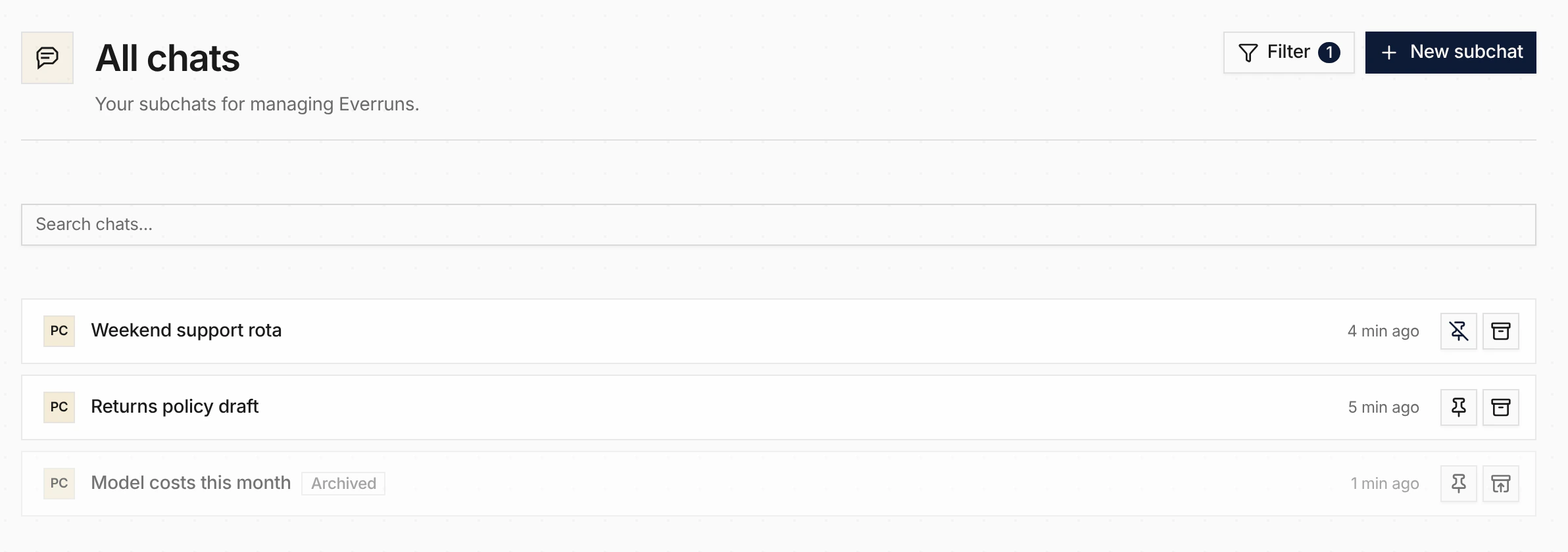
Run models on your machine with the local provider
An experimental local provider runs a model inside the Yolop binary, with Metal and CUDA release builds and weights fetched by yolop weights pull.
Yolop 0.17.0 release
Config and data directories can be relocated, model switching uses a curated list you manage, and compiled extensions install from prebuilt binaries.
Provider connections carry custom headers and cache diagnostics
An organization can set extra HTTP headers and a prompt cache diagnostics opt-in on a provider connection, applied to every model call made through it.
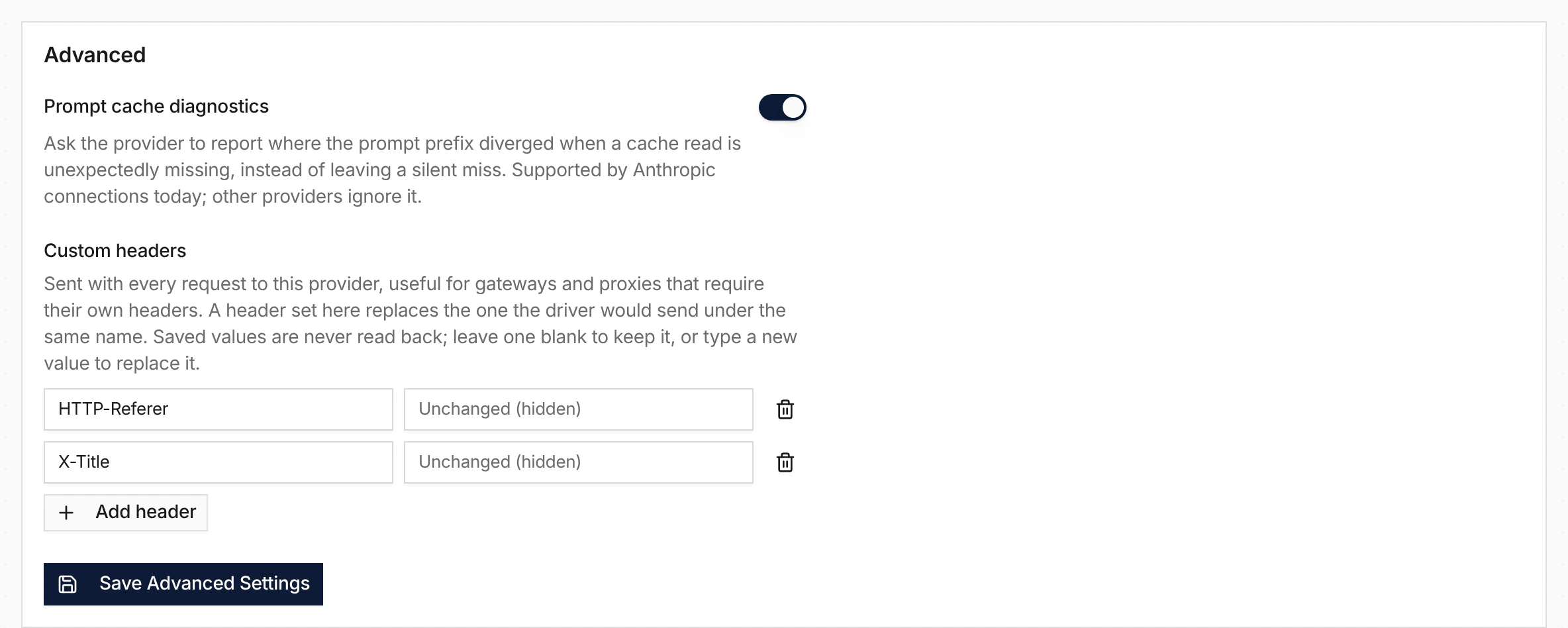
Start a chat with any harness, not only an agent
The New chat picker lists active harnesses, including Generic, Base and custom ones, next to agents, so a chat no longer needs a placeholder agent.
Runs as a WebAssembly component without JS or WASI
Bashkit can run as a component-model WebAssembly guest in plain wasmtime or a Hyperlight micro-VM, with no JavaScript engine and no WASI needed.
TLS backend and timezone data become explicit features
Bashkit 0.17 builds without default features must pick a rustls crypto backend for http_client and enable tzdata to use named time zones.
Compiled extensions install from prebuilt binaries
yolop extensions install now downloads a compiled extension's server binary for your platform and verifies its SHA-256 checksum before writing anything.
Model switching uses a curated list you manage
/model in Yolop now opens an ordered cross-provider model list managed with yolop models, and the local weights commands move to yolop weights.
Yolop 0.16.0 release
Yolop sets itself up as a Buzz Desktop harness in one command, extensions are managed from the extensions CLI, and profiles can define a whole agent.
Everruns CLI, server and worker binaries are about 20% smaller
Release builds now strip symbols and the CLI boxes its command dispatch, cutting the CLI by 22% and the server and worker binaries by 18 to 19%.
Everruns Rust SDK can use native TLS for smaller binaries
TLS in the Everruns Rust SDK is now a Cargo feature: keep the default rustls-tls or pick native-tls, which cuts a minimal client from 6.5 MiB to 3.0 MiB.
SDK 0.2.1 release
The Rust SDK can use native TLS for smaller binaries and moves to reqwest 0.13, with dependency and security updates across all three SDKs.
Register a capability on a running Framework runtime
A host holding a shared InProcessRuntime can add a capability discovered after startup and activate it in live sessions without rebuilding the runtime.
Everruns 0.20.0: Register capabilities on a running runtime
A2A delegation in the everruns crate becomes an opt-in feature, and a running Framework runtime can register new capabilities without a restart.
Memory can be scoped to a repository
The remember, recall and forget tools in Yolop take a global or repository scope, and repository memory is shared across all linked git worktrees.
Config and data directories can be relocated
New --config-dir and --data-dir flags, or YOLOP_CONFIG_DIR and YOLOP_DATA_DIR, move Yolop's global settings and session data without changing HOME.
Local sessions can hand work to each other
The session_coordination capability lets a coordinator Yolop session dispatch durable tasks to opted-in local sessions and wake when they finish.
Everruns 0.19.0: First-class sandbox and checkpoint records
Sandboxes and checkpoints become first-class records, giving durable runs an explicit, addressable place to execute and resume from.
A2A delegation in the everruns crate is now an opt-in feature
Outbound A2A delegation moved behind a new a2a Cargo feature that is off by default, so local runtime builds no longer compile a second HTTP and TLS stack.
Profiles can define a whole agent
A Yolop profile can now carry its own capabilities, MCP servers, skills directory and standing instructions, so one profile flag selects an agent with a job.
Extension management moves to the extensions CLI
Model-callable extension management tools are removed from Yolop; install, enable, disable and reload extensions with the yolop extensions command instead.
Everruns 0.18.0: The 0.18 neutral-kernel boundary
Chats is on for every organization with pinned chats, session recordings split into Transcript, Timeline and Events, and everruns-core becomes a neutral kernel.
Set up as a Buzz Desktop harness in one command
The yolop into buzz command writes a custom harness file for Buzz Desktop, so Buzz can start Yolop over ACP without anyone editing harness JSON by hand.
Yolop 0.15.2 release
OpenRouter connects with a browser sign-in, and Terra and Luna model variants join the OpenAI and Codex selectors ahead of Sol.
Yolop 0.15.1 release
The Meta Model API joins the supported providers, and terminal text selection survives Ctrl and Ctrl+C, on the tuika 0.8.0 toolkit.
everruns-core 0.18 becomes a neutral execution kernel
Hosted platform records and services moved out of everruns-core into everruns-platform and sibling crates, and the everruns-runtime crate was removed.
OpenRouter connects with a browser sign-in
Yolop's /setup can sign in to OpenRouter in the browser with PKCE and store the minted API key, so you no longer paste or export a key by hand.
Framework workspaces gain multiple isolated Git heads
Framework sessions can bind to one named head of a workspace, such as a local Git worktree, with fork, archive and destroy as explicit operations.
Knowledge index embedding spend is metered and ledgered
Query embeddings made by search_index now count toward session cost and budgets, and index-sync embeddings are recorded against the organization.
Session recordings split into Transcript, Timeline and Events
A session page now offers three full-width views of a run: a read-only conversation replay, a curated execution history and the raw event ledger.
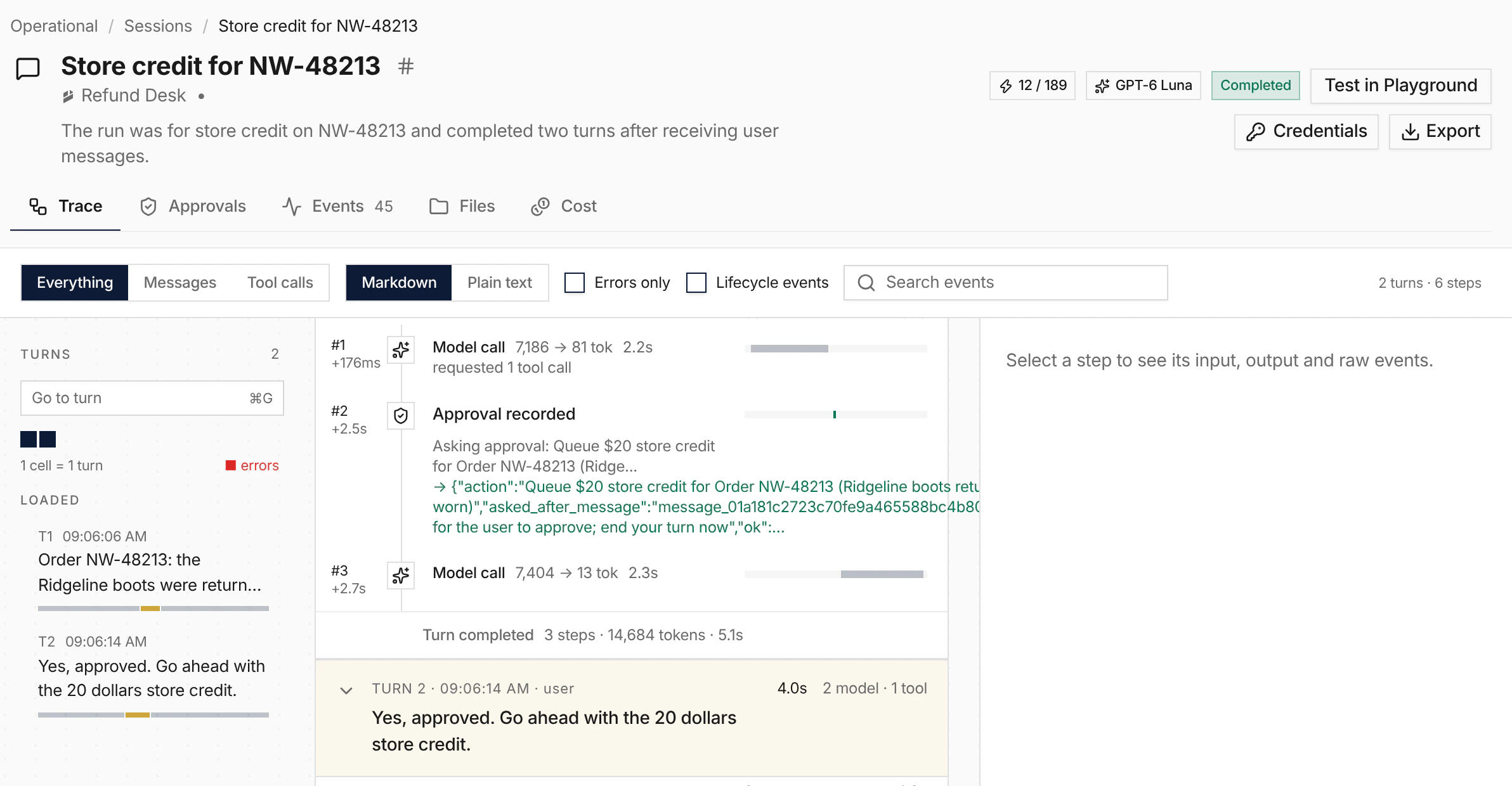
Everruns 0.17.26: Live, steerable sessions
Live, steerable sessions, Sessions as the operational list, advanced capability authoring, and recovery for Daytona workspaces.
Chats is on for every organization, with pinned chats
Chats no longer depends on a feature flag, so every organization gets the chat list, search and new-chat flow, and threads can be pinned to the top.